Français
 Polski
Else WINDMÜLLER née SÄNGER (1891-1944)
This biography was written by the 9th grade students of class 3e4 at the Hector Berlioz secondary school in Colmar, in the Haut-Rhin department of France, with the guidance of their German teacher, Laurence Bourganis, and their art teacher, Christian Rimelen.
Else Sänger was born on January 2, 1891 in Witten, a town with a population of around 27,000, in the Ruhr region of Germany.
Her parents were Robert Sänger and Thekla Lilienthal, and she was their only child. The family was Jewish: the town had been home to a significant Jewish community since 1815, and had its own synagogue.
On April 9, 1912, Else married Albert Windmüller in her hometown of Witten. The following year, on March 31, 1913, their daughter Gertrude Thérèse Windmüller was born in Moers, in the Rhine valley.
The rise of Antisemitism in Germany
Albert Windmüller was a successful businessman. The family set up home in Krefeld, south of Moers, where a Jewish community had been well-established since the early 17th century. The synagogue was built in 1851 and the Jewish population, although very much in the minority, continued to grow. By 1925, however, it had begun to decline. Fierce anti-Semitism flared up after the First World War. In 1927, the Jewish cemetery was “deconsecrated”. In 1928, the synagogue’s stained-glass windows were smashed and swastikas were painted on the main entrance. In 1930, posters appeared calling on residents to boycott Jewish businesses. This made for a highly hostile environment for the Jews.
The Windmüllers were wealthy, and Albert was on the town council (see his biography). They could afford a good education for their daughter, who studied medicine in Bonn.
However, when Hitler came to power in 1933, Gertrude moved to Milan, in Italy, to pursue her education. In 1932, Mussolini had once again made it clear that he did not want anti-Semitism to take hold in Italy but nevertheless, in 1933, the Fascist party began to target Jews.
In 1933, there were still 1481 Jews living in Krefeld, but by 1937, at least 500 of them had fled. Albert’s father died there that year.
In 1938, as the Nazis waged war on the Jewish community, Else and Albert no longer felt safe in Germany. Shortly after Kristallnacht (the Night of Broken Glass) on November 9-10, during which rioters and the SA attacked Jews and Jewish businesses and burned down synagogues, including the one in Krefeld, the Windmüllers finally made a decision: in common with hundreds of other people in the same position[1], they abandoned their home and belongings. They fled Krefeld to join their daughter in Milan, where they arrived on November 19, 1938.
Life in exile
In the meantime, Gertrude had married a man called Natalino Riolo and had a son.
Life did not go as smoothly for Else and Albert, however. After only a few months in Italy, at a time when anti-Semitism was increasing rapidly, their residence permits were not renewed. This meant they had to leave the country, and in January 1939, they moved to France.
Following the German invasion of Poland on September 1, 1939, France and Britain declared war on Germany. After a period known as the “phony war”, Germany invaded France on May 10, 1940. On June 14, the German army swept through Paris.
Else and Albert were forced to flee once again. This time they headed to the southwest of France, with the intention of crossing the border into Spain, continuing on into Portugal and sailing from Lisbon to the United States.
Crossing the Spanish border proved too risky, however. Numerous other groups of people were arrested, so they decided to abandon their plan and try another escape route, this time to Switzerland.
They found a safe place to stay in Chapareillan, in the Isère department of France, but on July 8, the Germans marched into the village. They then organized a roundup, and gathered all of the able-bodied men in the town hall square, where they checked their identity papers. A Resistance fighter was arrested, never to be seen again. Someone had turned him in. Did someone report the Windmüllers too?
On July 9, 1944, the Gestapo arrested Else et Albert. In 2007, a “Chemin des Justes” (Path of the Righteous) was inaugurated in Chapareillan. Four brave people had helped to save Jews. Sadly, the Windmüllers and two other Jews who were also hiding in the village, Herschfeld Korngold, who was born in 1894, and Moszek Srednicki, born in 1893, were not so fortunate. That day in July 1944, they all met the same fate.
On July 11, 1944, they were taken to the Saint Paul women’s prison in Lyon, in the Rhône department of France, and from there transferred to the Drancy transit camp, north of Paris, on July 24, 1944.
When she arrived in Drancy, Else was assigned the serial number 25,864.
On July 31, 1944, Else and Albert Windmüller, together with 1304 other people, were deported on Convoy 77 to the Auschwitz concentration and extermination camp, never to return. They were later declared to have died on May 8, 1945, the day that Germany surrendered. The Nazis murdered them simply because they were Jewish[2].

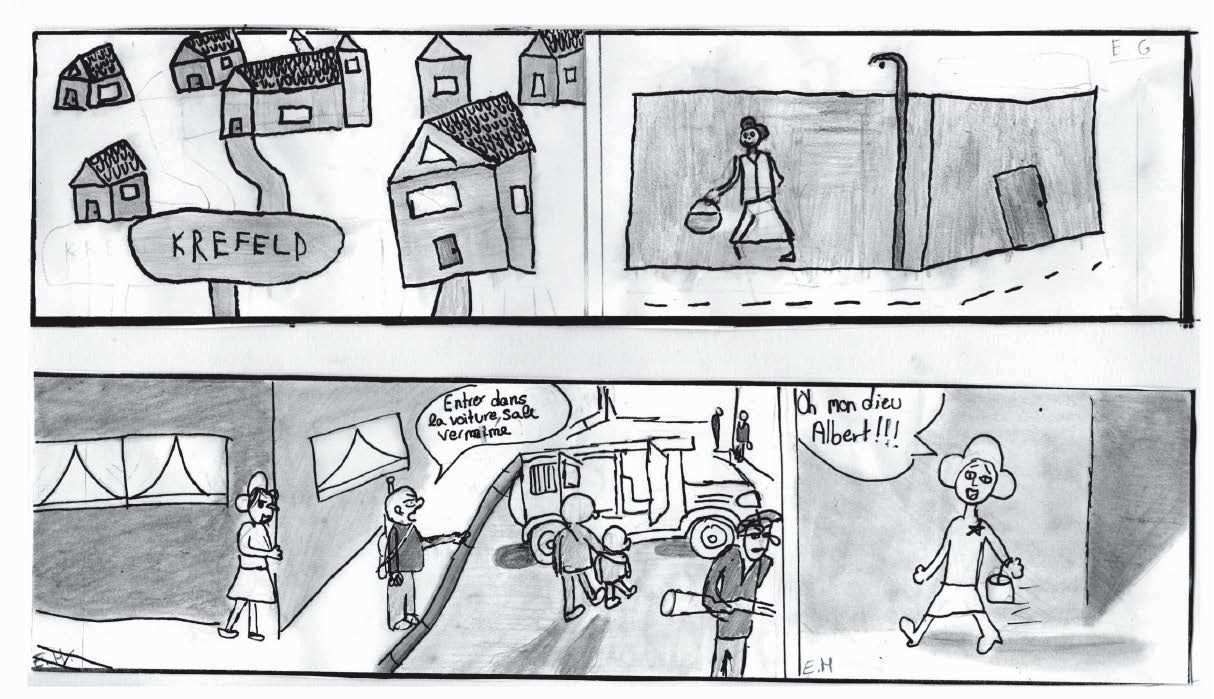
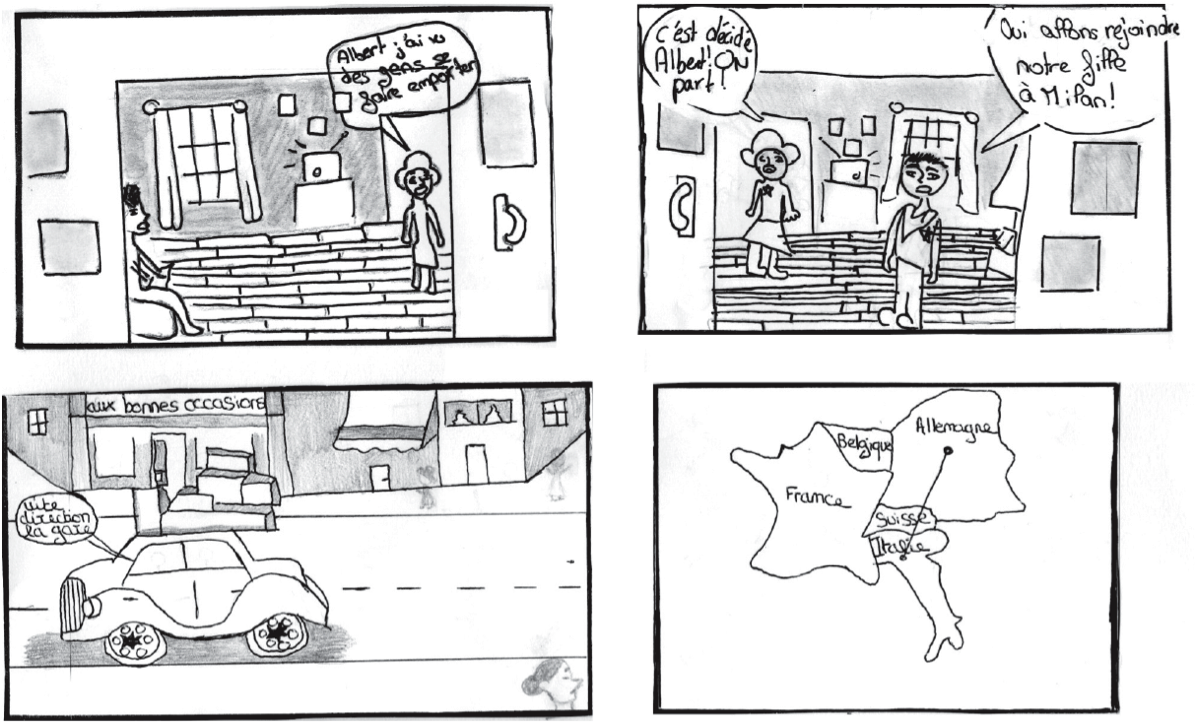
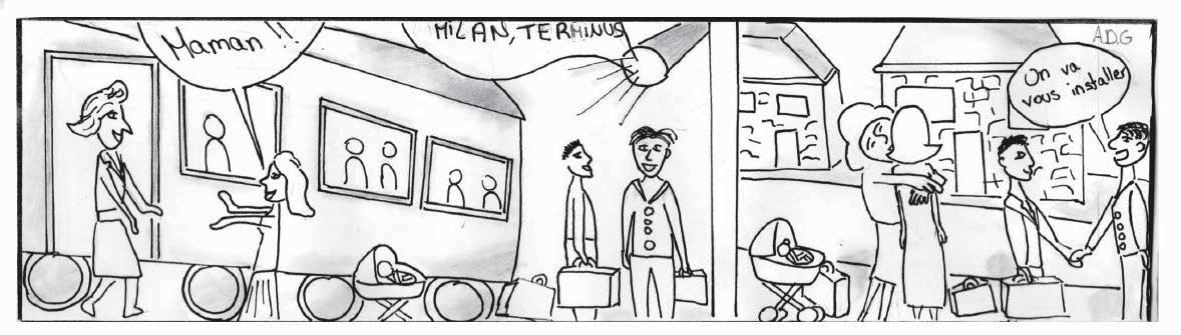
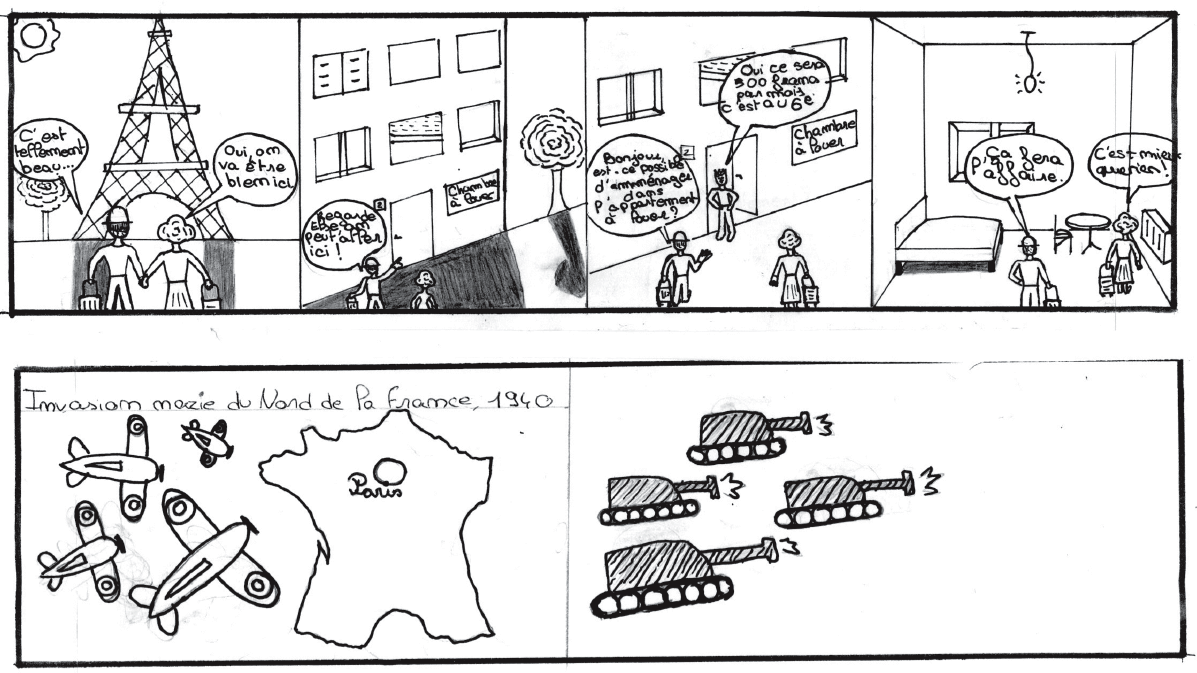
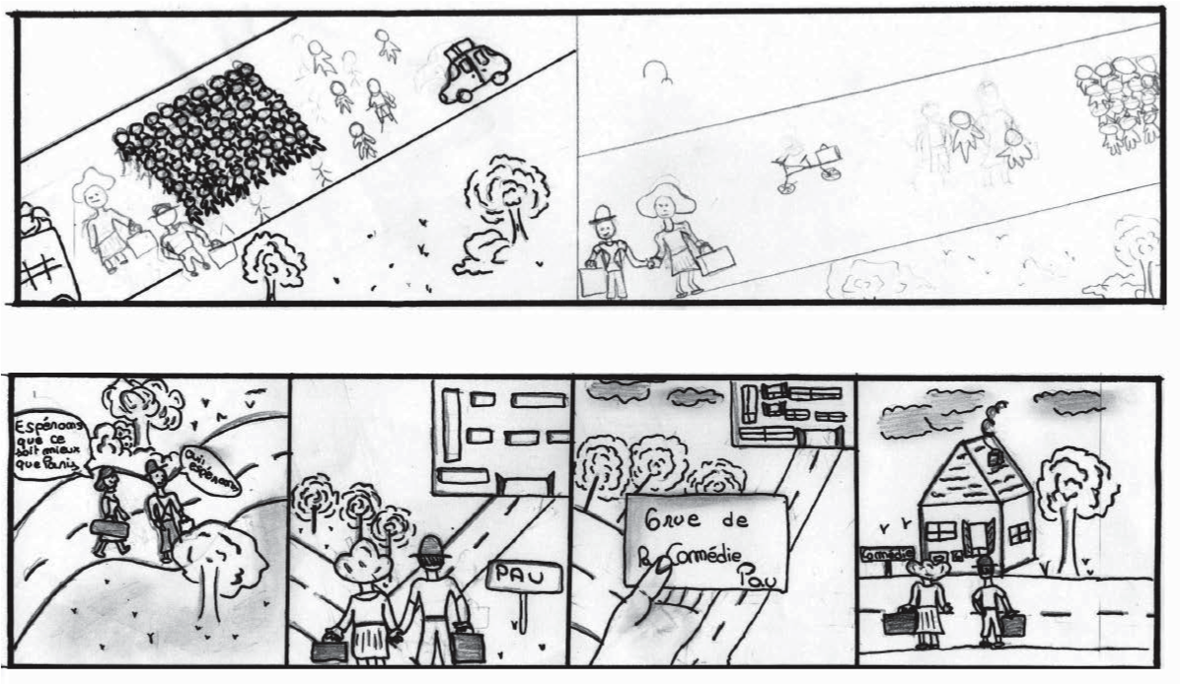
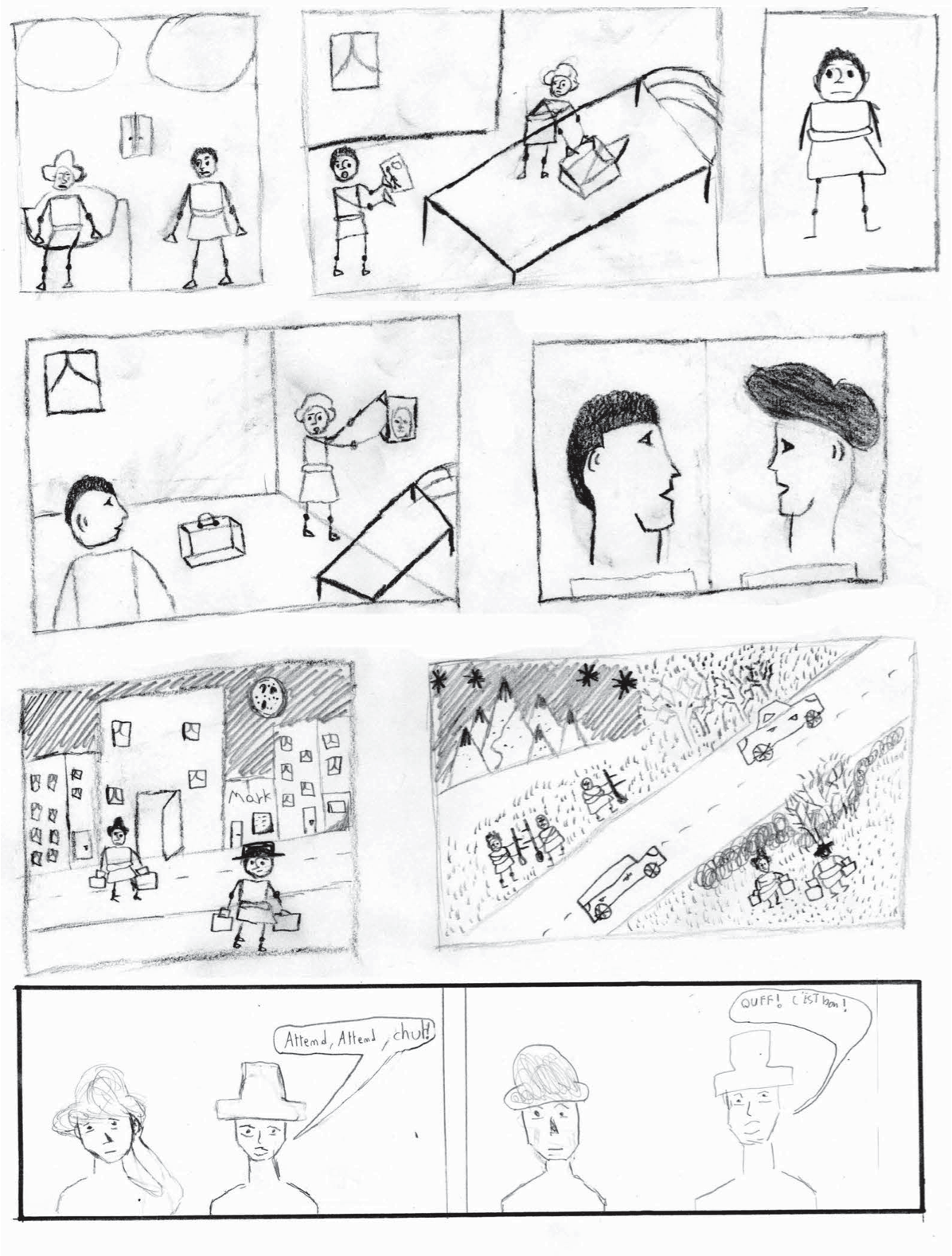
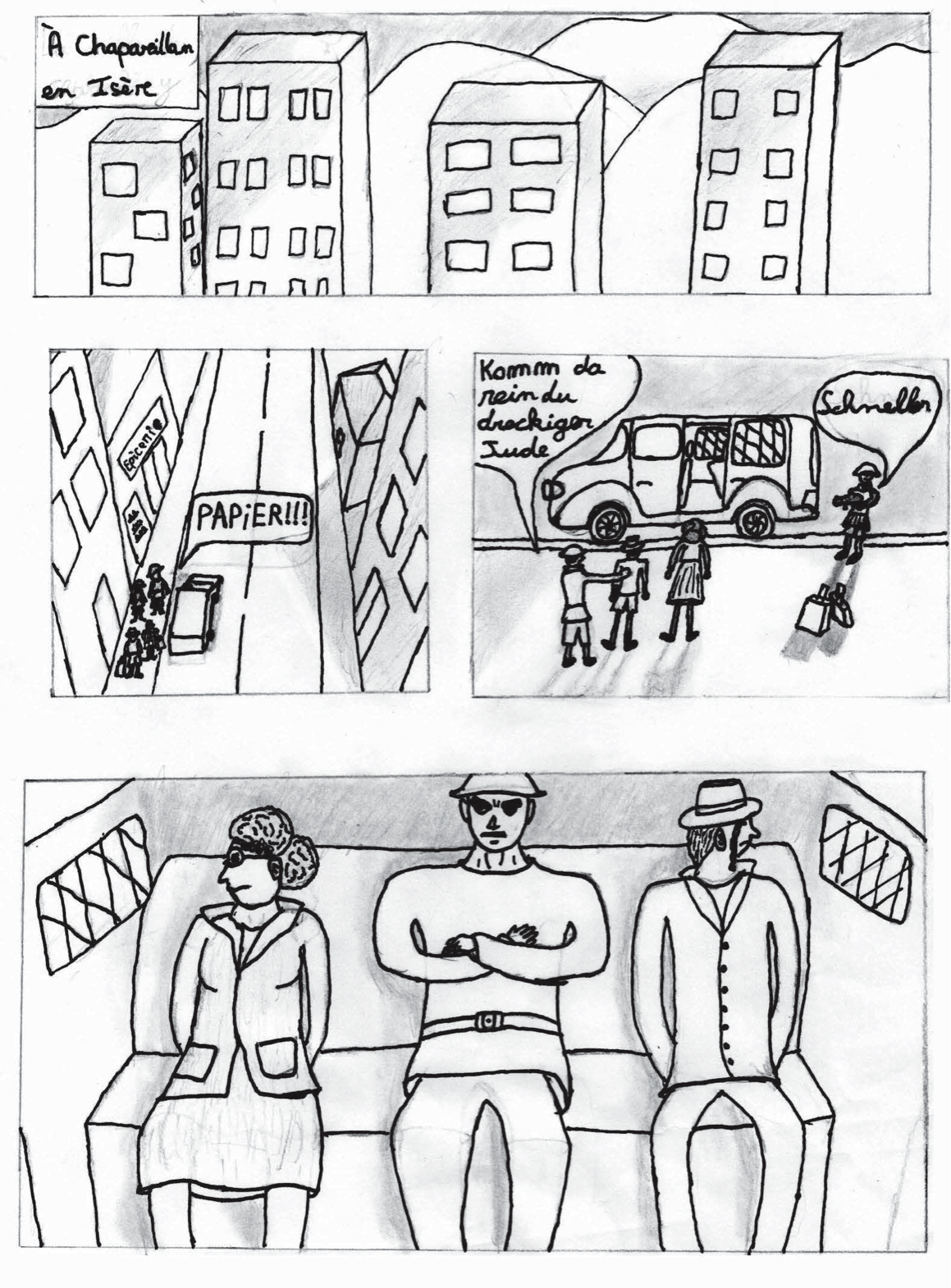
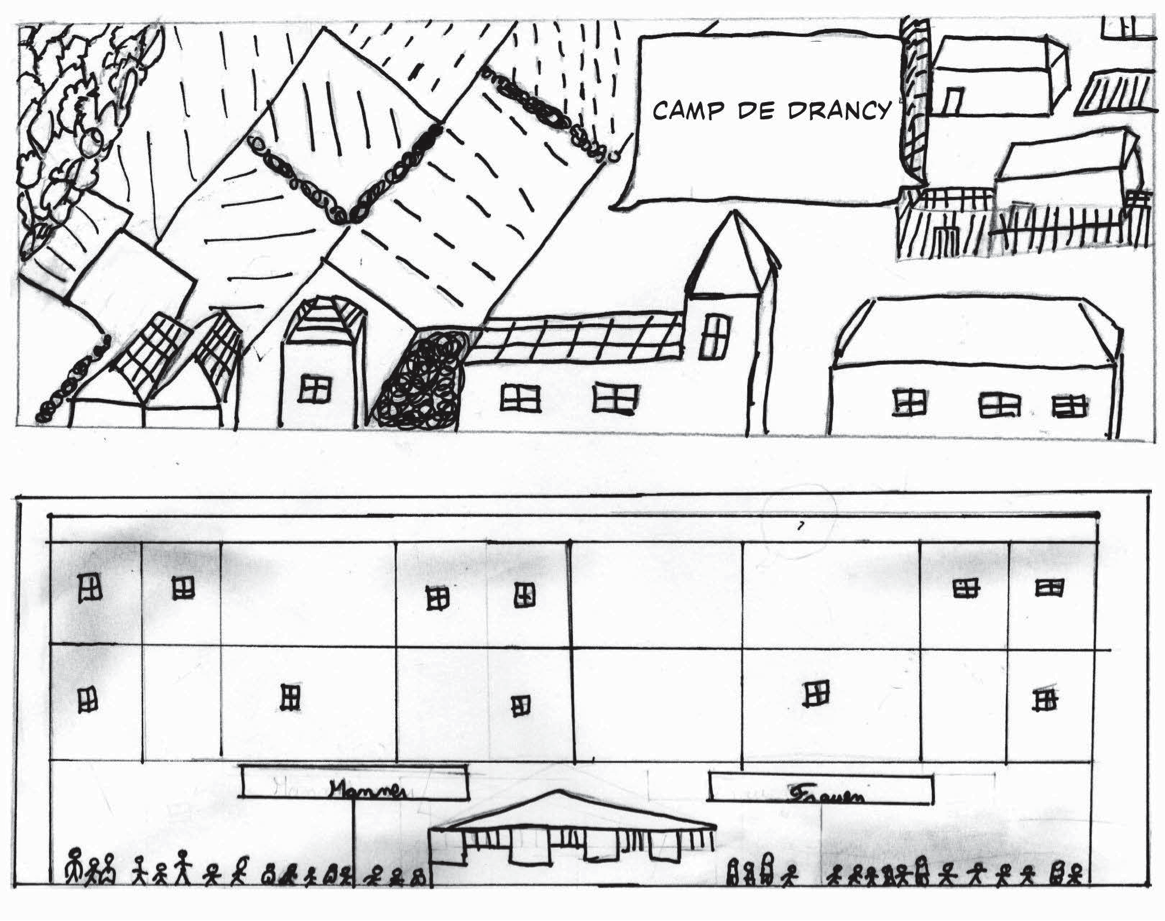
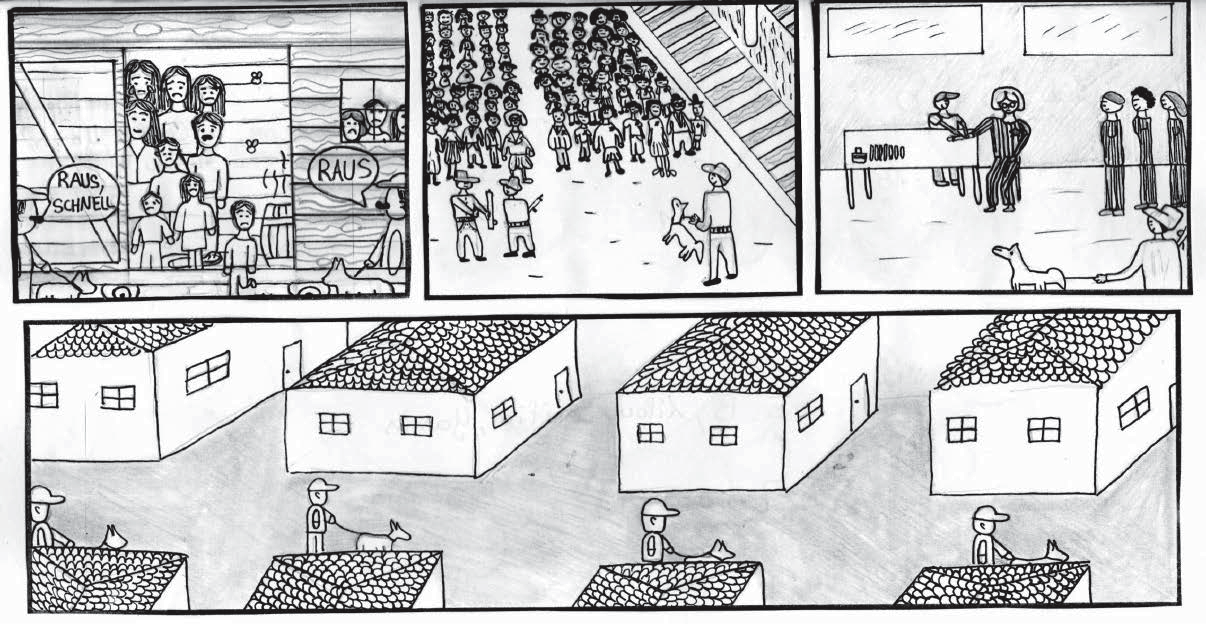
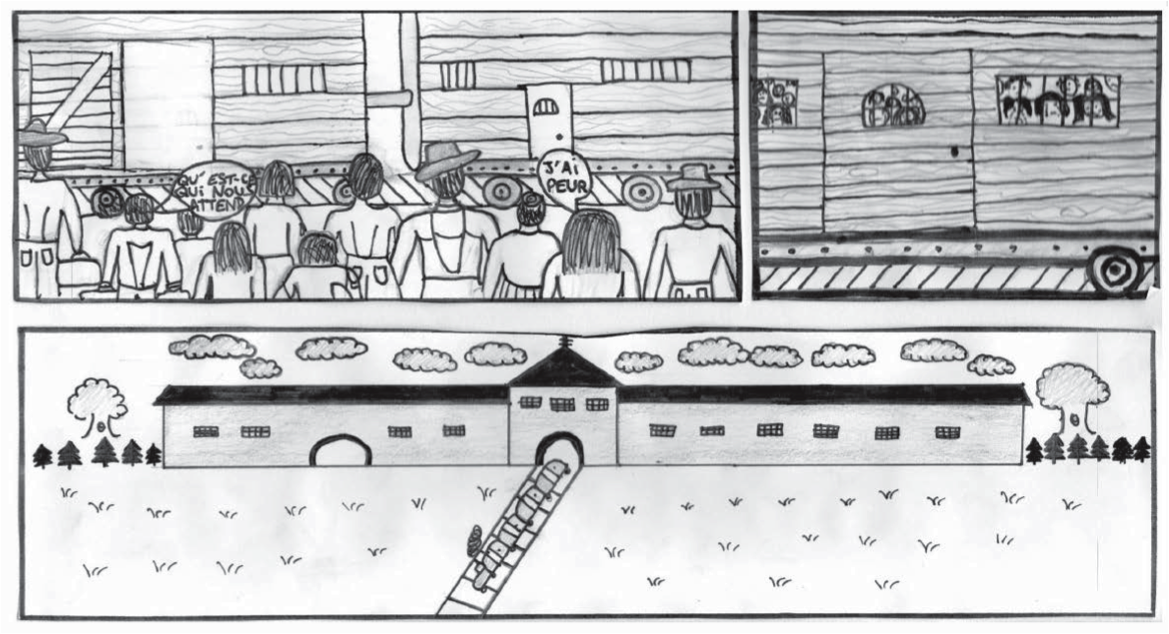
- PDF in French only: “Comment réalise-t-on une bande-dessinée?”
To address this question, the French illustrator Etienne Gendrin, who created the album “Têtes de mule” (2022), teamed up with students to design and produce a comic strip based on the life story of Else and Albert Windmüller, a German couple who died in the Auschwitz concentration camp. - The German version of the PDF
Notes & references
[1] Jewish Virtual Library: Krefeld https://www.jewishvirtuallibrary.org/krefeld
[2] In accordance with Nazi doctrine, people were arrested not on the basis of their religion, but on grounds of their “race”. Jews who had converted to other religions were also arrested and deported. For further information, see the Vichy government’s 2nd decree on the Status of the Jews.