Français
 Polski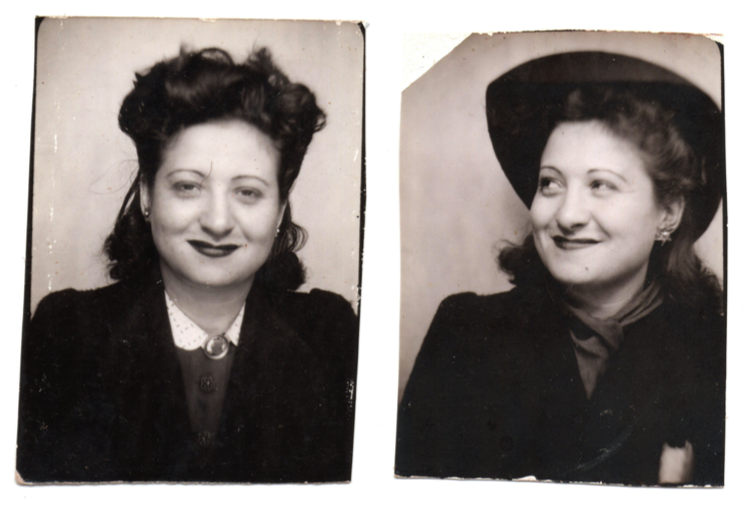
Suzanne KAVITZKY
Photographs kindly provided by Suzanne Kavitzky’s nephew, Bernard Fryscher, for the Convoy77 project
Summary
- The research stage of the project
- Family background and childhood
- Life before the war
- Life during the war
- Deportation
- Return to France
- Political deportee status
1. The research stage of the project
We are a group of 9th grade students from the Marie Laurencin middle school in Ozoir-la-Ferrière, in the Seine-et-Marne department of France. We researched the life story of Suzanne Kavitzky, who was deported on Convoy 77 because she was both Jewish and a member of the French Resistance.
We met Suzanne’s nephew, Mr. Fryscher, who shared her story with us.
The Convoy 77 project team sent us a number of historical records, which Mr. Fryscher had previously donated to the Shoah Memorial in Paris..
We worked with various types of documents, including family photos, identity cards, civil status records, employment certificates and official files..
First of all, we sorted the documentation by date.
We then extracted the information from the records and put it into a shared document.
Lastly, we wrote Suzanne’s biography.
2. Family background and childhood
Who was Suzanne Kavitsky?
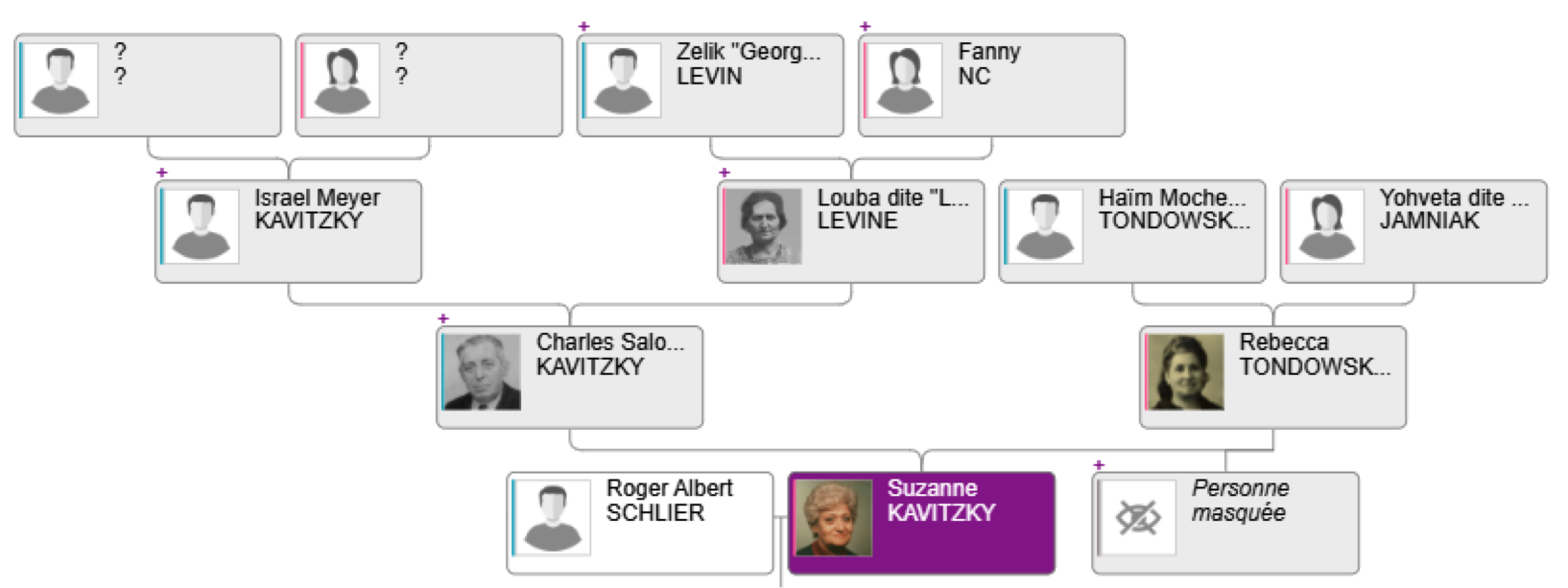
Suzanne’s paternal grandparents were Israel Meyer Kavitzky and Louba, known as Louise, Levine, while her maternal grandparents were Haïm Mochek Tondowsky and Yohveta, known as Yvonne, Jamniak.
Her parents were Charles Salomon Kavitsky and Rebecca Tondowsky.
Charles Salomon Kavitsky was born on January 30, 1894 in Tchernihiv (Russia/Ukraine). He arrived in Paris at the age of 13, in 1907, to work in the fur trade. On August 23, 1914, in Sidi Bel Abbès in Algeria, he enlisted as a soldier in the 35th Infantry Regiment of the French Foreign Legion. This entitled him to be naturalized as a French citizen on December 6, 1918.
On her father’s side, Suzanne had an aunt called Frouma and five uncles: Georges, Pinkus, known as Paul, David, Marcel and Émile. Émile married Mireille (who was Suzanne’s friend and also her cousin).
Paul married Léa Meblivadny and they had two children, Serge and Fanny. Fanny married Toussaint Spadoni and they had one child (whose name is hidden on the French genealogy website gw.geneanet.org).
Suzanne was born in 1922 and had one younger sister. According to their family tree, Suzanne’s daughter married and had one child.
Suzanne’s parents wedding photo, taken in April 1921
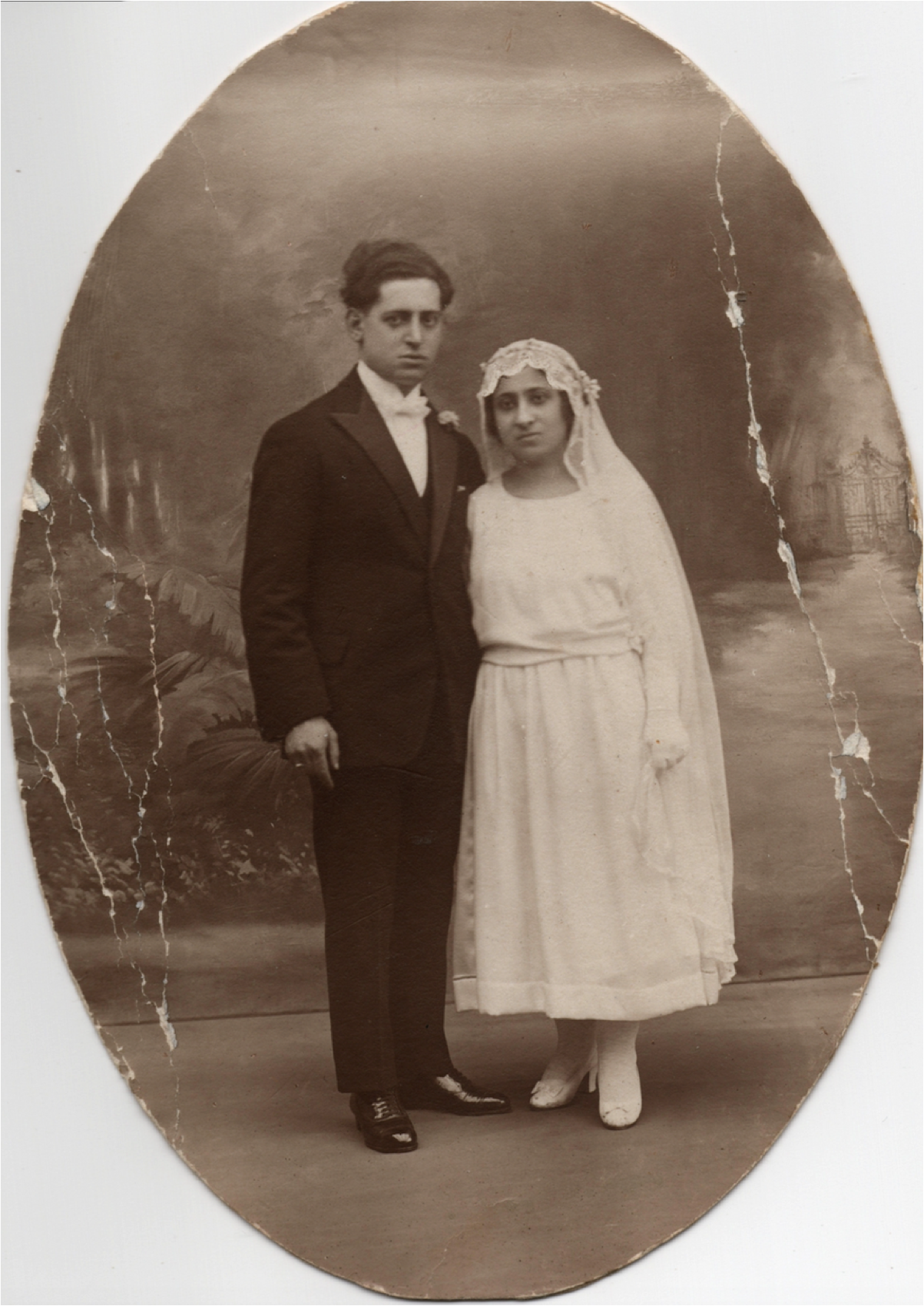
Photograph kindly provided by Suzanne Kavitzky’s nephew, Bernard Fryscher, for the Convoy 77 project
Suzanne’s childhood
- She had short, dark hair.
- In August 1926, when she was 4 years old, Suzanne and her family went to Onival beach, in the Somme department of France.
- In the photo below, Suzanne is standing beside her mother, who is wearing a black dress and black shoes.
- Suzanne is wearing a little white dress and short white socks, her hair is fairly short and straight, with bangs, and she is holding a tennis racket.
Photo of Suzanne and her mother
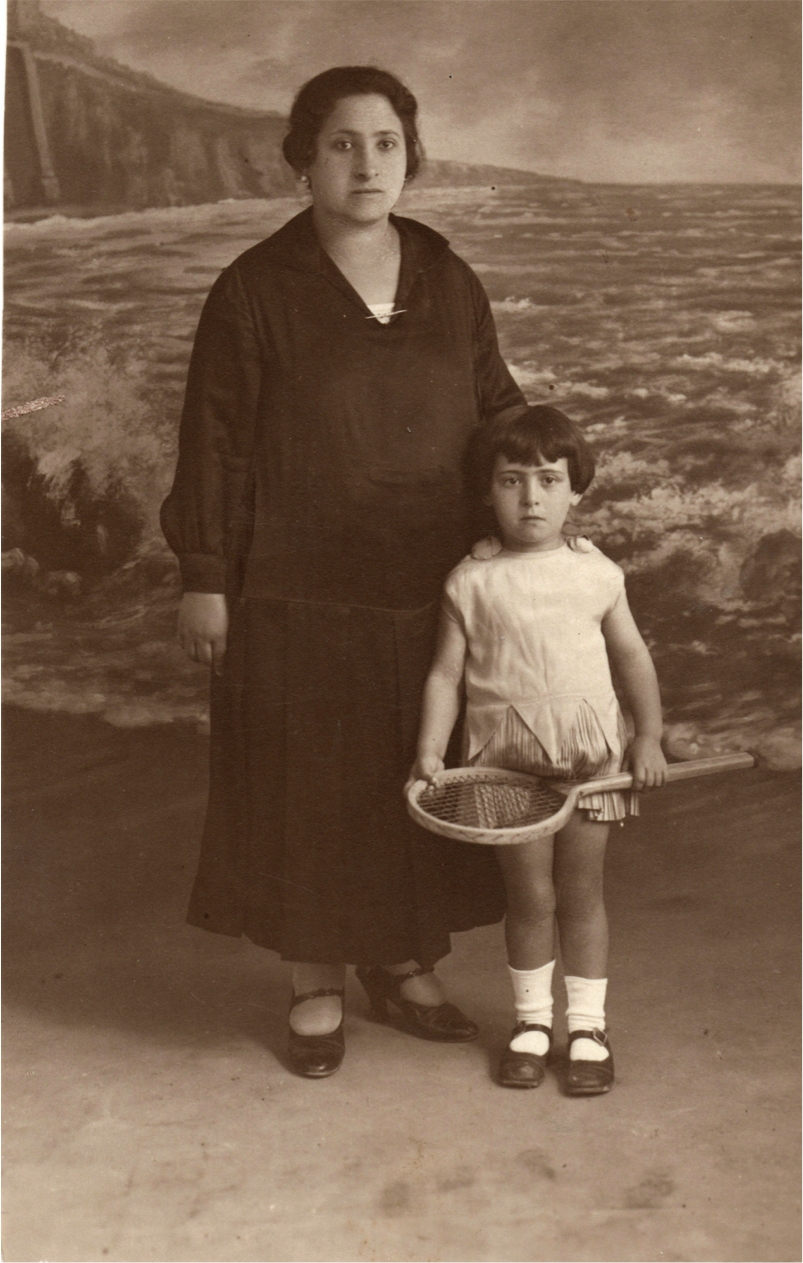
Photograph kindly provided by Suzanne Kavitzky’s nephew, Bernard Fryscher, for the Convoy 77 project
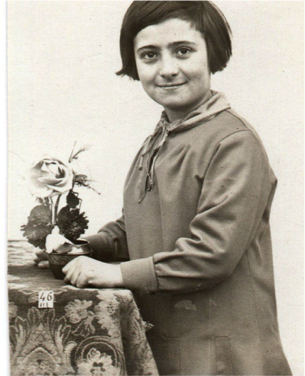
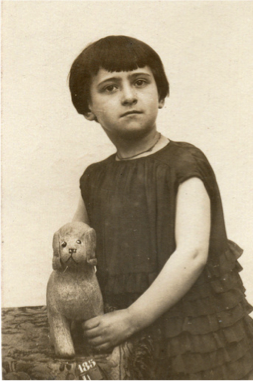
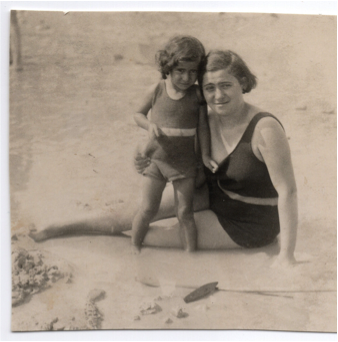
Photographs kindly provided by Suzanne Kavitzky’s nephew, Bernard Fryscher, for the Convoy 77 project
- In the photo taken in 1930, Suzanne, aged 8, is smiling and she looks happy.
- It was around this time, on November 28, 1928, that she was vaccinated against diphtheria, so that she could start school.
- In the photo taken in 1932, Suzanne is wearing a dark colored dress and a necklace. She still has short hair. She is sitting beside a toy dog.
- In the photo taken in August 1934, Suzanne, aged 12 and her sister Monique, aged 2, are at the beach. Suzanne is sitting on the sand in a dark colored swimsuit.
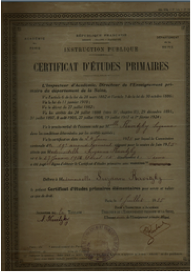
- In June 1935: Suzanne passed her elementary school leaving certificate with honors.
3. Life before the war
Suzanne’s professional life
- 1935 – 1936: Suzanne was an apprentice hairdresser at the Tison hair salon at 3 avenue Belvedere in Le Pré-Saint-Gervais, in the Seine-Saint-Denis department of France.
- 1937 – 1939: she worked as a hairdresser in the Simon hair salon at 147 rue Saint-Maur in the 9th district of Paris.
- 1940 – 1941: she worked as a hairdresser in the Maurice hair salon at 14 rue Lafayette, also in the 9th district.
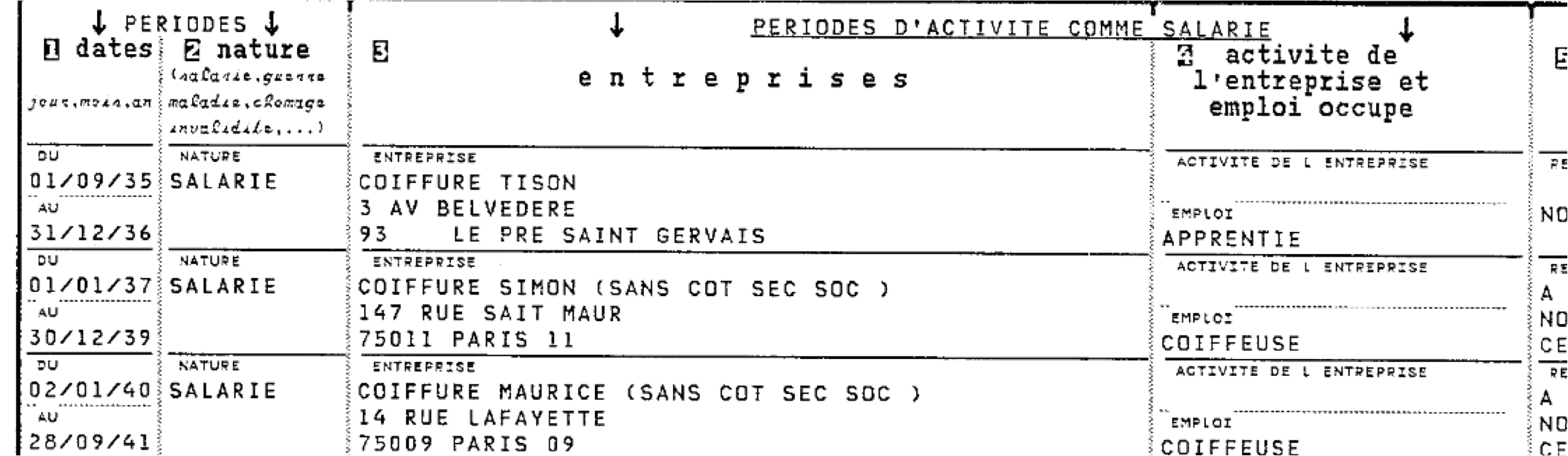
Suzanne Kavitzky’s retirement application form
Suzanne was close friends with her cousin Mireille.
Photo taken at Mireille’s wedding
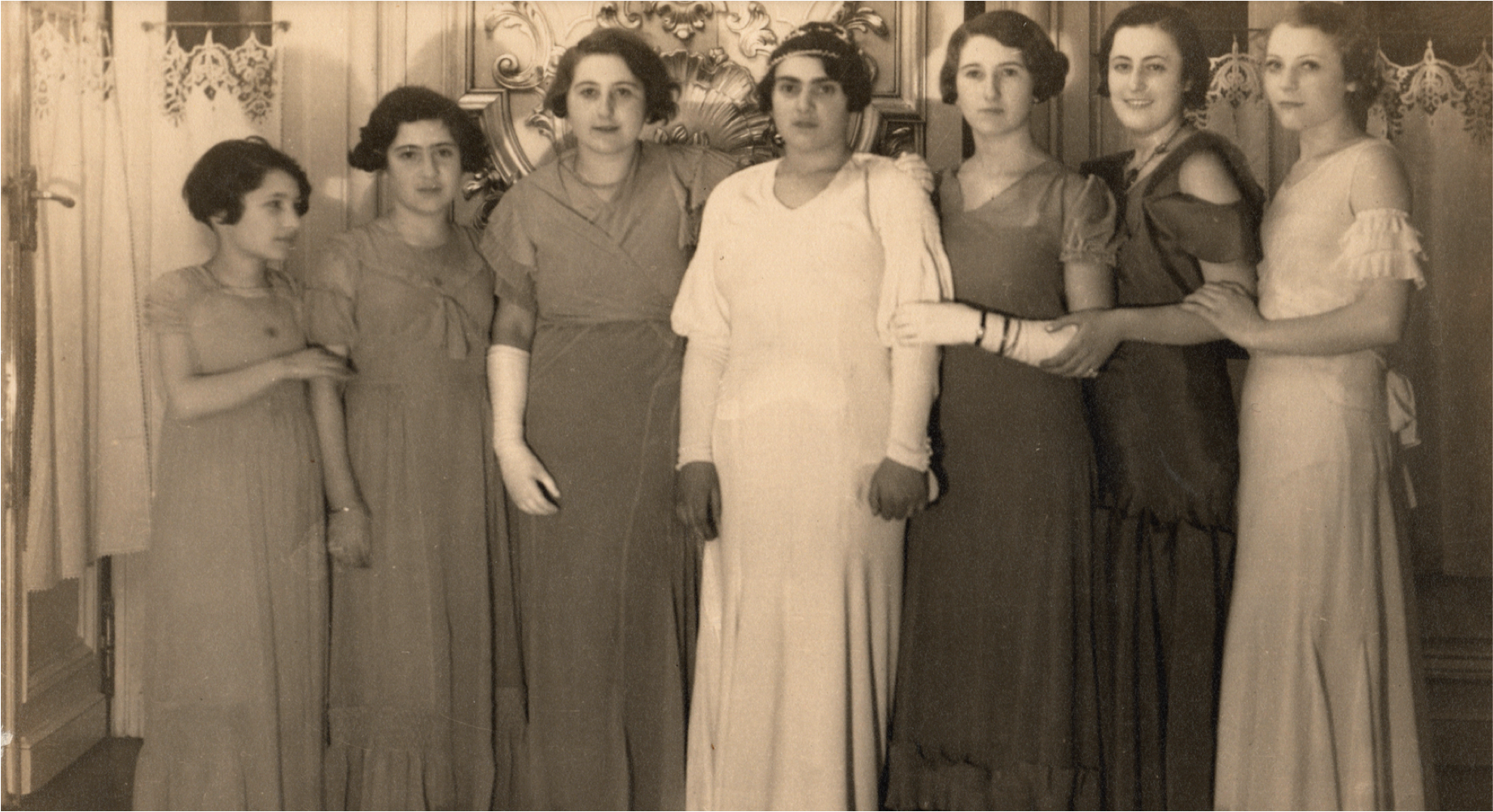
Photographie personnelle, donnée par le neveu de Suzanne Kavitzky,
Bernard Fryscher pour le projet Convoi 77
Mireille sera déportée avec ses parents et ne reviendra pas.
4. La vie pendant la guerre
Suzanne à la mode
Suzanne était très coquette.
Elle portait une veste à épaules carrées et ses cheveux avec les fameuses Victory Rolls qui étaient à la mode et portées par la plupart des femmes. “Les rouleaux de la victoire” rappelaient une manoeuvre faite par les avions de combat.
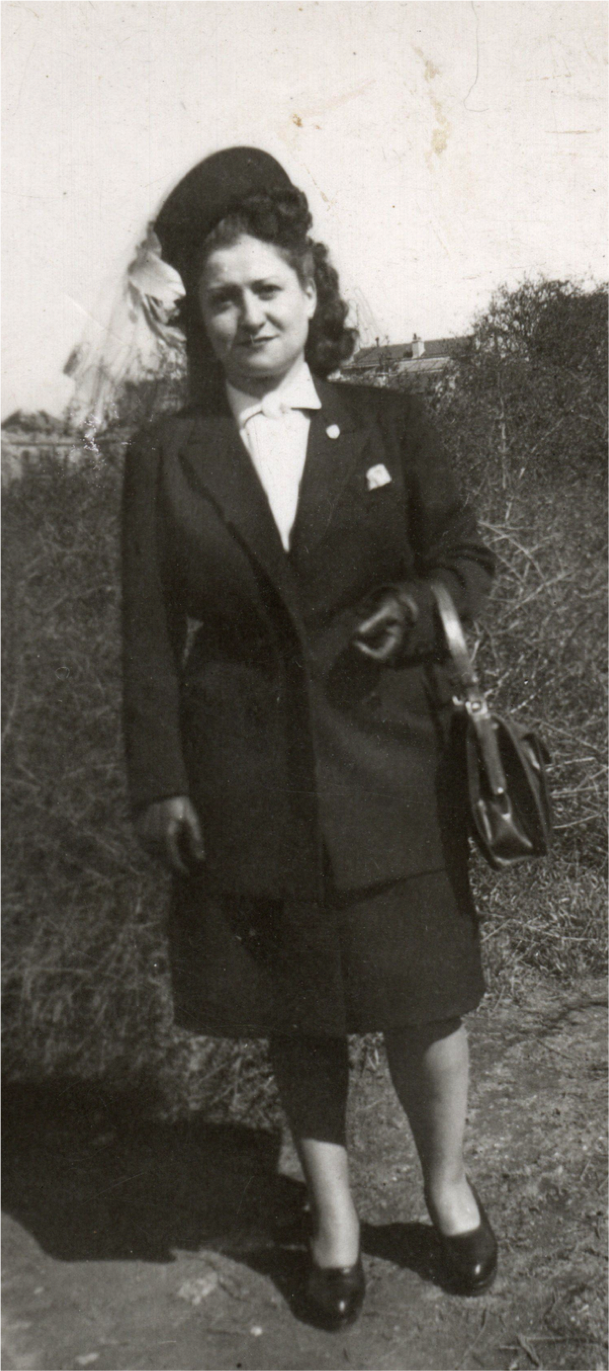
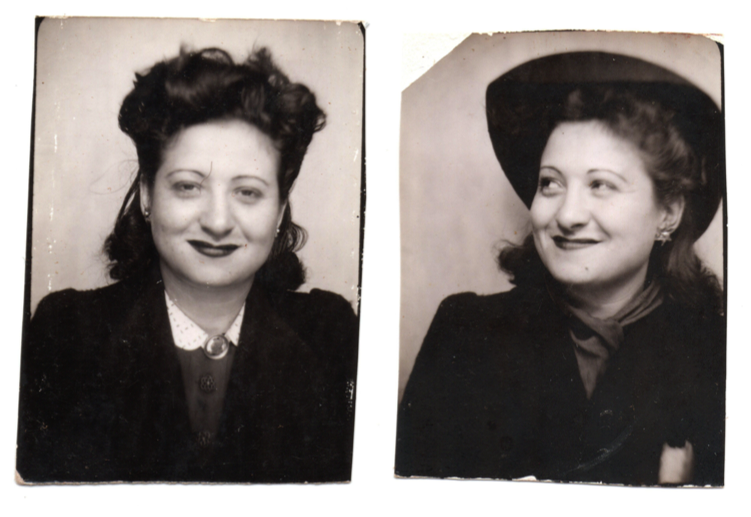
Photograph kindly provided by Suzanne Kavitzky’s nephew, Bernard Fryscher, for the Convoy 77 project
Mireille was later deported, together with her parents. Sadly, she did not survive.
4. Life during the war
A fashionable young woman
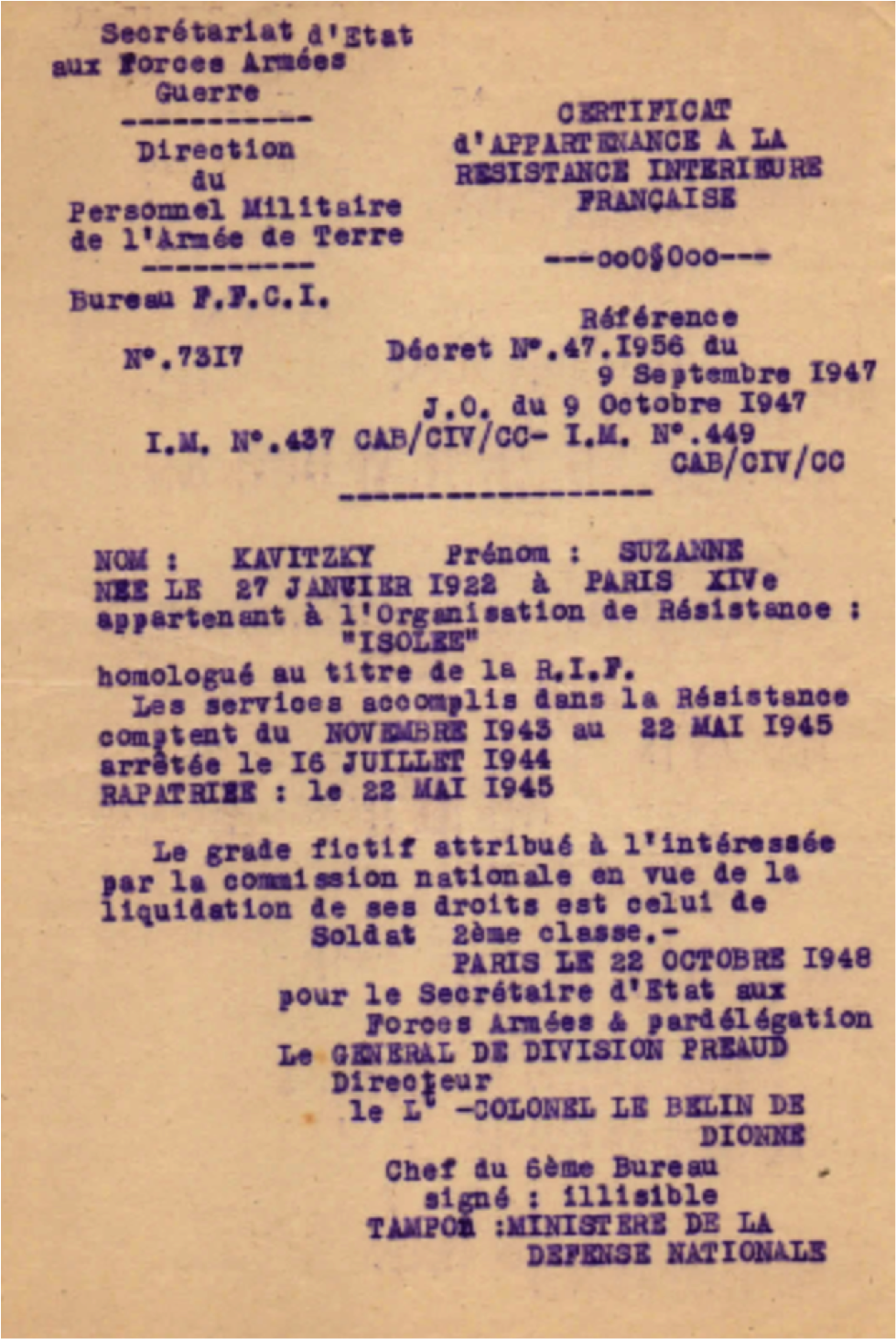
Suzanne always liked to dress in the latest styles.
She wore a square-shouldered jacket and set her hair “Victory Rolls”, which were in vogue at the time. Many women wore them. They were named after a maneuver made by fighter planes.
5. Arrest and deportation
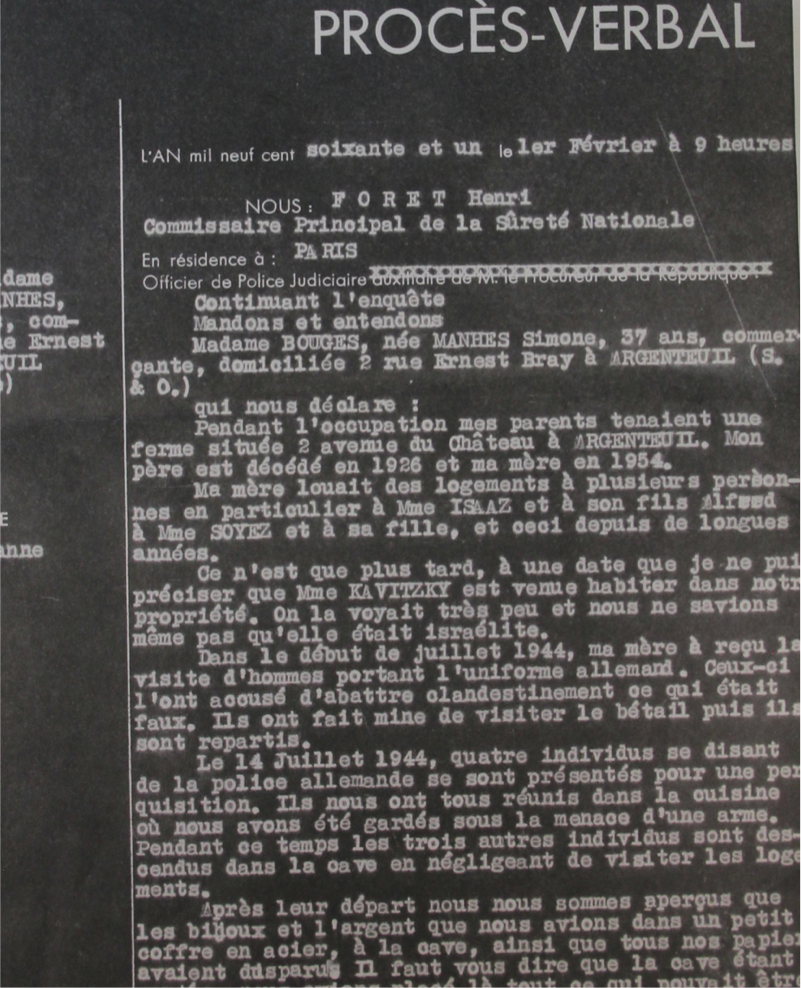
Suzanne Kavitzky moved from Le Pré-Saint-Gervais to the Manhès farm. There were several rooms and apartments at the farm, and it was there that she met Alfred Isaaz, who became her friend. She was 22 years old at the time.
On July 14, 1944, four men claiming to be German police officers arrived at the farm. After they left, the owners noticed that some things had been stolen. They filed a complaint at the local police station in Argenteuil. The police then arrested all the tenants: Mrs. Soyez and her daughter Andrée Marcou, Mrs. Isaaz and her son Alfred, and Suzanne Kavitzky.
On July 19, 1944, the Feldgendarmerie stationed in Saint-Germain-en-Laye took the four women to the police station. The reason given for their arrest was “theft from the German authorities”: they were also accused of being “terrorists”.
A short time later, the Germans released Mrs. Soyez and Mrs. Marcou, followed by Mrs. Isaaz, but kept Suzanne in detention. The record goes on to state that the thieves had been arrested.
From July 21 to 26, Suzanne was held in the Versailles Remand Center, which doubled as a prison.
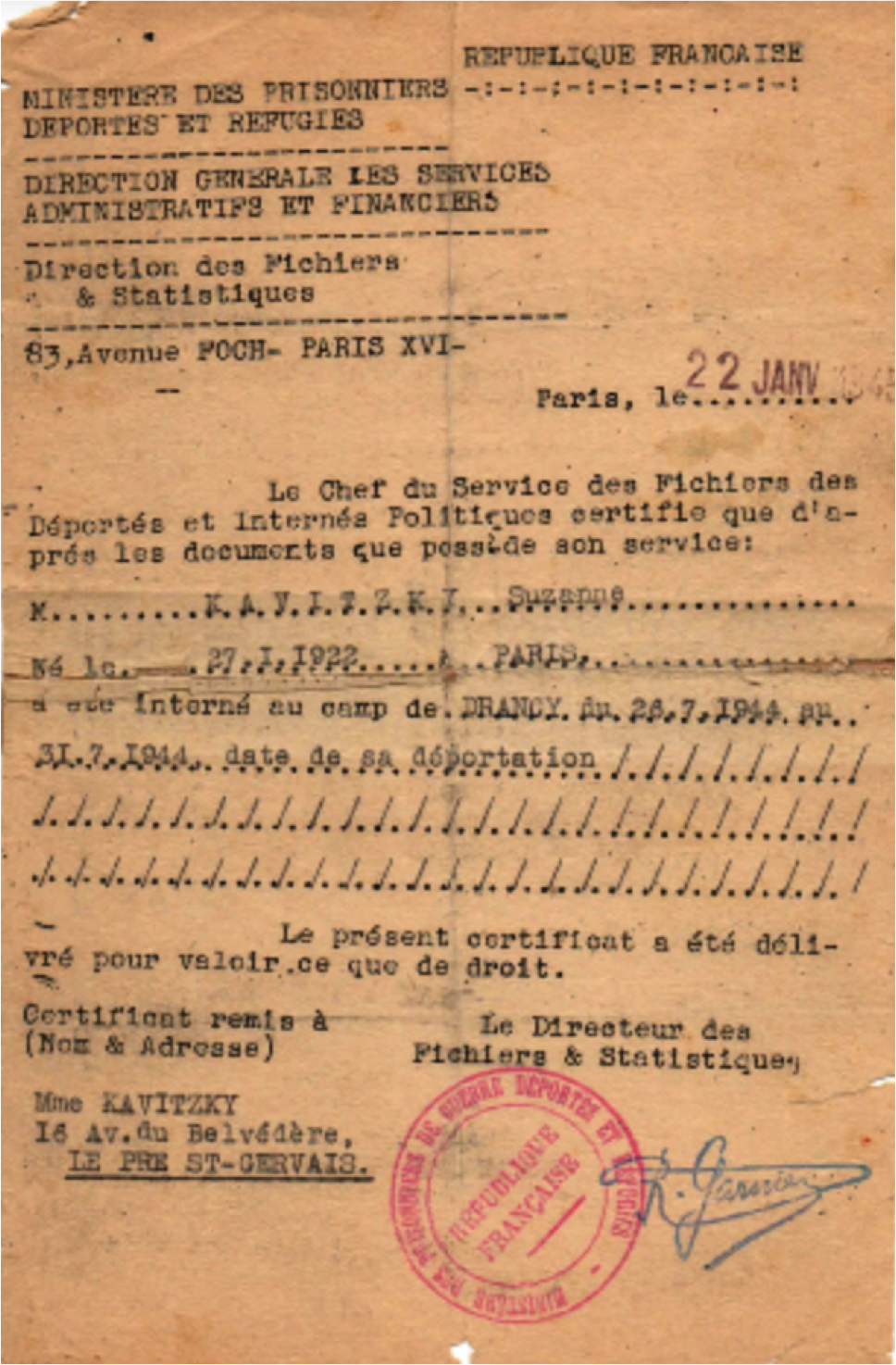
Although Suzanne was innocent, the fact that she was arrested enabled the Germans to find out that she was Jewish. The French gendarmerie (military police) then transferred her to the Drancy transit camp, north of Paris.
When she arrived in Drancy, on July 26, she was assigned the serial number 25, 985.
On July 31, 1944, Suzanne was deported on Convoy 77 to the Auschwitz concentration camp and killing center. The convoy arrived in Auschwitz-Birkenau during the night of August 3-4, and Suzanne was selected to enter the camp to work. Some time later, she was transferred first to the Liebau camp and then to Kratzau. She was still there when a group of Czech partisans and the Red Army liberated the camp.
On May 20,1945 Suzanne arrived at the Longuyon reception center in the Meurthe-et-Moselle department of France. She was issued with a card numbered 0981.301.
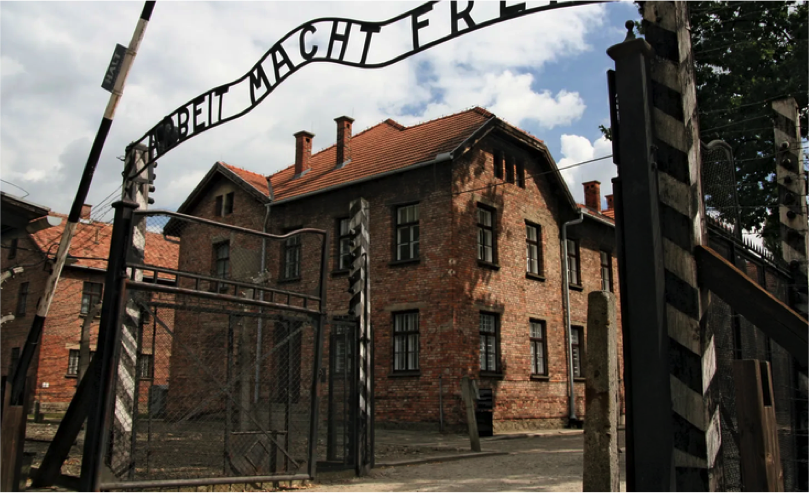 Of the 1306 people deported on Convoy 77, only 209 were still alive in 1945, of whom 141 were women.
Deportation route, from July 16, 1944 to May 22, 1945: Drancy > Auschwitz> Liebau > Kratzau (in Czechoslovakia, where deportees worked in an armaments factory).
After spending time in the Auschwitz concentration camp, Suzanne was transferred to the Liebau camp, where she remained for some time before she was moved to Kratzau:
The Liebau forced labor camp was part of the Gross-Rosen camp network.
In March 1941, the National Socialists built the Gross-Rosen concentration camp near the village of the same name, beside the railroad line midway between the towns of Strzegom and Jawor.
We researched Kratzau and the various factories where Suzanne worked.
Chrastava (Kratzau in German) is a town in the district and region of Liberec in the present-day Czech Republic.
During the Second World War, the town was in the Sudetenland region and thus in the Third Reich, and was the site of two labor camps
The Spreewerk armaments factory (now Elitex), employed mainly women deported from France.
The second concentration camp housed SS men and women, and Jewish women, most of them Polish and Ukrainian (Halytch), who worked for the Cichorius factory (now Mykana).
It was near the Jäger armaments factory, on the road towards Bily Kostel.
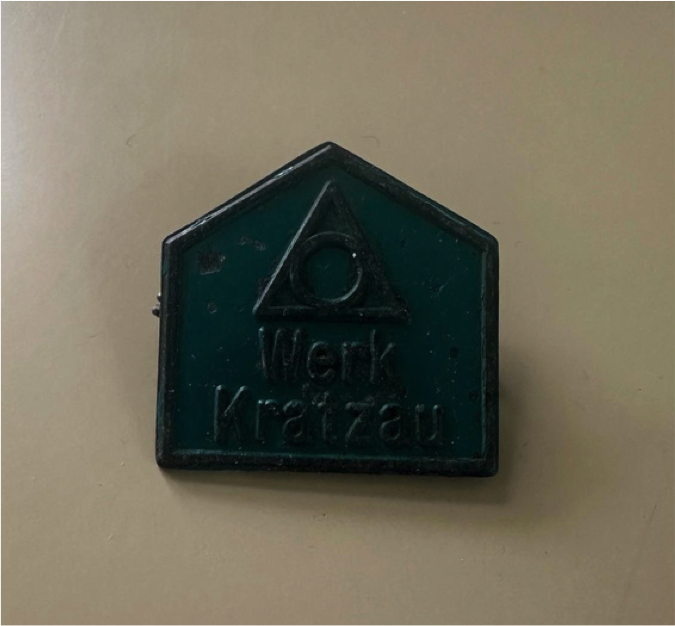
The labor camp for Jewish women at Weißkirchen bei Kratzau held 500 women. In principle, all the women worked at Werk Kratzau, a munitions factory.
The exact location of the camp was in a small place called Weißkirchen, where there was an abandoned textile factory some 2 or 3 miles from Kratzau.
Suzanne was sent there to work, and came back with a Werk Kratzau badge. Her nephew, Mr. Fryscher, brought it with him to our first meeting.
Verified points about the armaments factory:
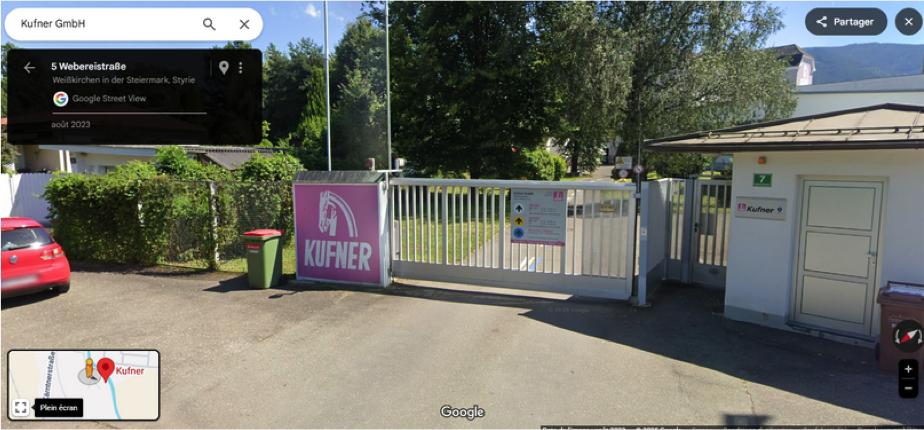
Former armaments factory now used as a textile factory ? Yes.
Textile industry trailblazer for over 160 years, still operating to this day.
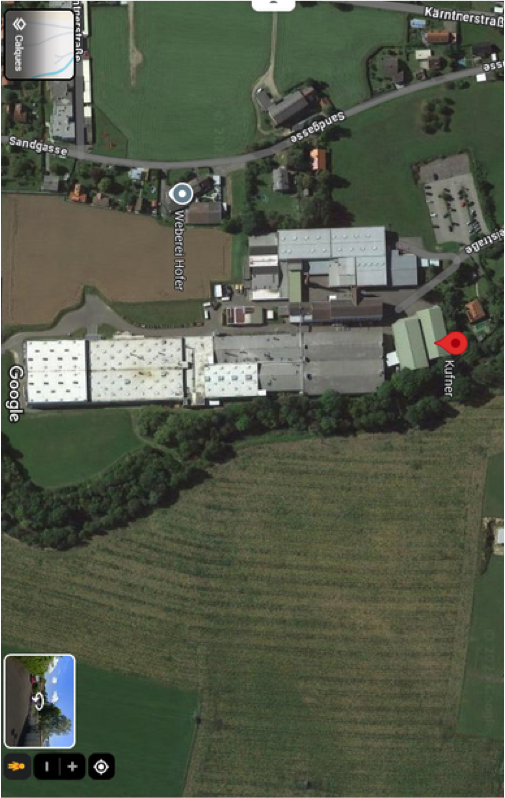
kufner.com/en/products-production
It is now a textile factory. The Germans occupied Czechoslovakia during the war and requisitioned the factory buildings .
6. Repatriation to France
The Lutetia Hotel
Suzanne was repatriated to the Lutetia Hotel, which was used as a reception center for returning deportees. She had a medical examination there on May 29, 1945, during which she was found to be infected with staphylococcus bacteria.
Suzanne then went to another reception center, at 16 rue d’Artois in Paris.
Her registration number was 21.931LA.
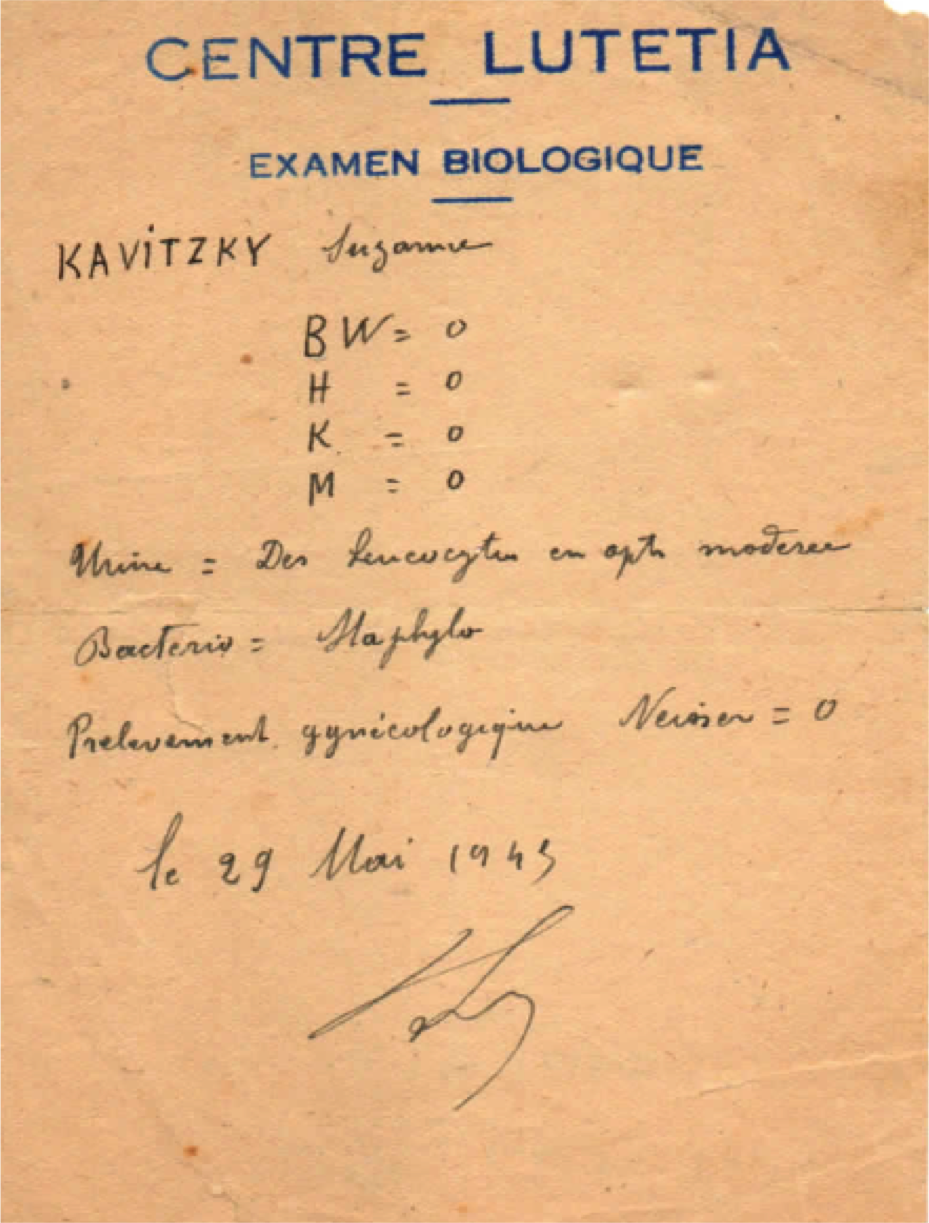
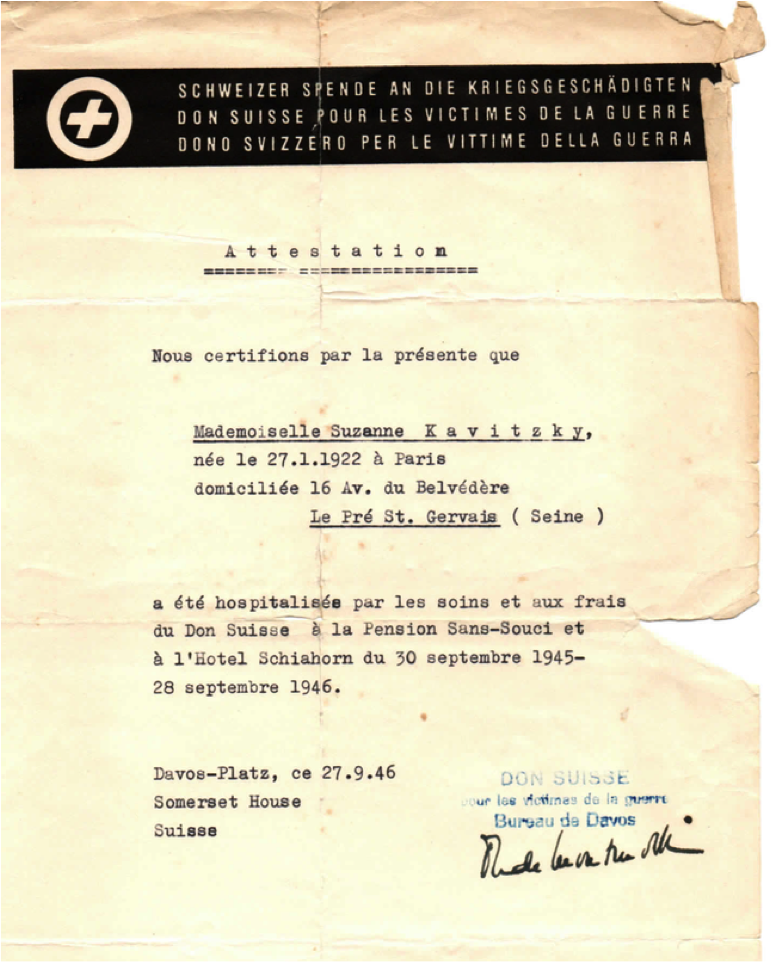
In April 1945, the Lutetia Hotel in Paris was converted into a reception center for large numbers of Nazi concentration camp survivors.
As of April 26, the Lutetia Hotel, which had 7 floors and 350 rooms, was able to accommodate deportees who arrived at all hours, day and night.
There was a team of volunteers, including doctors, social workers, cooks, scouts and soldiers, who worked around the clock for five months.
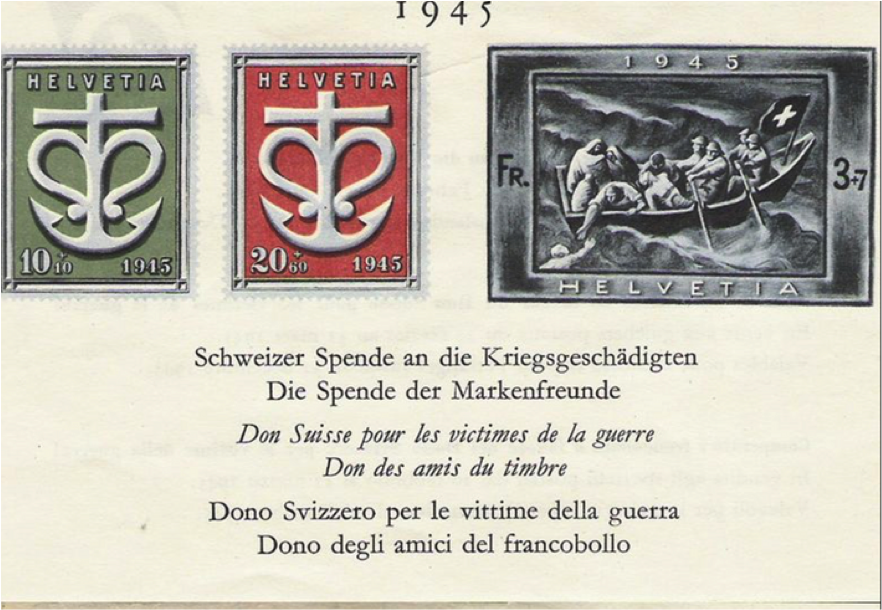
Le Don Suisse
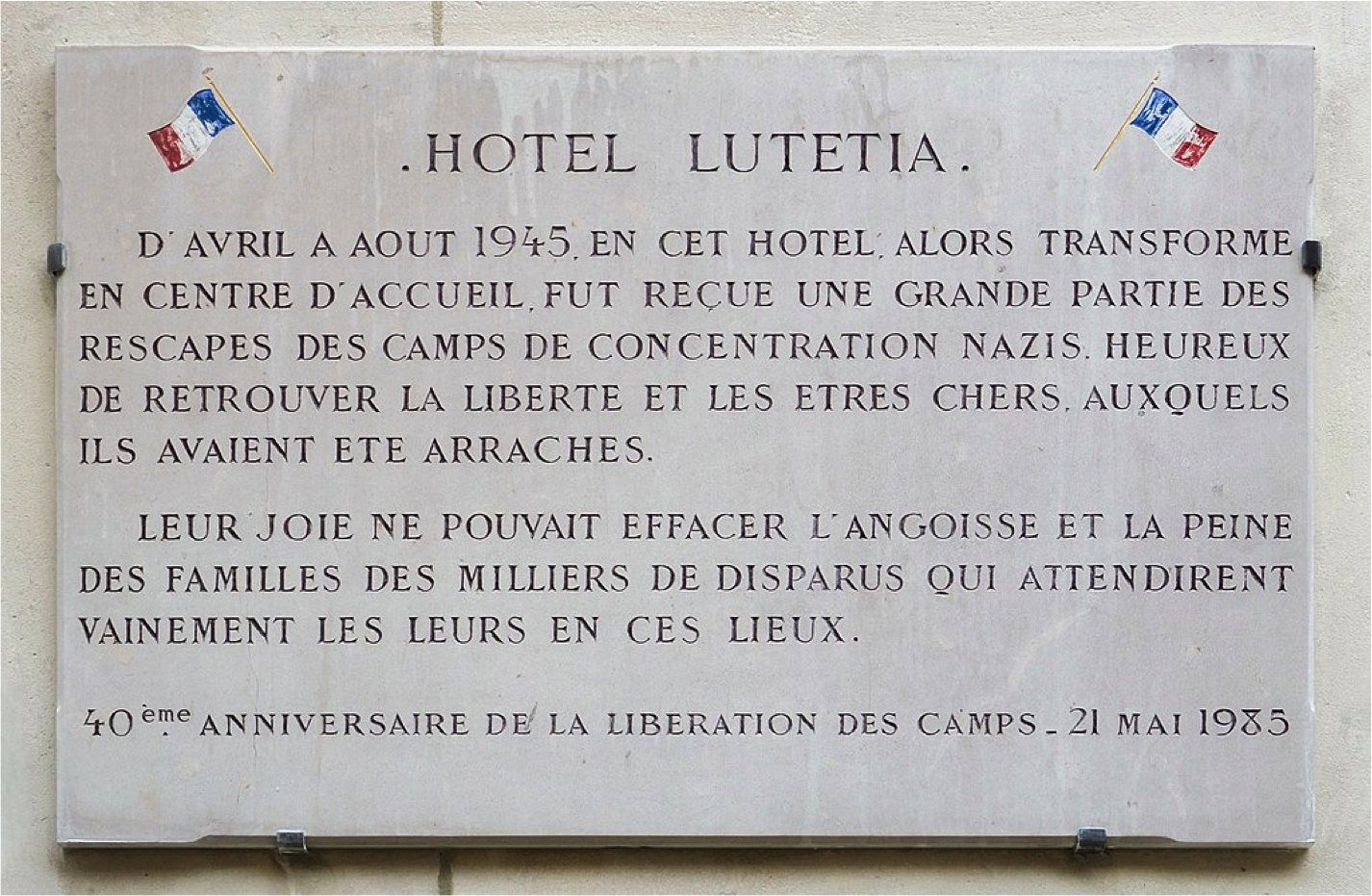
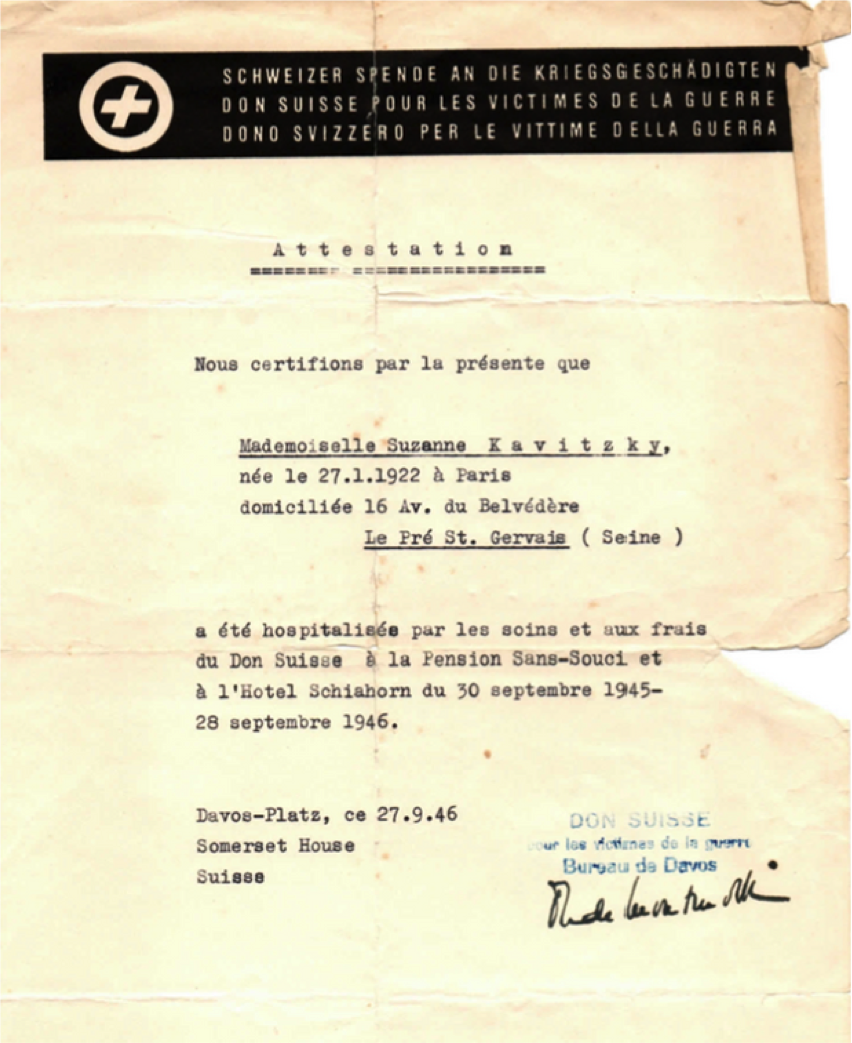
Suzanne was in very poor health, and needed medical attention and rest. From September 30, 1945 to September 28, 1946, the fees for this were covered by an organization called Le Don Suisse (Swiss Donation for War Victims). She was cared for at the Sans-Souci boarding house and at the Hotel Schiahorn in Switzerland. She was deemed 100% unfit to work for the 1st month, and 50% for the 2nd.
Background of Le Don Suisse: Founded by the Swiss Federal Council on February 25, 1944, the Don Suisse was intended to help European populations affected by the Second World War. It was financed by numerous fund-raising campaigns, which raised 200 million Swiss francs. Aid from the Don Suisse was sent to eighteen European countries, including Germany. It involved both humanitarian aid and reconstruction projects. The head of the Don Suisse central office was Rodolfo Olgiati (1905-1986), who had been Secretary General of the Swiss Cartel for the Relief of Children Victims of War since 1940.
During her stay in the sanatorium in Switzerland, Suzanne gave birth to a daughter, Régine, whose middle name was Monique, after her sister. The father’s name remains unknown to this day: Suzanne chose not to tell her family who he was.
7. Suzanne’s application for “political deportee” status
Back to normal life?
After she returned to France Suzanne was reunited with her parents and her sister.
On April 2, 1949 in the town hall in Bron, near Lyon, in the Rhône department of France, Suzanne married Roger Albert Schlier, who was born on December 28, 1920 in Mulhouse, in the Haut-Rhin department of France. A fitter by trade, he lived at 66 chemin du Fort in Bron. His parents were Joseph Schlier and Hélène Gabrielle.
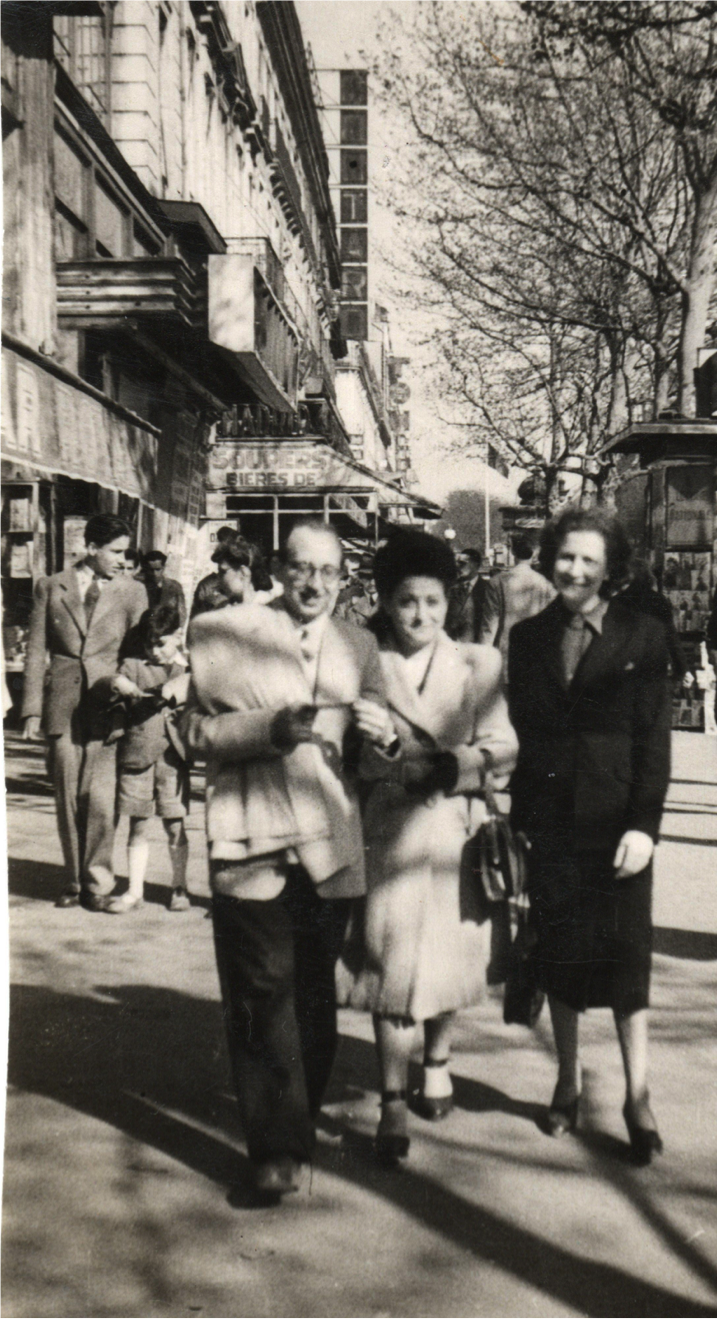
In the photo below, taken with her husband and her cousin, Suzanne appears to be enjoying life to the full. She still took good care of herself and dressed as stylishly as ever.
Photo of Suzanne, her husband and her cousin
Several years later, in 1961, she got divorced.
The struggle to be recognized as a political deportee
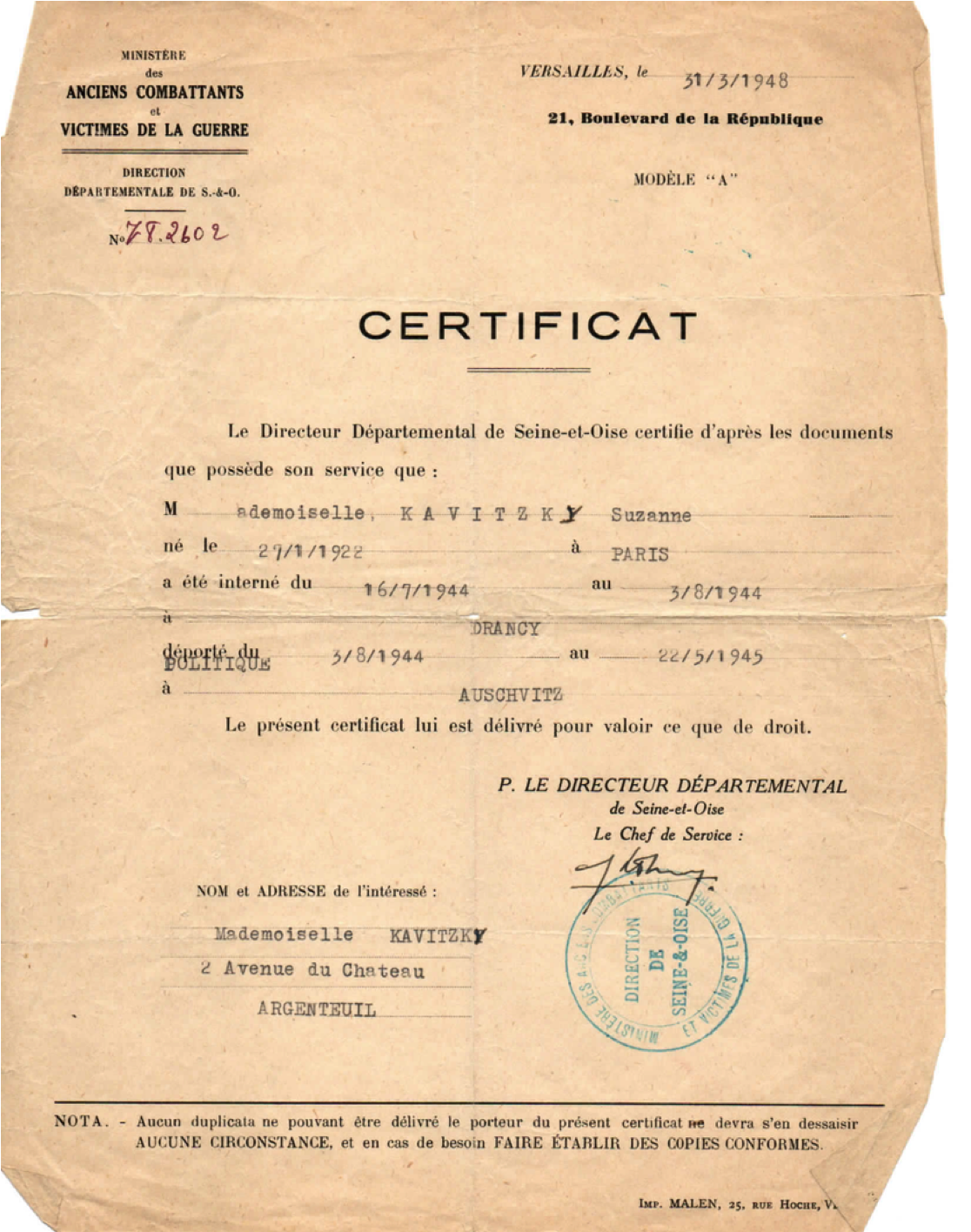
On March 31, 1948, the Director of the Seine-et-Oise department officially recognized that Suzanne had been deported for political reasons, on the basis that she had been interned in Drancy on July 16, 1944, was deported on Convoy 77 to Auschwitz on July 31, 1944 and entered the Auschwitz camp on August 3, 1944.
On April 13 1956, the French National Commission and the relevant Ministry turned down her application for “Resistance fighter” status, on the grounds that her acts of resistance had not been sufficiently well-documented.
Suzanne then submitted an application for the status of “political deportee” (meaning that she was deported on political grounds, because she was Jewish), and her request was officially granted on April 12, 1957.
However, her application for “Resistance fighter” status was not granted until 1961, when her file was re-examined.
Suzanne’s post-war career
- 1945-1946: Convalescence.
- 1946-1955: Long-term incapacity for work.
- 1955-1956: Worked as a finisher for the Braun company at 96 Boulevard Sebastopol in the 3rd district of Paris.
- 1955-1958: Worked as a finisher at the Rajman factory at, 62 rue Reaumur in the 2nd district of Paris.
- 1957-1959: Worked as a finisher at the Braun factory at 96 Boulevard Sebastopol in the 3rd district of Paris.
- 1958-1960: Worked as a finisher at the Rajman factory at 62 rue Reaumur in the 2nd district of Paris.
- 1960: Worked as a finisher for the Braun company at 96 Boulevard Sebastopol in the 3rd district of Paris
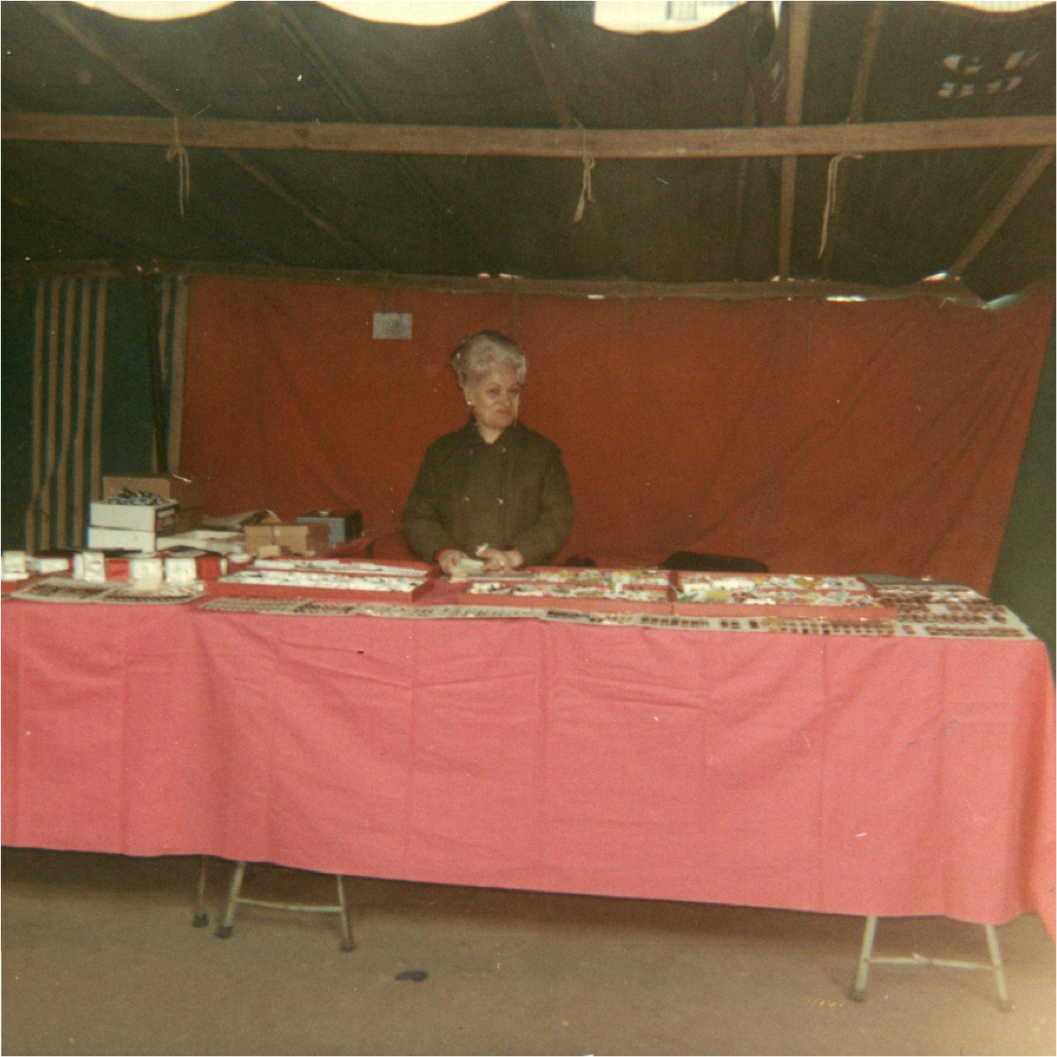
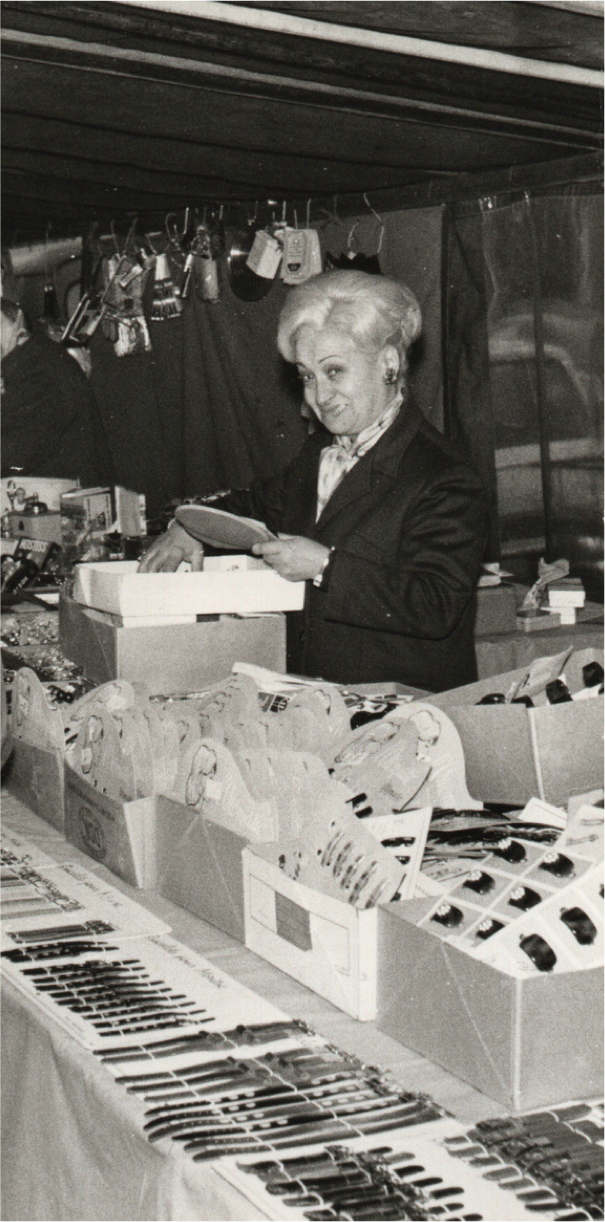
After 1960, she worked as a street vendor. She took over her father’s market stalls.
Suzanne retired on January, 1984. In order to claim her pension, she had to prove that she had been deported during the war.
She lived at 33 rue Kléber in Montreuil, in the Seine-Saint-Denis department of France/
In 1988, Suzanne’s daughter died of cancer – to that day, Suzanne refused to talk about her biological father.
Suzanne died in 1995.
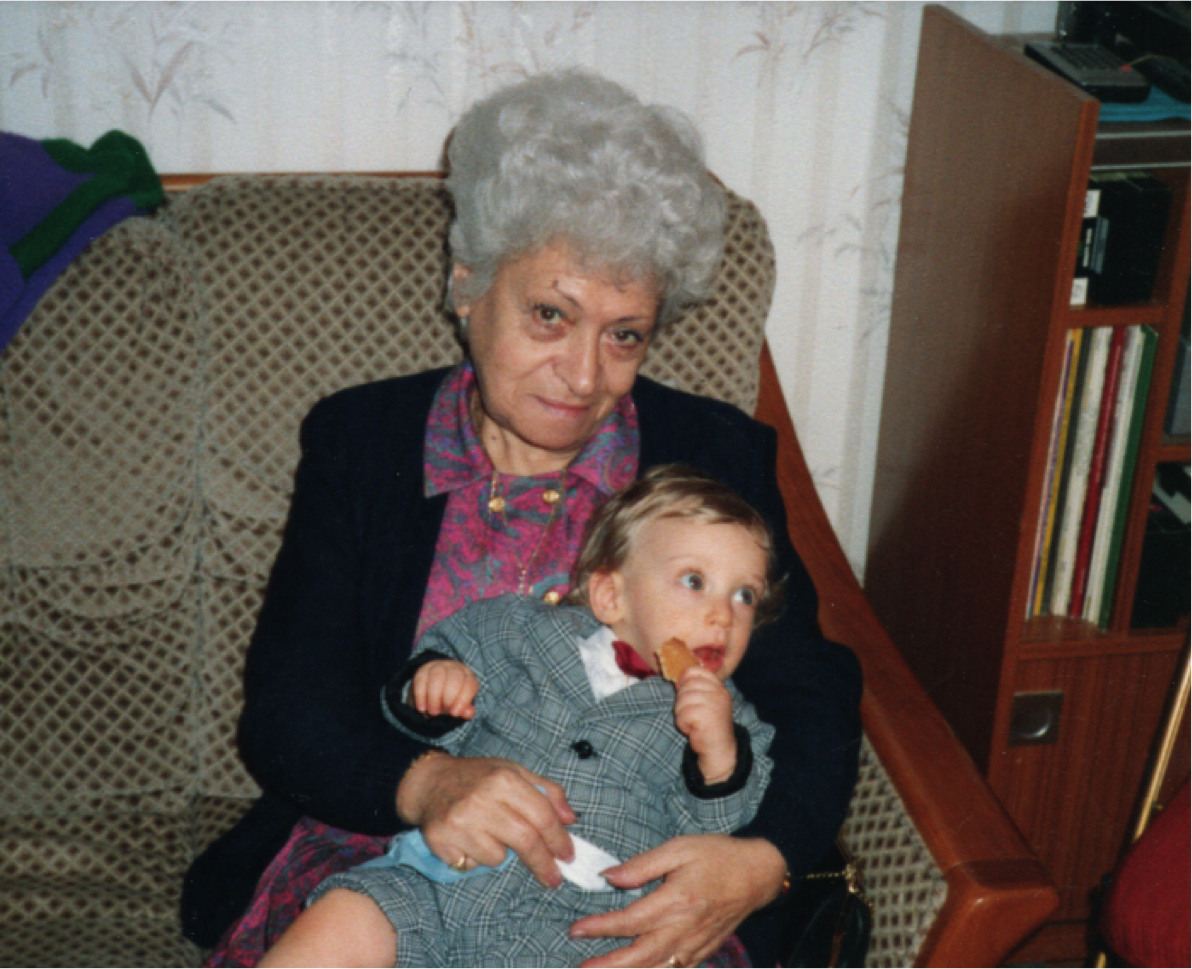
Photo of Suzanne in 1993
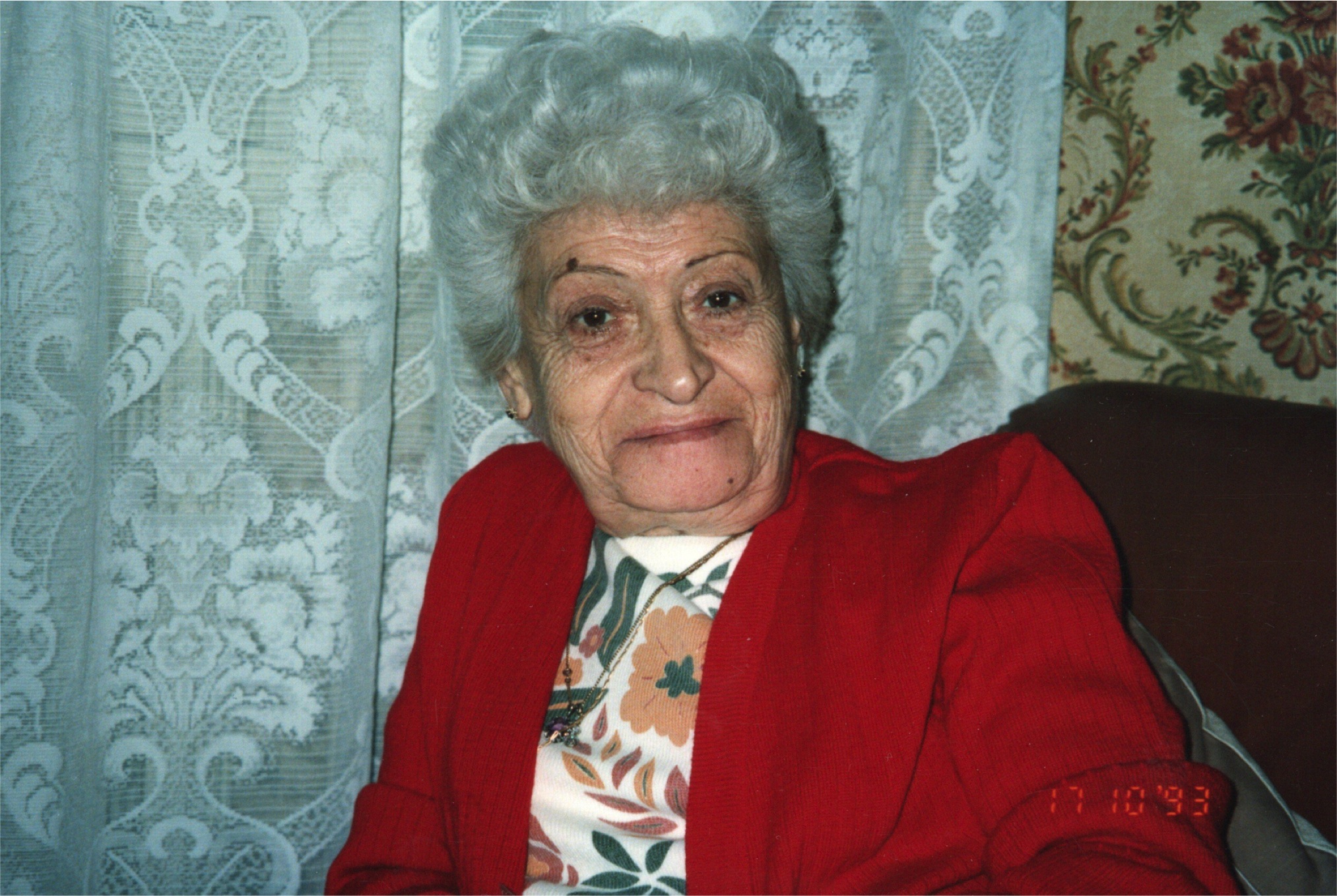
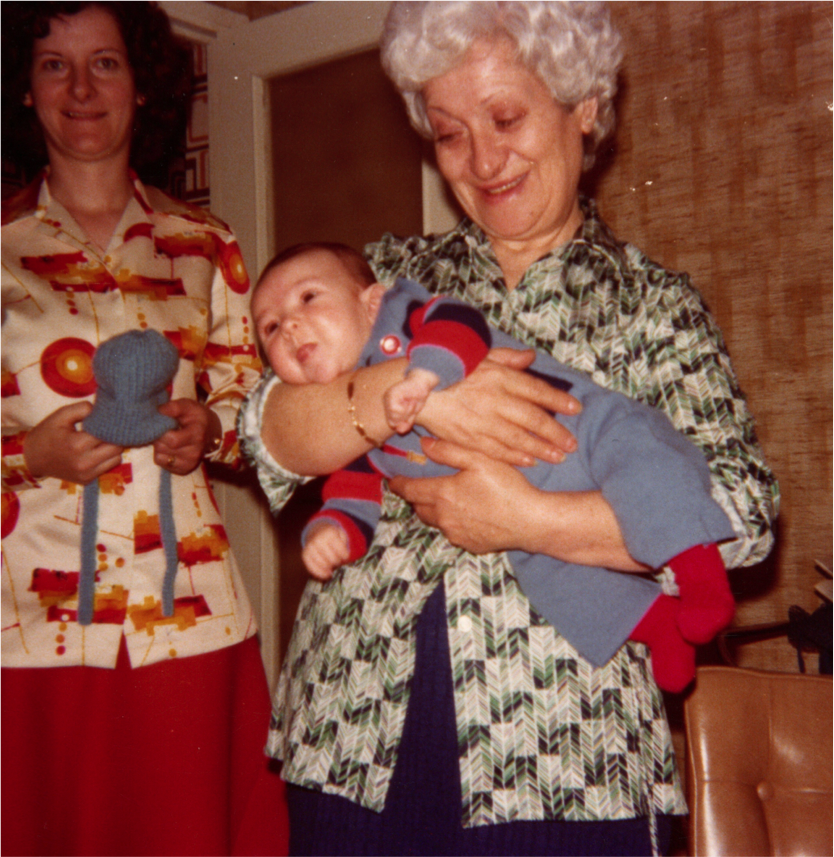
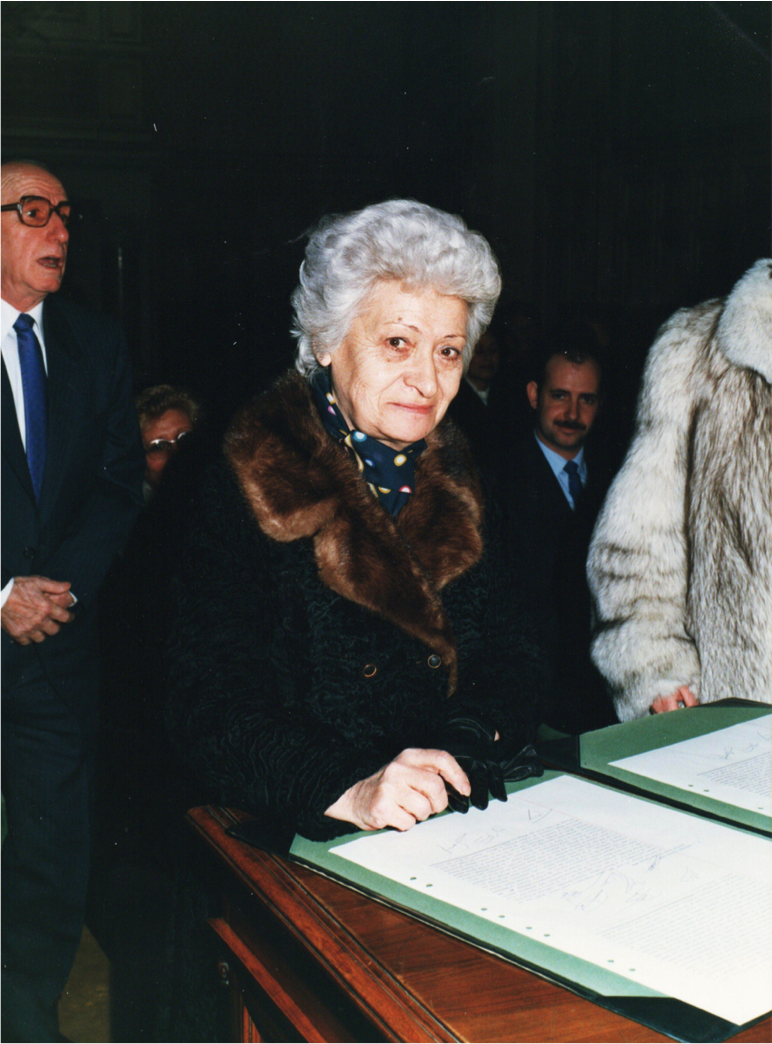
Photos of Suzanne in November 1977, in 1984 and in the late 1980s, on vacation at the beach
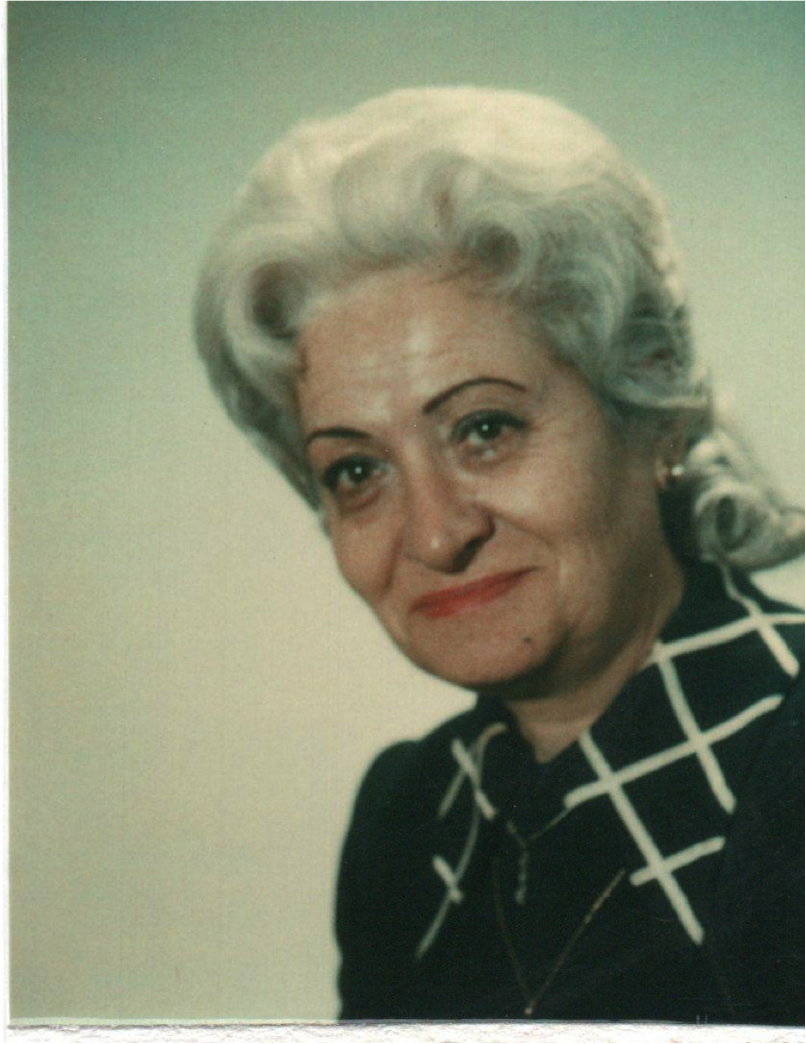
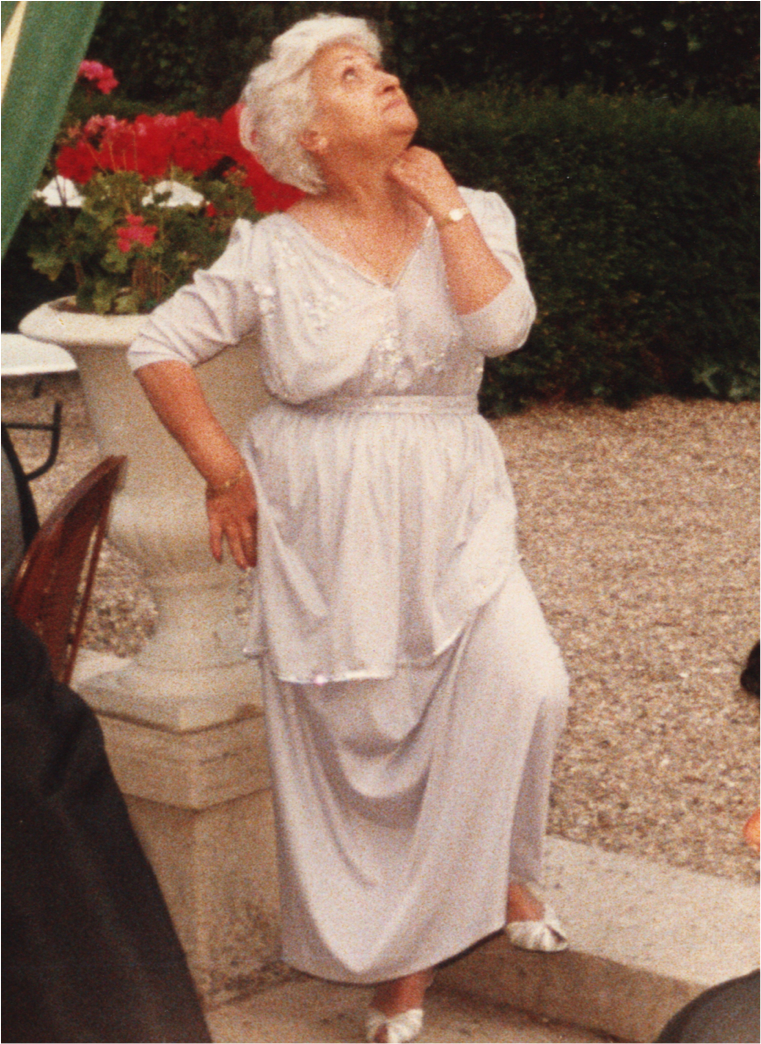
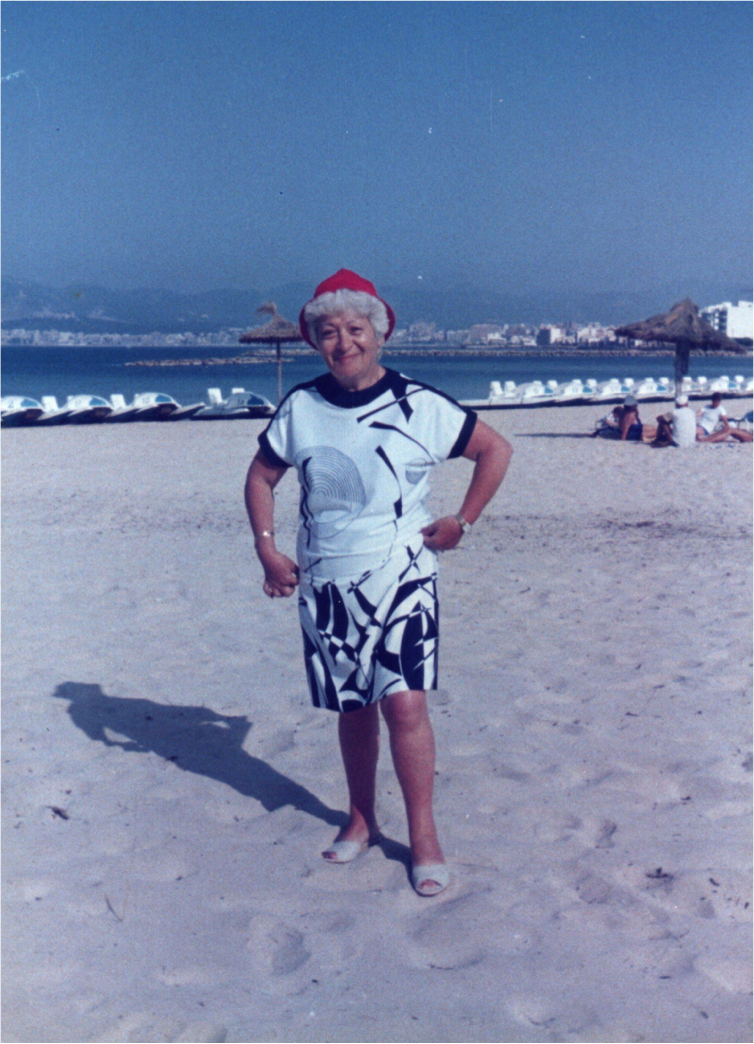
More photos of Suzanne, kindly provided by her nephew, Bernard Fryscher, for the Convoy 77 project
Thanks
We would like to thank Mr. Bernard Fryscher, Suzanne’s nephew, who kindly came to meet us in Ozoir, along with Mr. Klajnberg, at a deportation remembrance event.