Français
 Polski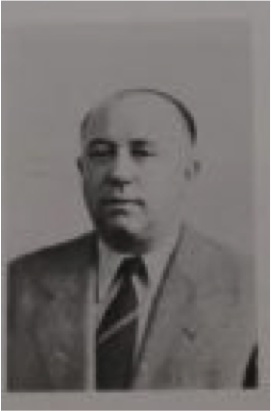
Isaac Albert BROÏDO
Albert Isaac Broïdo (born Broÿdo) was among the 1306 Jews who were deported on Convoy 77, last large convoy to leave France for the Auschwitz-Birkenau extermination camp. He and his family were Holocaust victims.
Photo: Isaac Albert Broïdo © French Defense Historical Service in Caen, Normandy.
I. WHO WAS ISAAC/ALBERT BROÏDO?
Isaac was born at 5pm on April 4, 1905, in the maternity ward of Rothschild Hospital in the 12th district of Paris[1], into a family of Lithuanian Jews. His parents were Noël Broÿdo (also known as Notel Nathan Broydo), who was born on September 18, 1878, in Vilnius, and Anna Louner (also known as Guena Louner), who was also born in Vilnius[2]. According to Albert’s sister, they moved to France because Notel was involved in revolutionary activism, and had false identity documents provided by the Orthodox Church.
When Isaac was born, his family was living at 12 Rue du Plâtre, in the Marais district. His father was a bric-a-brac dealer and secondhand clothes dealer, while his mother Anna was a “housewife”, meaning that she took care of their home and the children. However, according to her granddaughter Martine, Anna “sold secondhand clothes at the Carreau du Temple.” They both survived the war and died in the 11th district of Paris, he on on April 4, 1950, and she on March 28, 1947[3].
Isaac was the eldest of three siblings: he had one brother, Léon Broÿdo, who was born the 4th district of Paris in 1913, and one sister, Suzanne Broÿdo (married name Képès), born in 1918. When Léon Broÿdo married Marguerite Rabinovitch in 1937, Albert was a witness at the wedding[4]. Léon, like his brother, was involved in the Resistance[5]. He was arrested at least once in 1942 and was sent to Drancy camp[6], from which, according to his niece Martine, he was one of the few people who managed to escape. Léon survived the war and died in the 16th district of Paris in 1980. Their sister, Suzanne, became a leading gynecologist and feminist who campaigned for women’s rights to choose what happened to their own bodies and was closely invoved in the French Family Planning Movement known as the Planning Familial. She married Adam Képès, with whom she had two children. She and her family took refuge in Montpellier during the war[7]. Suzanne testified for the Shoah Memorial Archives[8] and spoke about her family. She also filled in testimonial sheets for Claude Broïdo and Brana/Blanche Broïdo née Weintraub at Yad Vashem[9]. She died in 2005.
Isaac/Albert spent little time at school, and after suffering anti-Semitic abuse from his classmates, he never went back. He began his working life as a street vendor: he applied for a license when he was just 16, and kept it until 1930.
In 1926, his business expanded. At the age of 21, he founded Broïdo & Fils, a wholesale secondhand clothing firm[10]. He drove a car, which was unusual at the time, and on May 10, 1927, in Pont-Hubert, in the Aube department, he knocked over a young cyclist, for which he was fined 50 francs and ordered to pay damages of 7,500 francs[11].
As he and his family had been naturalized as French citizens, Albert had to do his national service. He was assigned to the 71st Infantry Regiment in Saint-Brieuc in Britttany, then seconded to the 6th Section as secretary to the Chief of Staff in Minister of War’s private office. After serving his eighteen months, he was demobilized. He went home to his young wife, Brana, known as Blanche, Weintraub (or Veintraub), who he had married on August 28, 1924, at the town hall in the 4th district of Paris. They had their first child, Marc, on January 13, 1928[12]. They lived at 42, rue de Turbigo, in the 3rd district of Paris[13]. Brana was a shorthand typist, and we wonder if they worked together. In common with many other Jews who wanted to integrate into French society, they adopted French first names: he chose Albert while she opted for Blanche.
Albert continued to climb the career ladder. He became a founding member and secretary of the French Trade Union Chamber of Used Clothing and Related Goods Dealers. In 1930, he diversified further and, in partnership with Jean Guerber, founded Établissements SPIP (Société Parisienne d’Importation de Porcelaines), a wholesale glassware and porcelain business based at 39 Rue Grange-aux-Belles in Paris. He became a master glassmaker in 1936 and founded and managed a fine glass and crystal manufacturing firm called Verreries et Cristalleries de la Seine.
Albert was now a successful businessman, a captain of industry[14]. He also appears to have worked with his brother Leon, who was also a businessman, possibly in a family firm[15].
In 1938, as the international political climate became increasingly volatile, he was drafted back into military service, but was promptly sent home again. In August 1939, he was drafted into the 662nd Motor Transport Company. In September, the Allies declared war on Germany. Albert, although serving as a soldier, demonstrated his creative genius: he founded the first mobile military cooperative, according to his daughter. He was not deployed at the front, but instead was assigned to an advisor at the Seine Prefecture.
In April 1940, he was assigned to “special duty for the manufacture of military equipment.” In July, when France surrendered, he was demobilized.
His son Claude was born on May 5 1940, in Paris[16].
II. A MEMBER OF THE FRENCH RESISTANCE
In his military service records for the period 1940-1945, Albert is listed as a reserve brigadier in the French army[17]. However, he also made a name for himself through his involvement in the French Resistance, which he joined at the beginning of the Occupation: in doing so, he put his family at risk.
Initially, Albert joined the Resistance as part of a network led by Ernest Pruvost, who would later be made an Officer of the Legion of Honor, a Companion of the Liberation, and the National Chief and Official Liquidator of the EM P.T.T. Network. They worked together to produce fake identity cards and counterfeit food ration cards. Within the network, Albert held the position of 3rd class mission officer and the rank of lieutenant. Unfortunately, in 1941, the authorities spotted him, after which he had to leave the network[18].
On August 20, 1941, his brother Léon was arrested during a major roundup in the 11th district and interned in Drancy camp.
Albert fled to Nonancourt and, with the help of his former network leader in Paris, joined a fresh resistance network with which he fought from September 1, 1941 through December 1942. He was involved in operations carried out by the FCC (French Fighting Forces, created by General de Gaulle in London in 1942). He was a second lieutenant, and fought alongside Captain Henri Le Veille, the Regional Underground Leader for Normandy.
Of course, Albert and his family carried forged identity documents that masked their Jewish background. Brana, known as Blanche, who was in reality born in Alexandria, in Egypt, was, according to her new forged papers, born in Lens. Albert, “afraid of being arrested” for his involvement in the Resistance, moved his family to safety in the unoccupied “free” zone in the southern half of France and then returned to Normandy to continue his “activities with Monsieur Le Veille.”
In late 1942, on the advice of his leader, Albert moved south to be with his family in Cannes. From December 1942 to June 1944, he “liaised” with Roger Chevalier[19] and worked for him in the Mithridate network. He was responsible for finding suitable sites for covert transmitters and then for setting them up. He also provided valuable information on “the movements of German troops and anti-aircraft units”[20]. Unfortunately, however, the Gestapo found out about his network, probably as a result of a tip-off, and started to tail him. This was what led the German police to the Broïdo family home, the Villa Cacho Maïo, on Avenue du Commandant Bret in Cannes[21].
III. THE ARREST
On June 27, 1944, the Gestapo arrived at the villa and discovered that, on top of Isaac’s resistance work, the family was Jewish. In a letter he wrote to the Minister of Veterans Affairs on December 12, 1955, Albert explained:
“In late June 1944, someone knocked on my door one morning shouting, ‘Police!’ My first instinct was to run away, but after walking around for a few minutes and thinking it over, I went back, because my wife and two sons were at home.
What exactly were the questions that the police, whom I later discovered were the Gestapo, had asked my wife? I never found out, but when I arrived, two men greeted me with guns drawn and said: “So you’re Jewish, it seems, on top of everything else!” And then they took me, my wife, and my youngest son, who was 5 years old, to the Hotel Montfleury[22] in Cannes, which was the Gestapo headquarters.
Meanwhile, my other son, who was 16 at the time and also an activist, had managed to climb onto the roof and, stark naked, lay flat on his stomach, and thus avoided being found”[23].
After they left, a Gestapo agent and a Frenchman raided the villa[24].
The Broïdo family was then transferred to the Excelsior Hotel in Nice, where a number of other Jews were also being held. The Germans confiscated all their belongings, including Brana’s jewelry and other valuables[25]. Isaac was then interrogated for several days: he was violently punched and beaten with sticks to make him divulge information about his Resistance activities. He was hit all over with bullwhips, in particular around his kidneys and head, and lost several teeth[26]. According to a post-war testimony by one of his fellow resistance fighters, Albert gave the Gestapo no information whatsoever about the Mithridate network during the interrogation[27]. He cunningly claimed to have been living in hiding in Cannes because he was Jewish.
IV. INTERNEMENT AND DEPORTATION
Thus began the Broïdo family’s internment and deportation. From July 12 through 30, 1944, Albert was interned at the Drancy camp, where he was assigned the serial number 25,074. As far as the authorities were concerned, the family was interned because they were Jewish. Their forged identity documents were probably not found, as on those, Isaac was shown as Albert and Brana as Blanche. Brana’s also included a French-sounding maiden name, “Veiret,” rather than her real name, Weintraub, which would have given away the fact that she was of foreign descent[28].
During his time in Drancy, Albert compiled an inventory of the property that the Gestapo had confiscated from him in Nice: “a cigarette case, a polished platinum ring, a polished platinum brooch, two platinum and rose gold earrings, a gold brooch, a gold chain, a blue precious stone, and various foreign bronze coins”[29].
Albert and his family spent some twenty days in the Drancy camp in room 1 on staircase 3[30].
On July 31, 1944, he was deported to Auschwitz together with his wife Brana and his son Claude.
They were crammed into a cattle car with about sixty other people, with no sanitary facilities and barely any water, food or fresh air. Claude was in tears and refused to leave his father’s side.
The convoy arrived in Auschwitz-Birkenau during the night of August 3-4. As soon as they got off the train, Albert was separated from his wife and son, who were sent to the gas chambers and murdered that same day, while Albert was selected to enter the camp to work. From that moment on, his life became a living hell: humiliation, abuse, hunger, cold, lice, and disease were all part of daily life for anyone who was not murdered on arrival.
After being shorn and shaved all over, Albert had the serial number B-3705 tattooed on his arm.
On November 8, 1944, he was assigned to the “Bomben Kommando,” a very demanding work detail where prisoners had to unearth unexploded bombs. He later recounted how the SS abused the prisoners:
“The SS guards responsible for supervising our work hounded us constantly, kicking our most sensitive body parts and hitting us with rifle butts and truncheons.”[31].
Albert remained in Auschwitz until January 1945, when he was forced to take part in the “death marches” to a series of other camps: Gross Rosen, Bockenheim, Hirschberg, and, by February, Reichenau. Lastly, as the Germans continued to flee from the advancing Red Army, he arrived at Buchenwald camp on March 7, 1945, where he was assigned the prisoner number 134,075[32]
After the war, In his application for the status of resistance fighter, testimonies from two other former deportees attest to his sense of solidarity with other prisoners. In a statement written on February 24, 1956, Émile Fournier confirmed that he knew Albert in early 1945 in Buchenwald . They spoke frequently in Block 60, where Albert helped to boost the men’s morale.[33] Another fellow prisoner, Colonel Camille Sauterau, a pilot and Resistance member, described how several prisoners survived on the strength of Albert’s advice:
“He tried, in particular, to convince all the resistance members among the deportees in Block 63 not to allow themselves to be led away during the evacuations of the [Buchenwald] camp but to remain where they were. Without a doubt, many of them followed his advice and in doing so saved their lives.”[34]
The American army finally liberated Isaac Albert Broïdo on April 11, 1945.
He was so weak that he could barely walk when Christian Pineau (who went on to serve in French ministerial positions between 1945 and 1958) decided to take him out of the camp with him, he later explained to his daughter. He was repatriated by train to the Orsay station in Paris on April 22, 1945[35]. He had lost around 44 pounds in weight.
When he arrived at the Lutetia Hotel in Paris, a luxury hotel that the Germans had previously occupied but General De Gaulle then requisitioned for use as a reception center for returning deportees, (or possibly at the Daniel Hotel – sources differ), his sister Suzanne, who was there to pick him up, did not even recognize him.
This was the start of a new chapter in his life: the process of claiming his rights as a deported person and Resistance fighter.
V. OFFICIAL RECOGNITION
Back home in France, Albert returned to his second-hand clothing business, which was a valuable asset at a time when ration coupons were still needed to buy fabric and there was a clothing shortage. In 1955, he stated in a letter that he was honorary president of the “Secondhand Clothing” section of the National Salvage Federation. He also ventured into the textile industry. He founded and managed a fabric import company called Sotexinco, which he continued to run until he retired, shortly before he died.
He gradually rebuilt his personal life too, reconnecting with his son Marc (who got married on July 23, 1949) and getting married again himself. On March 25, 1948, in Paris, he married Gilberte Valentine Marchand, who was born on March 25, 1916, in Nonancourt in the Eure department of France. Could he have met her during his second spell in the Resistance, between 1941 and 1942? The couple went on to have two daughters: Martine, born in 1950[36] and another born in 1952.
Albert and his new family went back to live in his pre-war home at 33 Boulevard Saint-Martin in Paris. Between 1955 and 1960, his family moved to Cannes, although Albert himself continued to live and work in Paris.
In the 1980s, according to official records, he lived at 54 Boulevard Suchet in the 16th district of Paris[37]. He also pursued his professional career, working as an advisor to the French Ministry of Foreign Trade in 1956, for example[38], as an adjudicator at the Seine Commercial Court and a delegate to the International Recovery Bureau.
At the same time as rebuilding his career and his family life, he embarked on the difficult process of having himself and his missing family members officially recognised as deportees.
Albert was interned in Drancy from June 27 to July 30, 1944, deported on July 31, 1944 and did not return to France until April 21, 1945. In 1946, he applied for deportee status for himself, his wife Brana/Blanche and his son Claude. He also claimed compensation for the goods looted from the Villa Cacho Maïo in Cannes and filed a lawsuit against the perpetrators[39].
In 1947, he requested that Brana/Branche and Claude be officially declared to have “Died for France” and be granted “political deportee” status. The first was granted in 1947[40] and the second in 1953[41].
Starting in 1955, Isaac Albert embarked on another series of official procedures, this time to request that he be granted the status of “Deported Resistance fighter”[42]. According to the evidence he submitted, Albert had difficulty proving his involvement in the Resistance because he had to wait for his network leaders to return to France in order to testify to his efforts: Ernest Pruvost for the EM P.T.T. network, Henri Le Veille for the regional underground network in Normandy, and Roger Chevalier for the Mithridate network. Ernest Pruvost, for example, explained that he had been unable to endorse Albert Broïdo earlier because he did not even know until 1949 that he had returned from the camps and survived. Unfortunately, however, this all came too late, as the closing date for certification of Resistance members had already passed[43]. After many explanatory letters and witness statements (he was very fortunate in that his fellow resistance fighters had survived), Albert eventually obtained his Deported Resistance Fighter card, number 100128737, on January 28, 1956[44].
Albert had also suffered severe abuse during his interrogation and in the seven different concentration camps he was held in, and in particular in Grossbreitenbach and Buchenwald. On February 28, 1956, he therefore applied for a rank equivalence certificate to validate his military service and war injuries[45]. On March 20, 1956, he received his first validation certificate and recognition of war injuries. This allowed him to apply for payment[46].
Later that year, he received his validation certificate for his services, campaign, and injuries as a deported or interned Resistance member, bearing the number Rectif 38.607, which he renewed several times. He was awarded a 100% military disability pension plus 130% for deportation-related illnesses. He suffered from pituitary-related obesity, impaired hearing, and Targowla syndrome (an extreme degree of retentiveness and recall, with unusual clarity of memory images characterized by violent episodes of vivid flashbacks). He also suffered from back and hip pain, pelvic, intestinal, and liver problems with vomiting, diarrhea, foot and shoe problems, and a heart condition[48]. On April 22, 1987, he applied for a further increase in his disability pension.
On July 26, 1957, he was named a Knight of the French Legion of Honor. A decade or so later, on April 10, he was promoted to Officer of the Legion of Honor.
VI. COMPENSATION FOR THEFT AND LOOTING
Starting in 1946, Albert endeavored to recover the assets (“a fairly large sum of money and a significant amount of jewelry”) that the Gestapo seized when he was arrested. “During my time in Drancy camp,” he wrote to the Office of Private Property and Interests, “I drew up an inventory, albeit incomplete, and was given a receipt for it, but this was taken away from me when I arrived in Auschwitz.”[49]. He said he was aware, however, that “it is possible to find duplicate lists of items that the Germans took.” He therefore asked to be told “where the paperwork from Drancy camp is kept” in order to substantiate his “claim.” Such duplicates do indeed exist: they are available on the Shoah Memorial website, listed under Albert’s name.
After the Liberation, the two looters[50] were prosecuted for ransacking the house in Cannes and stealing “a box hidden in the garage.” In parallel with this, Albert filed a civil lawsuit. The Frenchman was acquitted and the German was found guilty. The court ordered him to pay Albert 1,875,000 francs in damages. However, as the German defendant could not be traced, The French state was responsible for paying the damages. However, as Albert had already received a lump sum compensation payment of 60,000 francs after the war, he was not entitled to claim any further compensation from the state.
Albert also helped his son Marc put together a claim for compensation for loss of property on behalf of his mother, Blanche, as he was her “sole heir.” The fact that Albert had remarried meant that he was no longer entitled to compensation or reparations related to his first wife[51]. Marc, on the other hand, was entitled to claim “half of the loss suffered, i.e. 937,500 francs.”, but we do not know whether or not he succeeded.
VII. A CHANGE OF NAME
At some point, Isaac/Albert decided to adopt the French version of his first name: he officially changed it to Albert (which he had been called since he was a child), and this was ratified by the Seine Civil Court on September 7, 1956. He also changed the surname “Broÿdo” to the French version, “Broïdo,” on behalf of himself, Brana/Blanche, and Claude, as well as on his father’s birth certificate and death certificate, and on all his and Marc’s official paperework. This was completed on May 16, 1958 (and published in the French Official Gazette on July 25, 1958).
His brother, Léon, also changed his surname to Broïdo. It is worth noting that in reality, Isaac/Albert had been using the first name of Albert and the spelling Broïdo since at least 1925[52].
In 1979, Albert sadly lost his son Marc, who died in Paris[53].
A decade later, on February 5, 1989, Albert Broïdo died of a heart attack just outside Marseille, while on a train home to Cannes. He was 83 years old[54]. According to his daughter Martine, he had only recently stopped working. He had previously suffered a heart attack in 1960.
Albert Broïdo, who never turned his back on his Jewish roots nor hid his love for France, was, says his daughter Martine, buried according to Jewish tradition with the French tricolor draped over his coffin at the funeral.
Notes & references
[1] Albert Broïdo © French Defense Historical Service in Vincennes, GR 16 P 923 80 (17)
[2] Brana Blanche Broïdo, © Victims of Contemporary Conflicts Archives Division of the French Ministry of Defense Historical Service, in Caen, Dossier n°21 P 431 077
[3] Isaac Broïdo, Geneanet website: Albert Broïdo : généalogie par Nicole DUFOURNAUD (dufournaudn) – Geneanet
[4] Isaac Broïdo. Léon was widowed on December 18, 1970, but married again afterwards. Geneanet website: Albert Broïdo : généalogie par Nicole DUFOURNAUD (dufournaudn) – Geneanet.
[5] The French Defense Historical Service in Vincennes also holds a file on Léon Broydo, but the teachers and students have not read it.
[6] Léon Broïdo © Shoah Memorial, Paris (FRAN107_F_9_5683_114081_L)
[7] Albert Broïdo, Shoah Memorial, Paris (s. d.). https://ressources.memorialdelashoah.org/notice.php?qt=dismax&q=bro%C3%AFdo&start=1&rows=1&fq=diffusion%3A%28%5B4%20TO%204%5D%29&from=resultat&sort_define=&sort_order=&rows=
[8] We were unable to study the filmed testimony in detail. It may contain more information to supplement this biography.
[9] Blanche Weintraub (married name Broïdo) © Yad Vashem / Claude Broïdo © Yad Vashem
[10] Information provided by his granddaughter, Martine Broido, who has researched her family history.
[11] La Dépêche de l’Aube, December 31, 1927. He is mentioned under the name of Albert Broïdo.
[12] Brana Blanche Broïdo © Victims of Contemporary Conflicts Archives Division of the French Ministry of Defense Historical Service, in Caen, Dossier n°21P431077(49)
[13] Brana Blanche Broïdo © Victims of Contemporary Conflicts Archives Division of the French Ministry of Defense Historical Service, in Caen, Dossier n°21P431077(24)
[14] Albert Broïdo © French Defense Historical Service in Vincennes, GR 16 P 92380 (7)
[15] This is a conjecture on the part of some students, who noticed that Léon Broydo’s Drancy file also stated that he was a businessman, but historian Laurence Klejman found no evidence to support it.
[16] Claude Broïdo © Victims of Contemporary Conflicts Archives Division of the French Ministry of Defense Historical Service, in Caen, Dossier n°21P43107876973
[17] Albert Broïdo © French Defense Historical Service in Vincennes, GR 16 P 92380 (7-8)
[18] Albert Broïdo © French Defense Historical Service in Vincennes, GR 16 P 92380 (7-8) / Albert Broïdo © French Defense Historical Service in Vincennes, GR 16 P 92380 (12)
[19] He was awarded the French Military Medal and the French War Cross (with 3 commendations).
[20] Albert Broïdo © French Defense Historical Service in Vincennes, GR 16 P 92380 (7-8) / Albert Broïdo © French Defense Historical Service in Vincennes, GR 16 P 923 80 (32) / Albert Broïdo © French Defense Historical Service in Vincennes, GR 16 P 923 80 (31)
[21] Albert Broïdo © French Defense Historical Service in Vincennes, GR 16 P 92380 (7-8) / Albert Broïdo © French Defense Historical Service in Vincennes, GR 16 P 92380 (31)
[22] L’agent de police qui enquête le 11 février 1953 sur son arrestation indique que la famille a été menée à l’hôtel Excelsior, là où sont amenés les Juifs arrêtés.
[23] Isaac Albert Broïdo © Victims of Contemporary Conflicts Archives Division of the French Ministry of Defense Historical Service, in Caen, Dossier n°21 P 718 454
[24] Les noms des coupables sont cités dans les archives mises en copie mais nous avons choisi de ne pas les nommer directement. Voir plus loin.
[25] Isaac Albert Broïdo © Victims of Contemporary Conflicts Archives Division of the French Ministry of Defense Historical Service, in Caen, Dossier n°21 P 718 454)
[26] Albert Broïdo © French Defense Historical Service in Vincennes, GR 16 P 92380 (15)
[27] Albert Broïdo © French Defense Historical Service in Vincennes, GR 16 P 92380 (31)
[28] Isaac Albert Broïdo © Shoah Memorial, Paris (accessible en ligne) / Broïdo, Brana © Mémorial de la Shoah (FRAN107_F_9_5683_114079_L)
[29] Isaac Albert Broïdo © Shoah Memorial, Paris (available on line)
[30] Brana Broïdo, © Shoah Memorial, Paris (FRAN107_F_9_5683_114079_L)
[31] Albert Broïdo © French Defense Historical Service in Vincennes, GR 16 P 92380 (15)
[32] Isaac Broïdo Albert © Victims of Contemporary Conflicts Archives Division of the French Ministry of Defense Historical Service, in Caen, Dossier n°21 P 718 454
[33] Albert Broïdo © French Defense Historical Service in Vincennes, GR 16 P 92380 (10)
[34] Albert Broïdo © French Defense Historical Service in Vincennes, GR 16 P 92380 (11)
[35] Isaac Broïdo © Victims of Contemporary Conflicts Archives Division of the French Ministry of Defense Historical Service, in Caen, Dossier n°21P71845476971 (0008). See also the testimony of his daughter, Martine Broïdo.
[36] Delphine Ouazan-Labrosse, Shoah Memorial, Paris (s. d.-b). https://ressources.memorialdelashoah.org/notice.php?q=identifiant_origine:(FRMEMSH0408900N484366) : Delphine Ouazan-Labrosse, the daughter of Martine Broïdo, who is herself the daughter of Albert Broïdo, made several bequests to the Shoah Memorial on behalf of her mother Martine (photographs of Claude, Brana, and Isaac Albert). The teachers involved in the project discovered this after conducting their final checks. During the closing stages of their joint project, the students and teachers had thought that Albert and his wife Gilberte had never had children. See Martine Broïdo’s testimony about her father.
[37] Albert Broïdo © French Defense Historical Service in Vincennes, GR 16 P 92380 (5) / Albert Broïdo © French Defense Historical Service in Vincennes, GR 16 P 92380 (22-23)
[38] Albert Broïdo © French Defense Historical Service in Vincennes, GR 16 P 92380 (10)
[39] Isaac Albert Broïdo © Victims of Contemporary Conflicts Archives Division of the French Ministry of Defense Historical Service, in Caen, Dossier previously cited.
[40] Brana Blanche Broïdo © Victims of Contemporary Conflicts Archives Division of the French Ministry of Defense Historical Service, in Caen, Dossier n°21 P 431 077
[41] Brana Blanche Broïdo © Victims of Contemporary Conflicts Archives Division of the French Ministry of Defense Historical Service, in Caen, Dossier n°21 P 431 077
[42] Isaac Albert Broïdo © Victims of Contemporary Conflicts Archives Division of the French Ministry of Defense Historical Service, in Caen, Dossier n°21 P 718 454
[43] Albert Broïdo © French Defense Historical Service in Vincennes, GR 16 P 92380 (12)
[44] Isaac Broïdo © Victims of Contemporary Conflicts Archives Division of the French Ministry of Defense Historical Service, in Caen, Dossier n°21 P 718 454
[45] Albert Broïdo © French Defense Historical Service in Vincennes, GR 16 P 92380 (10)
[46] Albert Broïdo © French Defense Historical Service in Vincennes, GR 16 P 92380 (25)
[47] Albert Broïdo © French Defense Historical Service in Vincennes, GR 16 P 92380 (22-23)
[48] Albert Broïdo © French Defense Historical Service in Vincennes, GR 16 P 92380 (22-23)
[49] Isaac Broïdo © Victims of Contemporary Conflicts Archives Division of the French Ministry of Defense Historical Service, in Caen, Dossier n°21 P 718 454.
[50] According to a police report and the testimony of one of his leaders in the Resistance, these were two people knew Albert well. Were they also the ones who turned him in?
[51] Isaac Albert Broïdo © Victims of Contemporary Conflicts Archives Division of the French Ministry of Defense Historical Service, in Caen, Dossier n°21 P 718 454
[52] Other people’s names were spelled this way in the 1920s and 1930s, but it is but we do not know if they were related.
[53] In memory of Mr. Marc Broïdo. (s. d.). https://www.libramemoria.com/defunts/broido-marc/1d52e1e4576f4e2aa9d635091e7bf3bc
[54] In memory of Mr. Albert Marc Broïdo. (s. d.). https://www.libramemoria.com/defunts/broido-albert/164057eda3084301bfc4592d0b6bfc9f