Français
 Polski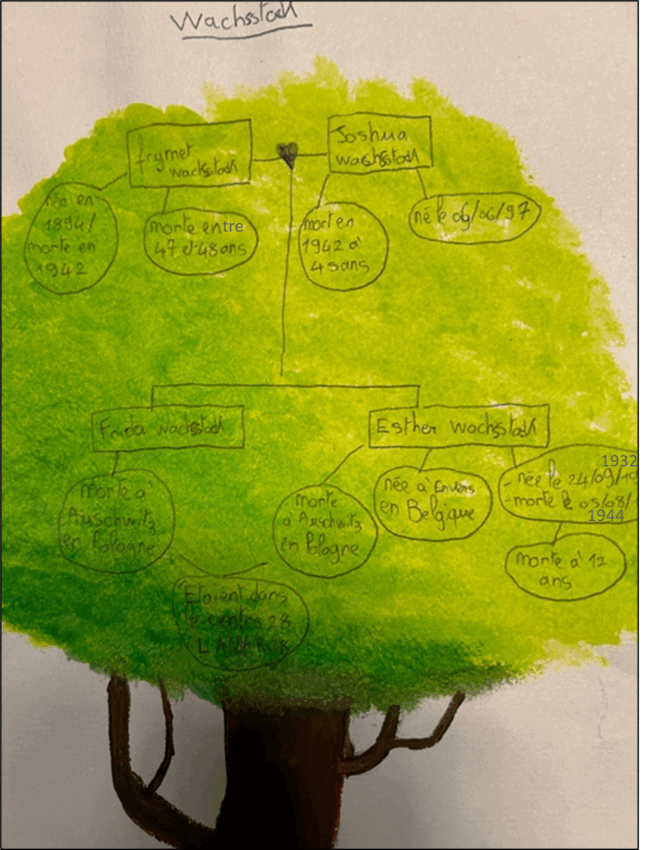
Esther WACHSSTOCK
Introduction
Past events are as vertiginous as space, and their imprints on the memory are as inadequate as words: I discovered that we remember.
Pierre Michon, Vies minuscules, 1984, éd. Gallimard, collection Folio, p. 226.
While terms such as “the Second World War”, “the Holocaust”, and “deportation” are familiar to even our youngest students, helping them to grasp the profound horror of such events is a much bigger challenge. How can we effectively convey to younger generations events that seem to them so remote, so abstract? How can we bring to life the pages of their history textbooks to, which describe how millions of people died simply because others objected to their very existence? In an increasingly unstable world, how can we help the students to understand that remembering the past is more important now than ever before, if we are to avoid repeating the same mistakes now and in the future?
Over a period of several months, the 9th grade students at the Fernand-Léger middle school in Vierzon, in the Cher department of France, immersed themselves in the story of a young Jewish girl, Esther Wachsstock, using archived records provided by the Convoy 77 nonprofit organization. This project, on which they worked in both history and French classes, gave them an opportunity to study historical documents, compare the various sources, categorize them, and then use them as a basis for a fictional personal diary. They became investigators into the past and writers in the present as they sought to retrace and better understand the life journey of a young girl who was deported when she was even younger than they are now.
It was not easy for the students to decipher the historical documents or to write the diary entries. They soon realized that the information available about Esther Wachsstock was limited and, in some cases, contradictory. Another problem arose when they began writing the diary: Esther was only ten years old when she arrived at the first U.G.I.F. center.
How could they recount what happened—the arrests, the deportations, the climate of fear—in the words of a child? The students decided to add some fictional details to flesh out the diary entries, while at the same time sticking to the facts in the source material and staying true to the historical context. They invented some of the people mentioned by name (“Serruya” and “Rosensweig”), just as they gave Esther a personality that was probably nothing like her, in reality.
We would like to caution our readers about those last two points: this diary was not intended to be a fully sourced or carefully structured historical account. If any descendants or acquaintances of the families named are reading this, we sincerely hope that they will not take offense at our approach, but instead take a generous view of our work. We wanted, within the scope of our knowledge and the time allocated to this project, using both the resources provided by the Convoy 77 team and also literature from that period (such as The Diary of Anne Frank and Voyage à Pitchipoï by Jean-Claude Moscovici), to give a voice to people who never had one, or whose words were deliberately forgotten or even erased. If this voice is fictitious, so be it; the decision was made before we even began the project, since we knew so little about Esther’s life, beyond what was recorded in a few official records. The real challenge here was to put ourselves in this young girl’s shoes as best we could: what was life like for her in Drancy camp? In the UGIF homes? How did she get on with her sister, Frieda ? Did she enjoy her outings? What did she worry about, what was she afraid of, what made her happy? These were the questions we set out to answer in this diary in some small way. It is up to the reader to decide for themselves to what extent we succeeded..
In the first section, we present our research findings and the resulting topics for further reflection. This section was coordinated by Ms. Mahieu, the students’ history and geography teacher. Then, in the second section, we invite you to delve into Esther Wachsstock’s fictional diary, with a series of entries relating to key moments of her life in France. These entries contain some of the information gleaned from the historical records alongside much fictional content. At the end, you can read some of the students’ comments, written after they completed the first draft of the diary, about the writing process and their thoughts on the project as a whole. This section was put together by Ms. Tourneur, their French teacher. All of the work was done by the students; the teachers’ role was limited to formatting and making minor grammatical corrections and changes to the syntax.
We hope you find it an interesting read,
The 9th grade students of class A at the Fernand-Léger middle school in Vierzon,
Ms. Mahieu and Ms. Tourneur
Please note: the passages in square brackets were added following helpful feedback from historian Laurence Klejman in order to better explain the historical context and using sources that were not available to us.
Section 1: the historical biography of Esther Wachsstock
The Wachsstock family, a Polish Jewish family in Belgium
Esther Wachsstock was born on January 10, 1932 in Borgerhout, which has since become a district of Antwerp, in Belgium. Her parents were Jozua (Szyja) Wachsstock, who was born on June 9,1897 in Krakow, Poland, and Frymet Wachsstock, née Rakower, born on December 17, 1894, also in Krakow.
On March 16, 1934, Jozua/Szyja and Frymet had a second daughter: Frieda. Esther was two years old at the time. Two sources indicate that the girls had an older brother, Bernard-Willem (Dov Zeev, in Hebrew), born on June 1, 1928, also in Antwerp[1]. He would therefore have been six years old when Esther was born].
According to their deportation records, dated 1942, the family lived at “37 rue Millisse”, “37 rue Milice” or “37 rue Melis” in Antwerp. [The Belkish Staatsblad (the equivalent of the French Official Gazette) lists their address as Milisstraat 37, Borgerhout, which was a poor and disreputable district in the northeast of the town].
The family originally came from Poland, but we have no information about when they emigrated to Belgium or whether they stayed in touch with family in Poland. [The story seems to date back to the early 20th century, when pogroms were occurring ever more frequently in Poland[2]. It appears that two Wachsstock brothers emigrated first to Holland and moved from there to Belgium sometime between 1906 and 1912. Esther’s father was the son of Lazar, one of these two brothers.
As Jozua lived in Belgium from the time he was a teenager, we can assume that this is where he met and married his wife. Also, since the surname Frymet is similar to that of Jozua’s mother, it is quite possible that they were related in some way.
Antwerp was, and still is, a city with a well-established Jewish community. It is also renowned for diamond cutting and trading[3] . Esther’s family was in the diamond business, but nevertheless lived in a poor neighborhood.
We should note that while Flemish was the main language spoken in Antwerp, the family no doubt spoke Yiddish as well.
According to the testimony of one of her great-nephews on the Geni website, Avraham Cohen, Frymet was a nurse].
The war, the arrest of Esther and her sister Frieda in France, and the time they spent in various U.G.I.F. shelters
Esther and Frieda arrived in France together with their parents in the early days of the Second World War, but we do not know when exactly they crossed the border[4]. [Might it have been during the exodus, as people fled the German invasion of Belgium?[5] Or perhaps it was later, in May 1940, when anti-Jewish policies were implemented in Belgium? Or in 1940, when 26,000 Jews were expelled from Antwerp. Those who were still there had to flee at all costs. Meanwhile, in France, when the battle was lost and the armistice was signed on June 22, 1940, the Jews’ situation became increasingly desperate. As soon as they moved into the occupied zone (the northern part of France down to the Loire River and the entirety of the coast, from north to south[6]), the Germans began to enact anti-Jewish legislation, and the Vichy government, led by Marshal Pétain, used its authorities and police to enforce it, as stipulated in the armistice agreement. For Jewish refugees from Belgium with no family or friends to turn to, the chances of survival were slim.
The Belgian records reveal that between 1940 and 1942, Jozua/Szyja’s property in the “diamond sector, along with that of his father Lazare, was confiscated. In Belgium, as well as in France, Jewish property was seized and “Aryanized” in accordance with the German decrees of 1940 and 1941.
We do not know when or where the family was arrested. Records kept at the Shoah Memorial in Paris show that a Chaya Wachsstock, who was born in 1901 in Krakow and lived in Antwerp, and who was probably Esther’s father’s sister, was arrested and deported on Convoy 26 on August 31, 1942. We can assume that she was arrested during the Vel d’hiv roundup. Did Esther and her family arrive in France at the same time as her? Had they left Paris already, if indeed they had been there? Did they try to escape to the free zone? Were they arrested at that time? It would appear that this was the case, as this is what the records relating to the two children state subsequently. However, there is no record of what happened to Bernard, who would have been 14 years old at the time].
Were Esther and her family held in other camps before they were sent to Drancy, an internment and transit camp in the suburbs north of Paris? We do not know, but both girls and their parents were all in Drancy in early November. The French and the German authorities used the camp to gather Jews together until they deported them to concentration and extermination camps, mainly Auschwitz-Birkenau.
Like all the other prisoners in Drancy, Esther and Frida must have been interned in extremely poor conditions. Run by the French authorities and guarded by French military police, the camp was overcrowded and living conditions were appalling. Although the prisoners were allowed to receive mail and parcels, they were poorly fed and frequently abused and humiliated.
[The girls’ parents were deported to Auschwitz on Convoy 40 on November 4, 1942. The two sisters, meanwhile, were not deported but instead placed in the care of the U.G.I.F. (Union Générale des Israélites de France, or General Union of French Jews), an organization founded and overseen by the Commissariat Général aux Questions Juives (General Commissariat for Jewish Questions) and directly linked to Drancy camp. They were “liberated” (to use camp terminology), as “blocked children”, which meant that continued to be strictly monitored. The SS knew where they were at all times, as we shall see later on[7].
On December 18, 1942, shortly after their parents were deported on November 4, Esther and Frieda were moved from Drancy to a U.G.I.F. reception center. All of the children passed through this center before being assigned to one of several children’s homes or residential schools, according to their age and state of health.
We do not know why they were not deported along with their parents, given that so many children, even those who were French citizens, were. In July 1942, at Pierre Laval’s suggestion, the Germans had agreed to allow children under the age of 16 to be deported from both the southern and northern zones. The deportations began in August ].
On December 23, 1942, the manager of the home to which the girls were sent wrote to the U.G.I.F. supplies department explaining that they had no food or clothing ration cards, so they needed to be issued with new ones (Fig. 1).
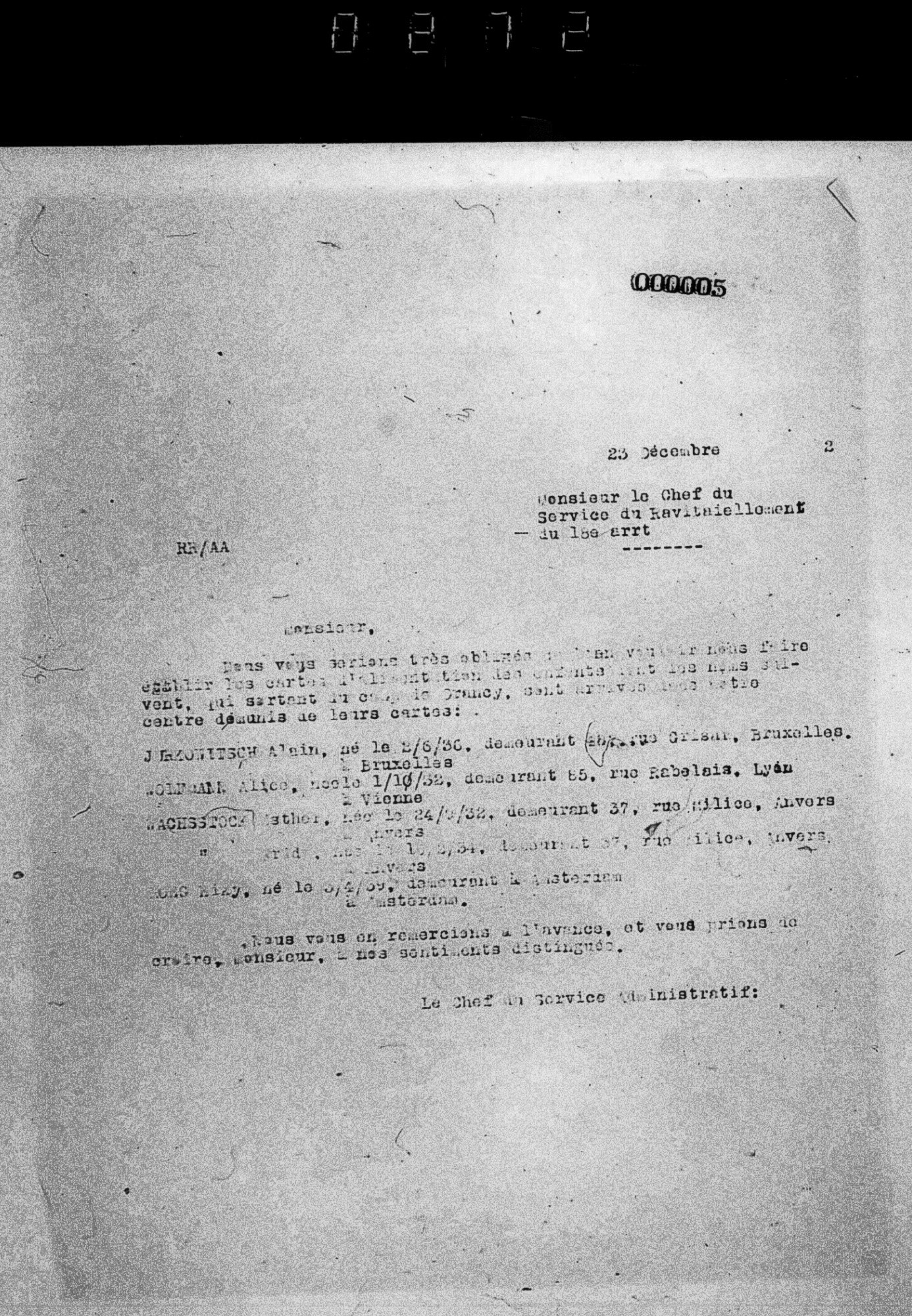
Figure 1 – From the file on Esther Wachsstock © Victims of Contemporary Conflicts Archives Division of the French Ministry of Defense Historical Service, in Caen, ref. RG-210-Ugif-13.
The town hall in the 18th district of Paris, which was where the children’s home was located, thus issued Esther with a clothing card numbered 26-8267 and Frieda with card number 26-8268. The cards were marked “J2”, which meant they were in the ”children and adolescents” category, which covered children between the ages of 6 and 12 and thus corresponded to the girls’ ages (in 1942, Esther was 10 and Frieda 8)[8]. They were staying in U.G.I.F. shelter 28, otherwise known as the ”Lamarck” center.
The French government founded the U.G.I.F. by legislation passed on November 29, 1941. As historian Jean Laloum explains, its “youth social welfare service” was set up towards the end of 1942 in order to care for young people who were left home alone after their parents were arrested. He goes on to say “It was this that led to the establishment of the children’s homes”[9]. They initially took in Jewish children who had either lost their parents or whose families were no longer able to care for them, including children whose parents had been deported (such as Esther and Frieda’s parents).
“Its purpose, according to its constitution, was to represent Jews in their dealings with the authorities, particularly as regards welfare, social security, and social rehabilitation,” at a time when Jews were banned from working in most professional jobs and their tools and property were being confiscated and sold. Its funds came from Jewish property seized by the German occupying authorities and from compulsory membership fees. All French Jews were required to join it. “The Union Générale des Israélites de France [General Union of French Jews] was overseen by a board of directors appointed by the Commissaire Général aux Questions Juives (General Commissioner for Jewish Affairs)”. While it could hire Jewish staff with the approval of the CGQJ, they were not exempt from deportation. The U.G.I.F. offices were at 19 Rue de Téhéran in the 8th district of Paris. It was disbanded after the Liberation.
The two sisters [who were not native French speakers] were lucky not to be separated. They were also fortunate enough to be invited to spend Sundays with Jewish families[10] who would give them an afternoon snack and a welcome break from the clamour of the children in the shelter. One of the couples who took them in were the Serruyas, who lived at 27 rue Poulet. The girls went to visit them on Sunday, January 31, 1943.
Soon after that, on February 4, 1943, Esther and Frieda were moved to a different U.G.I.F. facility, the Guy-Patin center, where they were listed in the admissions register with registration numbers 248 and 247, respectively (see Fig. 2). [From 1904 to 1940, the Guy-Patin center was known as “Le Toit familial” (which literally means “The Family Roof”), a home for young Jewish girls looking for work, which was founded by Baroness Adélaïde de Rothschild. It was then requisitioned by the occupying authorities. Located at 9 Rue Guy-Patin in the 10th district of Paris, it was a fine, large building but had neither a courtyard nor a garden, which was a problem given that Jews were no longer allowed to use public parks. The person who took them there was a “Mr. Gourevitch.” The children had a medical checkup every month. Their weight was closely monitored because many of them were very unhappy, having been cut off from their families and moved from one home to another and, in some cases, having been arrested by force. Many of them were depressed and had no appetite].
On Sunday, February 7, 1943, the Wasschstock sisters were again allowed to visit the Serruya family at 27 Rue Poulet. They took the number 30 bus from the “Guy-Patin” bus stop, which was just a ten-minute walk away.
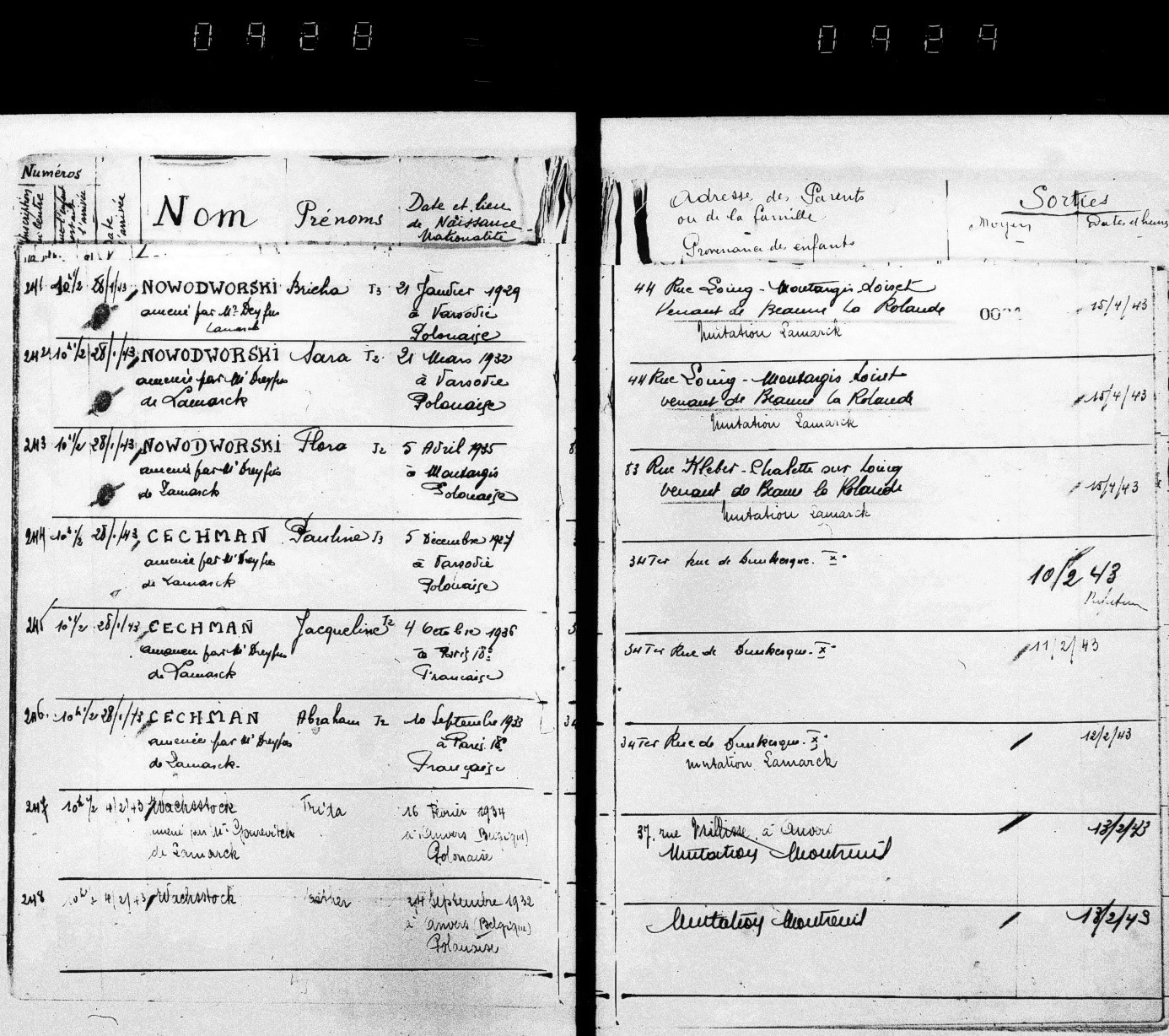
Figure 2 – The Guy-Patin admissions register. File on Esther Wachsstock © RG-210-Ugif-16.
On February 10, 1943, eleven girls were rounded up at the Guy-Patin center, but Esther and Frieda were not among them. A list of the 53 children who were still there on February 13, 1943 (52 on site, 1 in hospital) signed by the manager, “Miss C. Mossé,” notes that Esther and Frieda had “left” and been moved to a home in Montreuil-sous-Bois, in the eastern suburbs of Paris. [This home was founded in late October 1942. Listed as center number 52, it was a small place that housed from 15 to 21 children between April 1943 and July 21, 1944. The children from center 52 went to school in the local area].
On March 21, 1943, the Wachsstock sisters were once again allowed out. This time they went to visit a Madame Rosensweig at 8 Rue Auguste-Simon in Maisons-Alfort for their Sunday outing…[Maisons-Alfort was a long way from Montreuil-sous-Bois for the two little girls, who were old enough to have to wear the yellow star and were only allowed to ride in the last subway car.]
A fortnight later, on Sunday April 4, 1943, they visited her again. Further visits followed on Sundays April 25, 1943, July 11, 1943, July 18, 1943, and August 1, 1943 (Fig. 3). We do not know how the girls felt about “Madame Rosensweig”.
[The people the children visited were known as “correspondents”. The German authorities knew who they were and the children’s movements were strictly monitored to make sure they did not escape, which occasionally they did, thanks to the help of family members or the Jewish resistance. Some children did in fact escape from the home in Montreuil in early July, but the Wachsstock sisters had no such luck.]
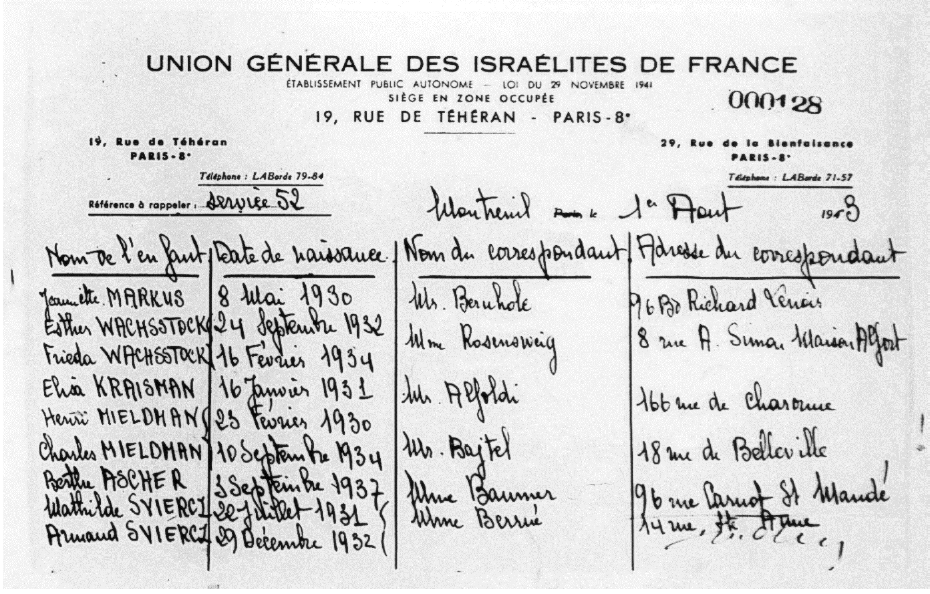
Figure 3 – Esther Wachsstock © YIVO RG-210-62 Microfilm MK490-44, Ugif-9.
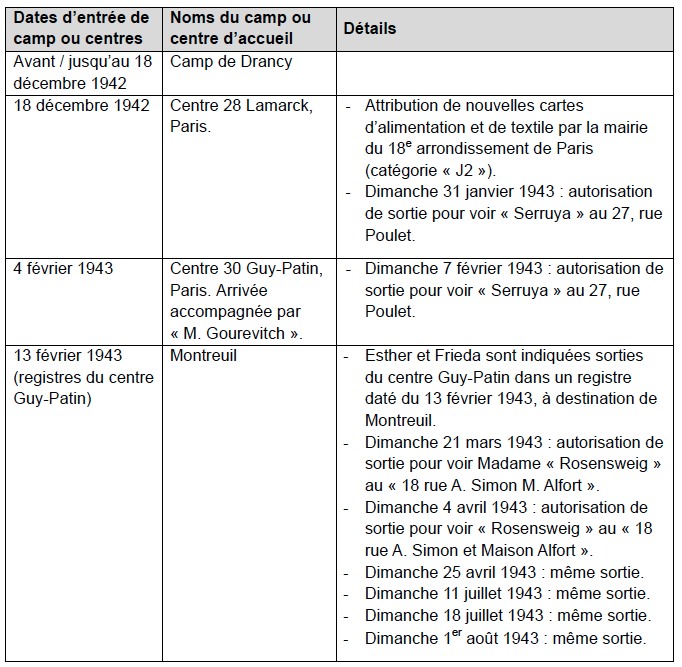
Tableau 1 – Timeline of Esther and Frieda Wachsstock’s movements between 1942 and 1943
The deportation
The records provided by the Convoy 77 team come to an end at this point. [However, research shows that at the start of the 1943 school year, the sisters were still in Montreuil and stayed there for the entire 1943-44 academic year. After they finished school and were on vacation, blissfully unaware of the Allied landings in Normandy, on July 21, 1944, on the orders of the SS commandant Aloïs Brunner, who ruled Drancy camp with an iron fist, the children staying in the U.G.I.F. home in Montreuil were rounded up, as were their supervisors. Between July 20 and 24, the same thing happened in all the other U.G.I.F. homes in and around Paris. The Nazis arrived during the night or at dawn and loaded the children into trucks bound for Drancy camp. They were registered and then assigned to dormitories, which they were rarely allowed to leave in the sweltering July heat of 1944].
Esther and her sister Frieda were deported on the 77th convoy to leave France. On the train with them were almost all of the other children and babies from the U.G.I.F. homes and 1,000 adults. Aloïs Brunner arrested as many Jews as possible and dispatched the convoy just as the Allies, who had landed in Normandy on June 6, 1944, were approaching Paris.
On July 31, 1944, Convoy 77, the last of the large deportation convoys, left Drancy bound for the Auschwitz concentration camp and extermination center.
Auschwitz (“Konzentrationslager Auschwitz” in German, meaning “Auschwitz concentration camp”) was the largest camp complex in the Third Reich, and was both a concentration camp and a killing center[11]. It was divided into three distinct sections: Auschwitz I, a former army barracks, was a concentration and labor camp, Auschwitz II was the extermination center and Auschwitz III included a chemical plant that manufactured synthetic fuel and a forced labor camp. Auschwitz was in the municipalities of Oświęcim (Auschwitz in German) and Brzezinka (Birkenau in German), about 30 miles west of Krakow in the province of Silesia, which had been annexed into the Reich after the German invasion of Poland in September 1939[12].
It was a gruelling journey, during which the deportees were crammed 60 at a time into cattle cars with straw on the floor, very little water, barely anything to eat and no sanitary facilities. The children from the U.G.I.F. homes travelled with their supervisors and, in some cases, a nurse. The train arrived in Auschwitz during the night of August 3 to 4, 1944.
986 men and women were deported on Convoy 77, along with 324 children, making a total of 1,306 people[13]. Esther and Frieda were among the 389 deportees who were under 19. 52.3% of the deportees were French, while the second most common nationality – that of Esther and Frieda’s family – was Polish, which accounted for 14.9% of the deportees. There were 8 Belgians, 5 of whom were children from U.G.I.F. homes (4 of whom were arrested in Montreuil). Of the 1,306 people deported on this transport, 836 were sent to their deaths in the gas chambers to death as soon as they arrived in Auschwitz.
The selection took place right away, on the platform, also known as the ramp, near the Birkenau camp. Some of the adults were selected to enter the Auschwitz camp to work, and the others were taken straight to the gas chambers, where they were killed and then disappeared into the crematoria. People with disabilities, senior citizens, children, and parents with children were herded into trucks waiting to take them to their deaths. Esther and Frieda, who were both still children, were almost certainly among the people killed immediately.
Esther’s was later declared to have died on August 5, 1944.
The search for Esther after her death
The records made available by the Convoy 77 team come from a variety of sources. Here is a summary of the research we undertook to gain a better understanding of the records relating to Esther Wachsstock after her death.
The letters ONACVG stand for “Office national des combattants et des victimes de guerre”, the French National Office for War Veterans and Victims. Its logo features a building that resembles Les Invalides in Paris. It was founded in 1916. One of its roles is to raise awareness among the younger generation of the stories and experiences of individuals who were involved in past wars. It researched Esther’s case and requested copies of her birth and death certificates from the town hall in Montreuil.
We have records that show that in 2011, the ONACVG requested that Esther and Frieda Wachsstock be officially recognized as having “died during deportation”. In cases where such people were French citizens or had been living France and were deported and died in a prison or concentration camp, these words are added to their death certificate in the civil registry of their last place of residence. This procedure was put in place by the French law No. 85-528 dated May 15, 1985[14].
“Died during deportation” status is granted according to the following criteria:
- It must be proven that the person died during deportation rather than elsewhere, such as while attempting to escape;
- The person’s file must be reviewed by the relevant government body, which is currently the French Ministry of Veterans Affairs;
- There must be clear and conclusive evidence of deportation or death in the camp, without which the application can be rejected;
- People who were deported but whose names were not included in the official lists of deportees, either because the records were lost or destroyed or because they were never compiled in the first place, cannot be officially recognized as having “died during deportation”;
- If a person’s name is spelled incorrectly or their identity is not clearly documented (which is often the case), the procedure is more complicated;
- The rules state that a family member has to submit a request for “died during deportation” status: it is not granted automatically. As a result, if no family member was able to submit such a request (because they were all dead, for example) or if they chose not to, deported people could not be officially recognized as having “died during deportation.” However, the French government has since made efforts to ensure that this status can now be granted and added to civil status records of anyone for whom the process was not completed in the 1950s and 1960s.
Esther Wachsstock was granted the status “died during deportation” on May 7, 2013, on the following grounds:
- Her name is on the official list of people deported from France to a Nazi concentration camp. The fact that she was deported from Drancy to Auschwitz, which is a well-documented route, helps to validate this;
- Records confirm without doubt that Esther Wachsstock died in Auschwitz;
- According to a French law passed in 1946, “died during deportation” status is granted to people who were arrested and deported by the Nazis or their collaborators, and murdered in a concentration camp or in transit. Esther Wachsstock clearly meets these criteria;
- Her case was reviewed by the French Ministry of Veterans Affairs and several French memorial organizations, and her name was officially added to the list of people whose lives were lost during the war.
In conclusion, Esther Wachsstock was posthumously recognized in this way because she was arrested, deported, and died in a Nazi camp, and as such met all the criteria set out in French law. The “died during deportation” status is intended to pay tribute to victims such as Esther and to help us remember the millions of other lives lost during the Holocaust.
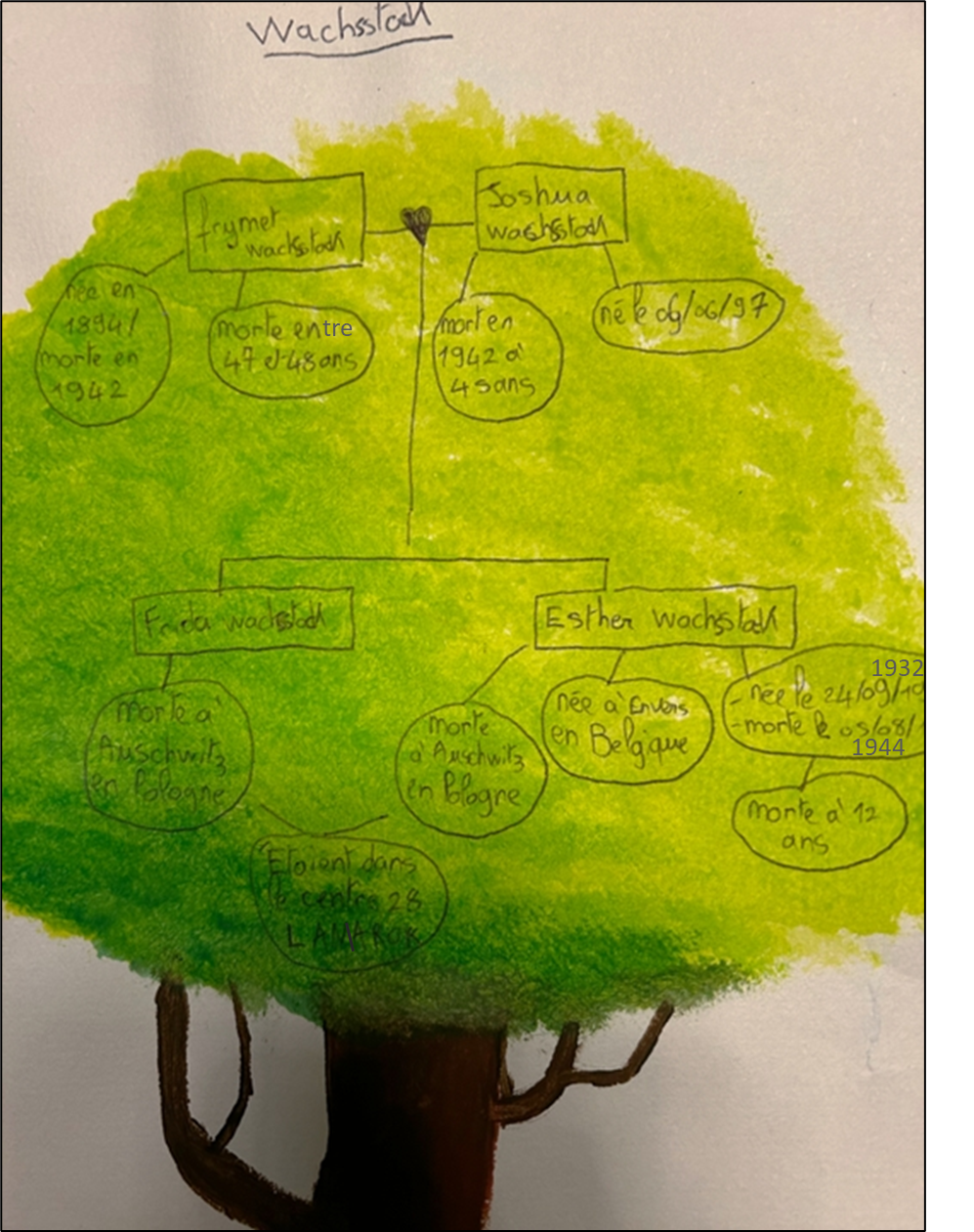
Figure 4 – Esther Wachsstock’s family tree, drawn by Ombline and Yara.
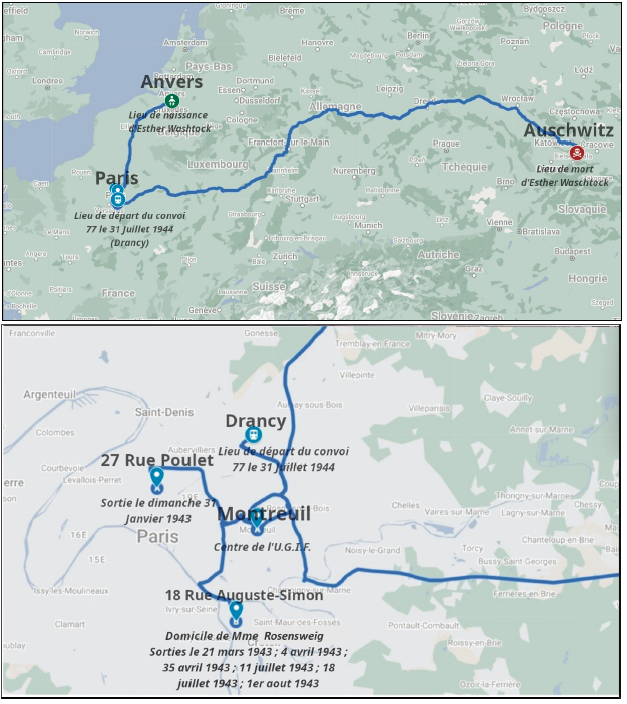
Figure 5 – Two maps of Esther Wachsstock’s journey through Paris and Europe, made by Théodore, Arnaud, and Deniz (Google Maps).
Section 2: Esther Wachsstock’s fictional diary
Part 1 – After Esther was interned in Drancy for the first time
By Axel and Kelyan
December 22, 1942
Dear diary,
I’m taking the time to write a few words to describe what’s happening in of my life right now.
My little sister Frieda and I have been brought to one of the U.G.I.F. shelters in Paris. We were let out of Drancy camp for some reason, but we don’t really know why. We don’t have any food or clothing ration cards, but hopefully we’ll get them soon.
By Bastien and Ilan
December 24, 1942
Dear diary,
I want to tell you a bit about my life and that of my little sister, Frieda. It’s an absolute nightmare.
We were left to fend for ourselves after our parents were arrested. We no longer have a home of our own. A few days ago, we were brought to an unfamiliar place, a U.G.I.F. reception center. There are loads of kids here who we don’t know.
They gave my sister and me clothing ration cards. Our card numbers are 26-8267 and 26-828.
Before we came here, we were in Drancy camp. It was awful there because most of the people were abused and humiliated, and there wasn’t enough food to go round. The camp was so overcrowded, there were far too many people in there.
Part 2 – Outings to rue Poulet
By Hugo B, Lou, Thiméo, Domitille and Charlène
January 27, 1943
Dear diary,
My sister and I have just found out that in a few days’ time we’re going to meet our “correspondent”, Mrs. Serruya. A correspondent is a pen pal who we also get to visit. I hope we’re going to play games with her like we used to with our parents. I’m so sad to be away from them, I miss them so much. We have already written to each other a lot, and I can’t wait to meet her.
We know that her house is not far from the center where my sister and I are staying, Center 28, the Lamarck center. We were getting bored, but she tells us about what’s going on in the outside world, and that makes life more bearable. Mrs. Serruya often asks us how we’re getting on here.
Frieda and I play lots of card games and draw pictures, and we play hopscotch. We also have some lessons . I miss my parents like crazy, but thanks to Frieda, I’m holding up. She has nightmares every night, poor thing, and she isn’t eating much at all. She misses our parents too. I try to make her laugh and get her to meet other children who are stuck in the same situation as us, but no matter how hard I try, she always seems so unhappy. I’m really scared that the Germans will come and arrest us next.
January 31, 1943
Our meeting with Mrs. Serruya went very well. She’s a kind and interesting person, and we got along really well with her. She and her husband made us welcome and gave us tea and lots of yummy little cookies. Frieda really enjoyed herself. It’s been ages since I’ve seen Frieda that happy. We played Ludo, checkers, and cards. We also talked about what was happening in Paris and what might happen to us, but not for too long so as not to scare Frieda. We hope we’ll get to see them again soon.
February 4, 1943
There were rumors of a roundup, so they moved us to a different shelter. Frieda and I just arrived in the Guy-Patin center.
February 10, 1943
We have had to move again. There was a roundup at the Guy-Patin center! Now we’re in a home in Montreuil. Mrs. Serruya is no longer our “correspondent”. We’re heartbroken. Frieda has been inconsolable since she heard the news. I’m sad too. I was looking forward to seeing her again.
Part 3 – Outings to 18 rue Auguste-Simon in Maisons-Alfort
By Ombline, Yara, Méline, Arnaud, Deniz and Théodore
March 21, 1943
Dear diary,
Today, Freda and I visited a lady called Mrs. Rosensweig who lives at 18 Rue Auguste Simon in Maisons-Alfort. She’s our new correspondent. We got to meet her children, Camille et Lucas. We played hide-and-seek in the garden, but then I picked some daisies and Camille got mad at me because she said I picked “her daisies.” But then she gave me a tulip to make it up to me, and we played tag. I let her win so we’d be friends again, even though I could’ve won easily.
Later, Lucas and I went off by ourselves, which was really nice. We climbed a tree and talked about all sorts of things.
April 4, 1943
Dear diary,
I had an argument with Camille today at Mrs. Rosensweig’s house, and we weren’t allowed dessert, but then Lucas secretly shared his with me. We all ate the vegetable tart down to the very last crumb. Camille gave me dirty looks all through the meal. Luckily for us, Mrs. Rosensweig is strict but she’s also kind! Frieda really likes her and spends loads of time with her.
Part 4 – Shortly before the Esther was arrested
By Hugo T, Baptiste, Mélina and Arthur
…. (date unclear)
Dear diary,
I’m so afraid that they’ll come to arrest me and Frieda. Today we heard screams coming from the next street over. The police must have tracked down some families and taken them away. I dread the thought of the police coming and taking us all away too.
Part 5 – Just before the Esther was deported
By Elise, Joanna and Louane
July 30, 1944
Dear diary,
It’s been a long time since I wrote anything because the guards confiscated you, but luckily I managed to find this new notebook as a replacement.
My sister and I have been back in Drancy camp for a few days now. It’s really tough here because there’s not enough to eat, it’s hard to sleep because the guards outside are always shouting and we can’t even take a shower because they save all the water for drinking. During the day, we sometimes go out into the yard to play, but there are so many of us and the guards yell at us all the time because Frieda makes too much noise. Nighttime is difficult too, because she cries a lot and can’t sleep. She only falls asleep if I tell her a bedtime story. She often wakes up in the night because she keeps having nightmares.
It’s also been ages since we visited the Rosensweigs and the Serruyas, and we miss them.
I like to do my sister’s hair and put in the hair clips that Mom gave me. They have little blue and pink flowers on them that remind me of the ones we used to pick together, and Frieda seems happier when she feels pretty.
The guards have been acting oddly all morning. They seem jittery and out of sorts. I think I know what’s going on. It looks like we’re going somewhere, because they’ve given us tags with numbers on them to wear around our necks. I’d rather not tell Frieda the truth, though, it won’t do her any good. When we first arrived, some people told me we were all going on a long journey, to a place they call “Pitchipoï.”
Students comments about the project
Over the course of this project, I learned about various things, such as the U.G.I.F. and the fact that Jewish parents and children were not [always] deported at the same time. (Arnaud)
Through this project, I learned a lot about the deportation of the Jews. I realized how horrible and unfair it was. This project also gave me the opportunity to learn how to do research and to improve my writing skills by putting myself in someone else’s shoes.(Bastien)
What struck me most were the girls’ correspondents, because they were all very brave.(Domitille)
The thing that made the biggest impression on me was that Esther died at such a young age. It made me sad that she died so young. (Yara)
Two things that struck me were that Esther and Frieda lost their parents and had to live in a home with other children [who would later be] deported. (Charlène)
I was able to dive a little deeper into the life of a girl who was soon to be deported. (Théodore)
We came across a few documents that said different things, and some had been altered. (Ilan)
We invented the details of [Esther and Frieda’s] visit to their correspondents. We wanted them to have some fun times like all little girls their age. The difficulties we encountered during this project were inventing parts of their stories, as we didn’t have enough information about their lives before they were deported. […] The fact that Esther was only 10 years old presented a problem because we couldn’t have her use grown-up language. (Hugo B.)
The authors: the 9th grade students of class A at the Fernand-Léger middle school in Vierzon,
with the guidance of their history teacher (Ms. Mahieu) and their French teacher (Ms. Tourneur)
For the historical section of the biography, the students who participated in writing the text were Arnaud, Charlène, Deniz, Domitille, Hugo B., Ilan, Joanna, Lou, Louane, Méline, Mohamed, Ombline, Théodore, Thiméo and Yara.
For the fictional section, the diary, the students who participated in writing the text were Hugo T., Mélina, Arthur, Baptiste, Arnaud, Charlène, Deniz, Domitille, Hugo B., Ilan, Joanna, Lou, Louane, Méline, Ombline, Théodore, Thiméo and Yara.
Notes & references
[1] A genealogy page on the “geni.com” website, managed by Eilat Gordin Levitan and last updated on April 29, 2022, indicates that Joshua Wachsstock was born on June 9, 1896, in Krakow, Poland, and died during the Holocaust in 1942. The tree links to other individuals with information that appears to corroborate this, as Joshua is listed as married to “Frumet Wachsstock” (born in 1894, also in Krakow) and father to “Dov Ze’ev” (died around 1943), “Esthere,” and “Tamar Frieda.” [In the same town, there is also Jacobus (Jacob) Paul (born in 1878) (married to Rivka Lerner), Lazar Szyja (1906), Sara Matel, Anna (born in 1906), Naftali (1906), and David Esriel (born in 1900), who arrived in Antwerp between 1901 and 1915, according to the Belgian immigration police index, having passed through the Netherlands. No doubt also from the same family]. In addition, a Wachsstock family arrived in Antwerp between 1901 and 1915. It was made up of an adult named Lazar (born in 1875), his wife Sara-Racheli Rakover (born in 1875), and their children, who were born in Krakow: Johia/Jozua (1897), Mathilda Frymeta (1900), Chaja (1901), Rebecca/Ryfka (1903), Temar Freida (1906), and David, born in Borgerhout (a district of Antwerp) in November 1912. They are the parents and siblings of Esther’s father. They can also be found in the Dutch population register index. They would therefore have left Poland in or after 1906 and arrived in Antwerp before November 1912. References: Geneanet; and the Belkish Staatsblad.
[2] A pogrom: an attack involving looting and murder perpetrated against a Jewish community. See (Pogrom – Wikipedia)
[3] Strube and Franssen’s Inventaire des archives du séquestre de la Brüsesler Trehandgesekkschaft et du groupe 12 y compris les archives du Service Belgique de l’Office de politique coloniale du NSDAP (1899-1988, principalement 1940-1963), (Inventory of the archives of the Brüsesler Trehandgesekkschaft sequestration and Group 12, including the Belgium Service of the NSDAP Colonial Policy Office archives (1899-1988, mainly 1940-1963), declaration forms M and forms for death, cessation, transport, or transfer for traders and companies relating to traders and commercial firms (particularly in the diamond sector) including a folder containing information on the Wachsstock father and son: 1319 C12-1323 and C12-1324. Instrument I 25, in Antwerp (Antwerpen), classified alphabetically (Str-Weil), General Archives of the Kingdom 2 – Joseph Cuvelier repository. Antwerp was treated as a special case with regard to the Aryanization of Jewish property.
[4] The German invasion of Western Europe, May 1940 , United States Holocaust Memorial Museum
[5] Several records originally listed her date of birth as September 24, 1932, but it has been crossed out on all of them and replaced by January 10.
[6] Alsace and Moselle regions were de facto annexed to the Reich. The Nord and Pas-de-Calais departments of France were assigned to the Belgian Military Command.
[7] “The Germans insisted on being kept fully informed at all times about the number of children – whether or not they were “blocked” – and demanded the most complete lists possible: first names, surnames, nationality, date and place of birth, address,“ Jean Laloum wrote in his article ”The U.G.I.F. and its children’s homes: the Montreuil-sous-Bois center,” published in the journal Le Monde Juif (Jewish World) 1984/4.
[8] Article in French about Ration Card Stubs, Center for the History of the Resistance and Deportation in Lyon, in the Rhône department of France https://www.chrd.lyon.fr/musee/collections/talons-de-tickets-de-rationnement
[9] Union générales des israélites de France: Wikipedia page in English
[10] YIVO Insitutute for Jewish research, UGIF files on microfilm, available at the Shoah Memorial in Paris.
[11] Auschwitz concentration camp: Wikipedia page in English
[12] An exhibition at the Shoah Memorial in Paris between January 23 and November 16, 2025, featured some rare photographs taken by the Nazis at Auschwitz; they are also included in an album published by Éditions du Seuil.
[13] Convoy 77: The history and make up of the convoy
[14] Page in French about the change in the law: www.senat.fr
Other biographies written by students from Fernand-Léger middle school in Vierzon, with the guidance of their history and geography teacher, Ms. Mahieu: