

 Français
 Polski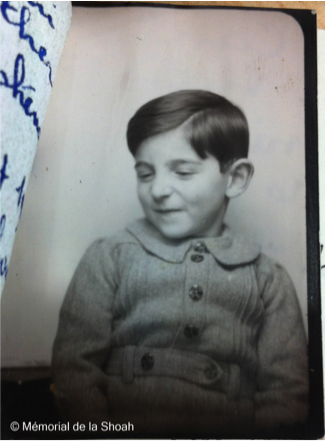
Victor CAMHI (1934-1944)
Victor Camhi was born on July 6, 1934, at the Clinique des Alpes in La Tronche, in the Isère department of France, where his parents were living at the time. He was an only child. Sometime prior to or during the war, the family moved to a 4th floor apartment at 18, rue Lakanal in Grenoble, also in the Isère department. According to a report by the French National Security Service dating from 1962, his father, Albert, “despite his Jewish status, had the right to continue his business as a hosiery merchant during the Occupation, thanks to his status as a veteran of the 1939-1940 war, when he was awarded the War Cross”. (This was relevant because Marshal Pétain’s 2nd decree on the status of the Jews, dated June 2, 1941, prohibited French and foreign Jews from working in almost all professions). His mother, Esther, was working as a sales assistant when she married Albert. We do not know if she was still working when the family was arrested.
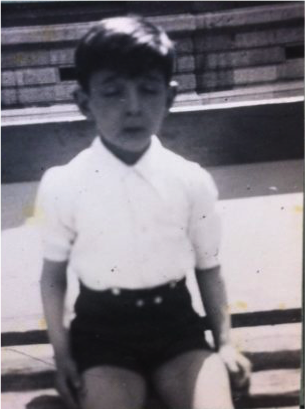
Where did he go to school? What were his hopes and dreams for the future? We do not know. All that remains of Victor are a few photos, including one of him with his father.
Victor and his parents were arrested at their home in Grenoble on June 18, 1944. They were all transferred together to Lyon, in the Rhone department of France, a fortnight later, at which point Victor was interned on his own at the Antiquaille hospital in Lyon from July 7 – 22, 1944. This information comes from a notebook kept by Edith Cahen, who kept a record of the children she cared for during that period [1]. There he met a number of other children including Marcel Handzel; Huguette, Georgette, Gilbert and Robert (Pinhas) Chemla; Josiane, Claude and Jacques Halimi; Eddy (Edmund) Sandmann; Jacques Schipper and a toddler, Dario Sarfati, who was soon to meet the same fate as Victor. The other children he got to know in the Antiquaille hospital were taken to Drancy with him, but were not deported.
Victor and his parents were interned in Drancy camp, northeast of Paris, on July 24. They were then deported to Auschwitz-Birkenau on Convoy 77 on July 31, 1944.
After a horrific journey, during which he traveled in the same cattle car as his parents, the train arrived in Auschwitz during the night of August 3-4, 1944. Victor and his mother were sent straight to the gas chambers, where they died. He was just 10 years old.
Albert, his father, was sent into the camp for forced labor. When he returned to France in May 1945, despite having experienced the hell of Auschwitz, Albert still held out hope that his son had survived. He wrote to various authorities, clinging to news, true or false, about children who had been repatriated from Auschwitz. In the end, all he could do was ensure that Victor was officially acknowledged to have been a “Political deportee”.
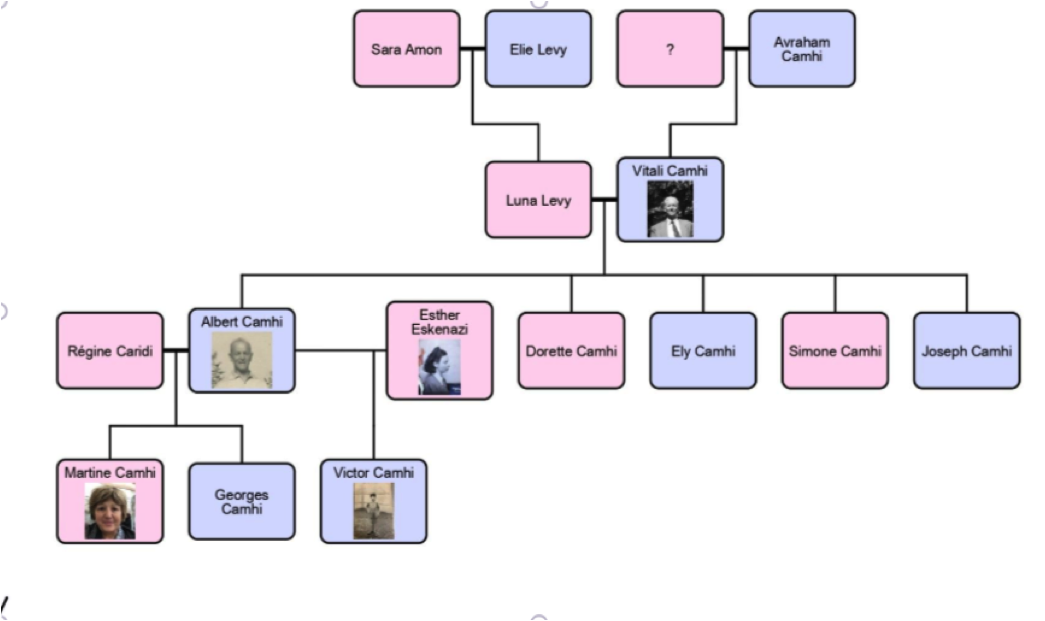
The Camhi family tree
The Antiquaille hospital
From February 1944 until September 3, 1944, when Lyon was liberated, the Antiquaille hospital was requisitioned and used to house Jewish children whose parents were imprisoned in the overcrowded Montluc prison.
75 children aged between 4 months and 14 years were detained in the hospital, which was run by the UGIF (Union Générale des Israélites de France, or General Union of French Jews), pending their transfer to Drancy camp, either alone or with their parents. There was only one child left in the hospital when Lyon was liberated.
There is now a commemorative plaque on the building that bears the names of the 75 children who stayed there. It is currently used as a university hall of residence named after Jean Meygret, a French Resistance fighter who died in the Dora concentration camp in February 1945.
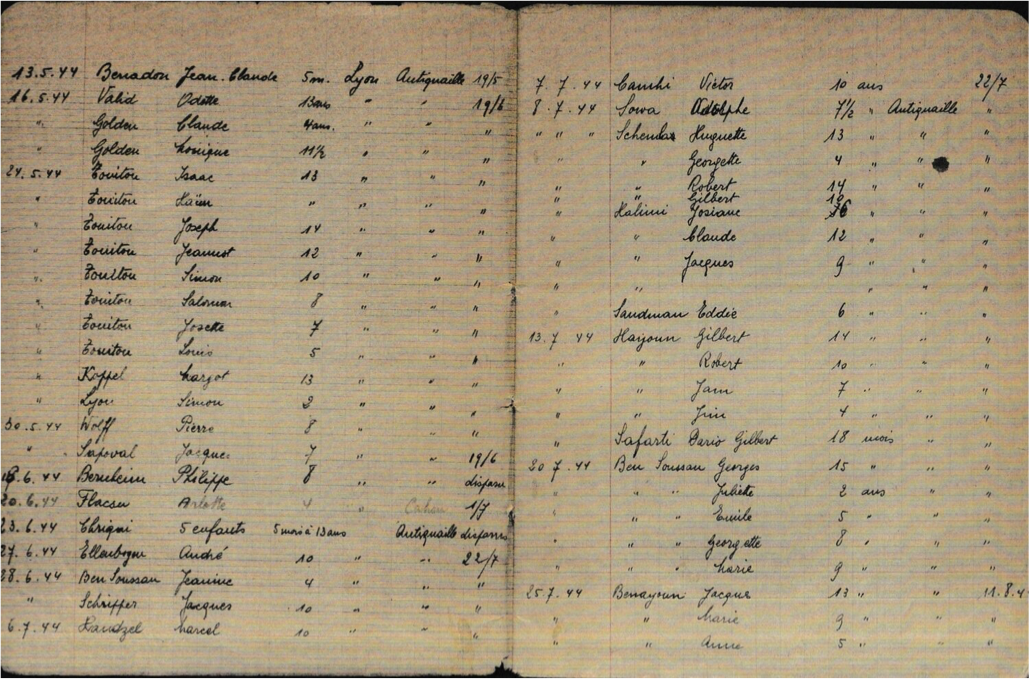
Source: David Diamant collection, previous reference CMXXV, current reference CMXXV,8,4,3,4, Shoah Memorial, Paris
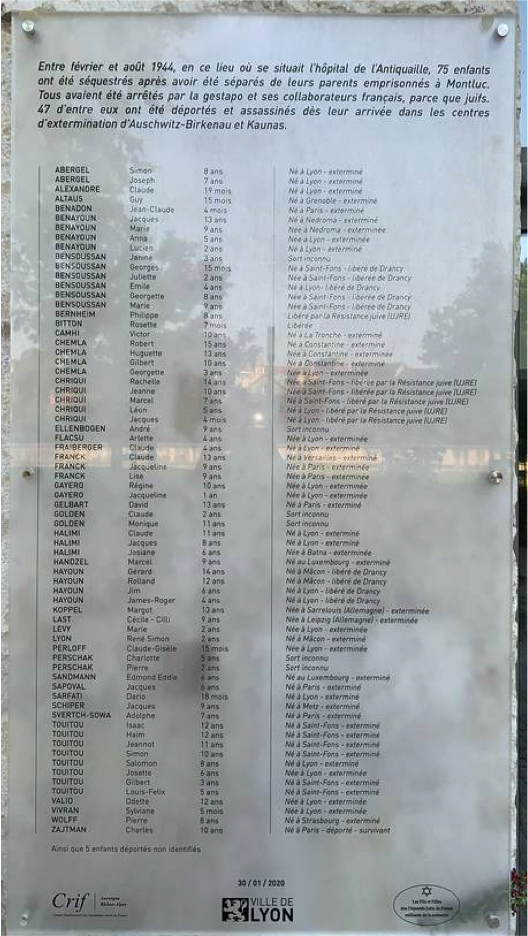
Photo of the commemorative plaque on the former Antiquaille hospital in Lyon. Source: Personal collection
[1] https://www.deportesdelyon.fr/les-archives-par-famille-a-m/enfants-camhi (David Diamant collection, Shoah Memorial) and file on Victor Camhi, Victims of Contemporary Conflicts Archives Division of the French Ministry of Defense Historical Service, in Caen.


