

 Français
 Polski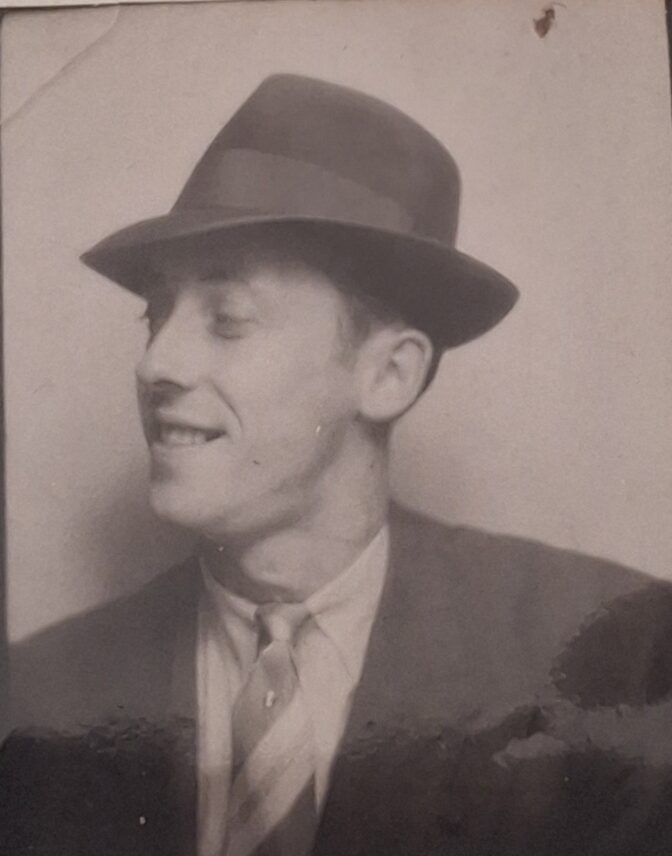
Isaac MEISTELMAN
Photograph of Thérèse Meistelman, undated © Michel Brodsky’s personal collection
The “En …quête d’histoire” (“In search of history”) workshop at the Fosse aux Dames secondary school in Les Clayes-sous-Bois, in the Yvelines department of France, carried out another historical investigation this year. With the guidance of their teachers, Marie Hurtevent and Géraldine Kerserho, students Joanna Barbosa, Loris Bocquet, Léonie Boitrelle Gaechter, Milla Boulanger-Daleau, Emma Braz-Rente-Moitron, Lina Cuccina-Beucher, Zoé Granjou, Rebecca Karlin Perrier, Mathis Opresco, Perrine Ragazzini, Tea Sheremeti and Manel Turmeau, set out to retrace the steps of a young Jewish man, Isaac Meistelman, and his wife Thérèse Meistelman.
By following various leads in the archives, the budding historians unearthed a few fragments of Isaac’s life, which was turned upside down when he was arrested and deported on Convoy 77, along with his young wife. By tracking down Thérèse’s nephew and visiting him last June, the students were able to meet the last remaining person who had known Isaac personally. Michel Brodsky, now 86 years old, has painstakingly preserved the very few photographs ever taken of his uncle. Had it not been for these photos, Isaac’s face would have remained a mystery.
The students also found information about his sister, Rosa, his parents, David and Berthe, and an uncle and an aunt. All of these people were caught up in the same harrowing story that ended in the horror of the Auschwitz-Birkenau camp.
Isaac, the son of Russian refugees
Isaac Meistelman came from a Jewish family originally from Russia. His paternal grandparents, Riven (or David) Meistelman and Hava Schneidermann (sometimes listed as Selnedman), were from Solobkivtsi, which at the time was in the Russian Empire but is now in the Khmelnitsky Oblast in Ukraine. Riven was born in 1865 and Hava in 1870. The uncertainty surrounding their first names and their mother’s maiden name stems from differences in spelling found in various records dating from that period. They had six sons, three of whom remained in Solobkivtsi: Paul and Albert were tailors, and Bernard was a cap maker. A fourth son moved to Kremenets in Poland (now in Ukraine). The other two emigrated to France: David, Isaac’s father, and Jankiel. It was Jankiel Meistelman’s application to be naturalized as a French citizen[1] that brought to light the rest of the family.
As for the maternal side of Isaac’s family, we were only able to identify Berthe Kant’s father: Chaïm Kant[2]. According to the French archives, Berthe was born in 1885 in a village called Smotrecht. We are fairly certain that this refers to Smotrych, south of Kamianets-Podilskyi, now in the Khmelnytskyi oblast in Ukraine.
Isaac’s father, David Meistelman, was born in 1883 in Vil’khovets’[3], another village south of Kamianets-Podilskyi in present-day Ukraine. He and Berthe Kant (who is described as his wife, although their marriage is not documented) emigrated to France together with their daughter, Rosa, sometime between 1912 and 1917. Rosa, who was also known as Rusik or Rosine, was born on January 9, 1912, according to records held in the OFPRA (French Office for the Protection of Refugees and Stateless Persons) archives[4]. She too was born in Solobkivtsi.
Isaac, raised in Paris in the 1920s and 1930s
When they arrived in France, the family set up home at 20 Rue Labat, in the 18th district of Paris. Their decision to settle in this working-class neighborhood in Clignancourt was typical of refugees from Eastern Europe, all seeking a new start in a country they saw as a safe haven. According to his birth certificate, Isaac was born in this building[5].
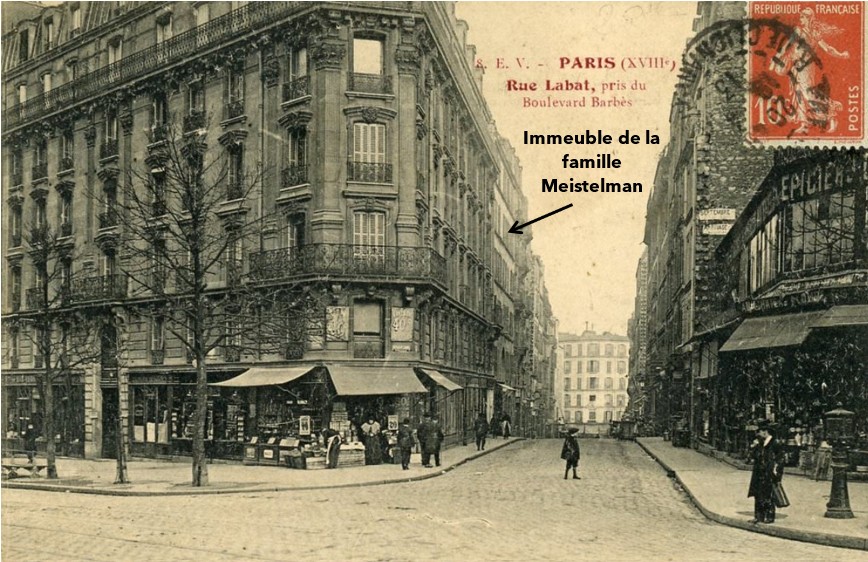
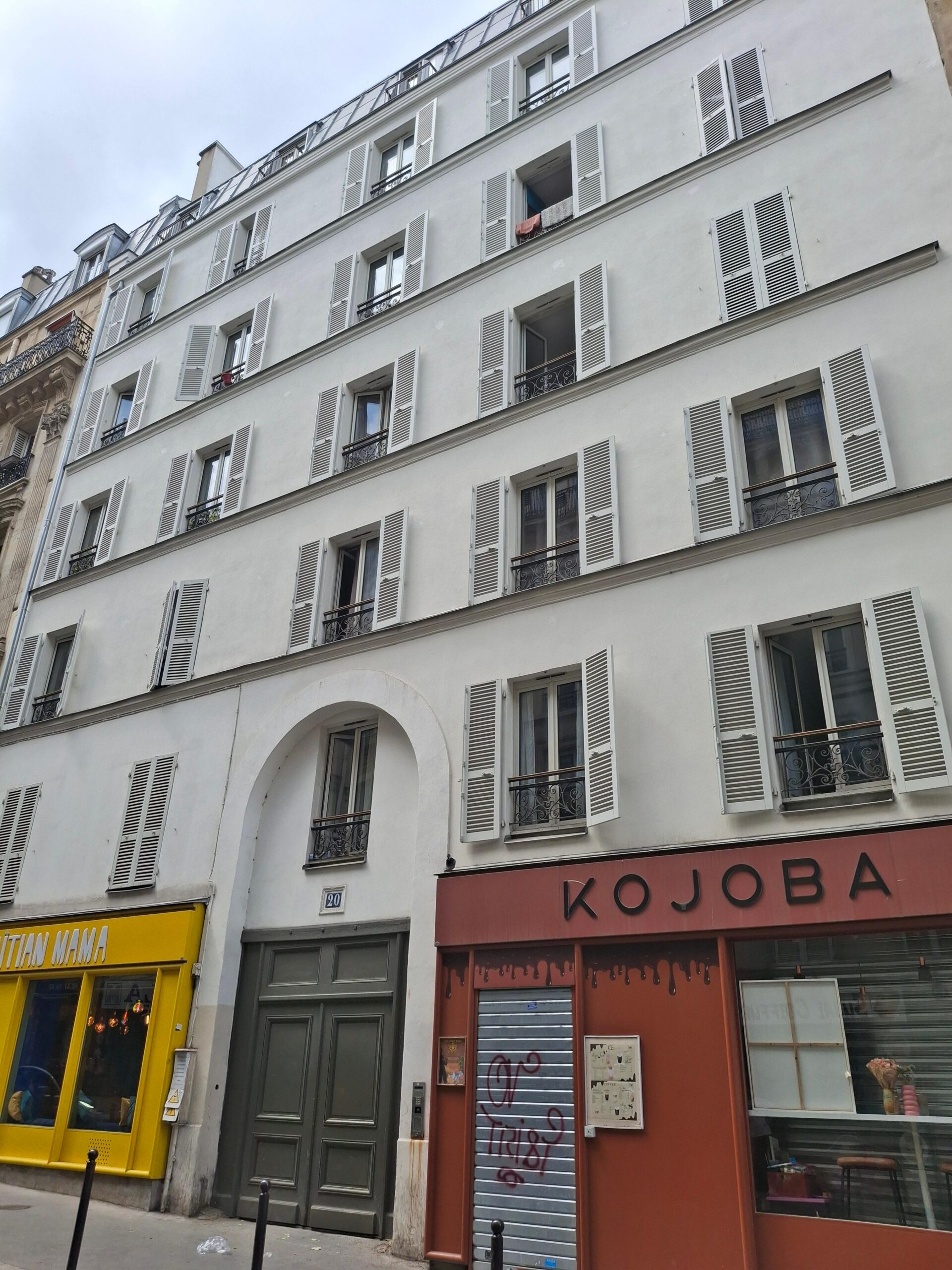
Photo 1: Postcard of the rue Labat and rue Barbès intersection (early 20th century) © www.cparama.com
Photo 2: Recent photo of 20 rue Labat in the 18th district of Paris © Marie Hurtevent
We do not know exactly when the Meistelman family arrived in Paris, but it must have been sometime between January 1912, when Rosa was born in Russia, and December 1917, when Isaac was born in France. Did the whole family migrate at the same time? Did David leave the Russian Empire first, and his wife and daughter join him later? We found nothing in the records to help us determine this. It is also unclear why they left Russia: was it for financial reasons, or to escape the anti-Semitic persecution that swept through parts of the Russian Empire in the early 20th century, or might it have been due to the political unrest in 1917, which led to the Russian Revolution?
David Meistelman most likely began working as a tailor as soon as he arrived in Paris, although there is no record of his occupation in the archives until the 1926 census, when David stated that he was tailor[6]. Five years later, in 1931, he was working as a tailor for an employer in the 20th district of Paris[7]. No profession is listed for his wife Berthe.
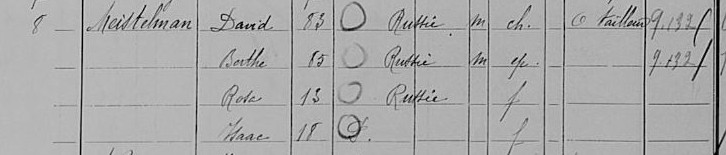
Census entry for the Meistelman family – 20 rue Labat (18th district)
© Paris archives, 1926 census of Paris, Clignancourt quarter.
In October 1917, just before her little brother was born, Isaac’s sister Rosa started nursery school at 29 rue Marcadet in the 18th district of Paris. She was five and a half years old at the time. According to the school register, she stayed there until July 1919[8]. She would then have moved up to the girls’ elementary school at 43 rue des Poissonniers in October 1919, but the records for the years prior to 1921 are missing.
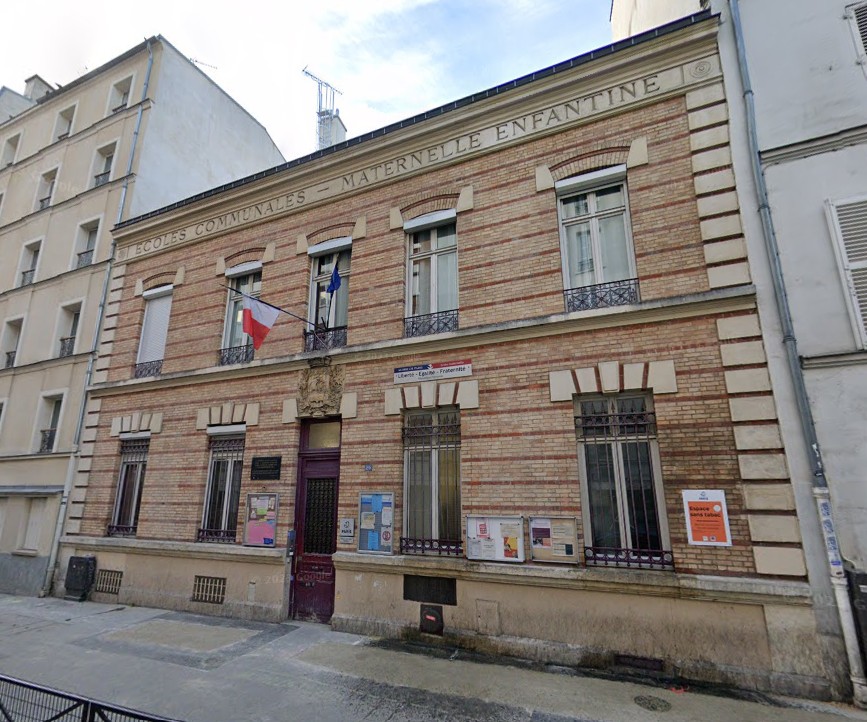
The nursery school on rue Marcadet, in the 18th district of Paris, in July 2025 © Google Maps
Two years later, Isaac followed in his sister’s footsteps: he started at the nursery school at 29 rue Marcadet in October 1923, and moved up to the boys’ elementary school at 43 rue des Poissonniers in October 1924. He completed the required number of years there and then left in 1931 to start an apprenticeship. His teacher noted in the school register[9], that Isaac was “well-behaved” and “good-natured”. He described him as a child of “average intelligence” who did “good work” and made “average” progress. No mention is made of him having passed the elementary school leaving certificate.
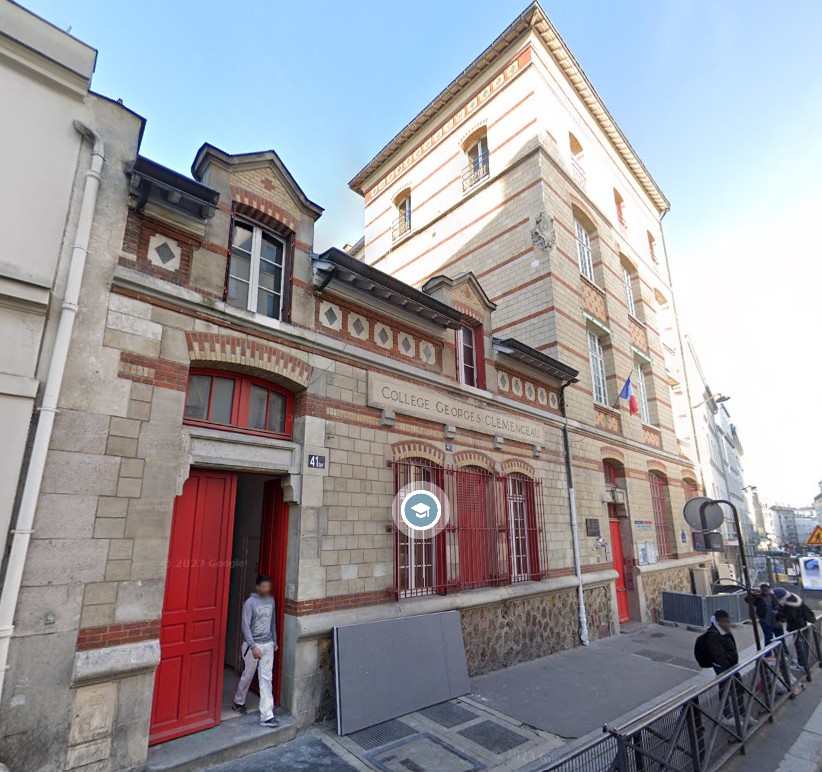
The former elementary school 43 rue des Poissonniers in the 18th district of Paris, now the Georges Clemenceau middle school © Google Maps
As there are no living witnesses, we know nothing about the family’s day-to-day life in the apartment at 20 Rue Labat. We suspect that they were relatively poor, but they must have got by nonetheless, as they lived at the same address from 1917 until the Occupation.
In September 1920, David Meistelman’s younger brother, Jankiel, arrived in France along with his young wife, Etia Bekerman[10], who he had married in June 1919 in Solobkivtsi. In the spring of 1920, they left Russia for Warsaw, and probably stayed there until they received their visas for France. When they arrived in Paris, they set up home in the 18th district, not far from 20 rue Labat. Jankiel and his wife had two sons, who were born in Paris in 1921 and 1928. Unlike David and Berthe, they applied for French citizenship in 1927[11]. They were non-practicing Jews and spoke Russian and Yiddish. We can safely assume that the same was true of David and Berthe.
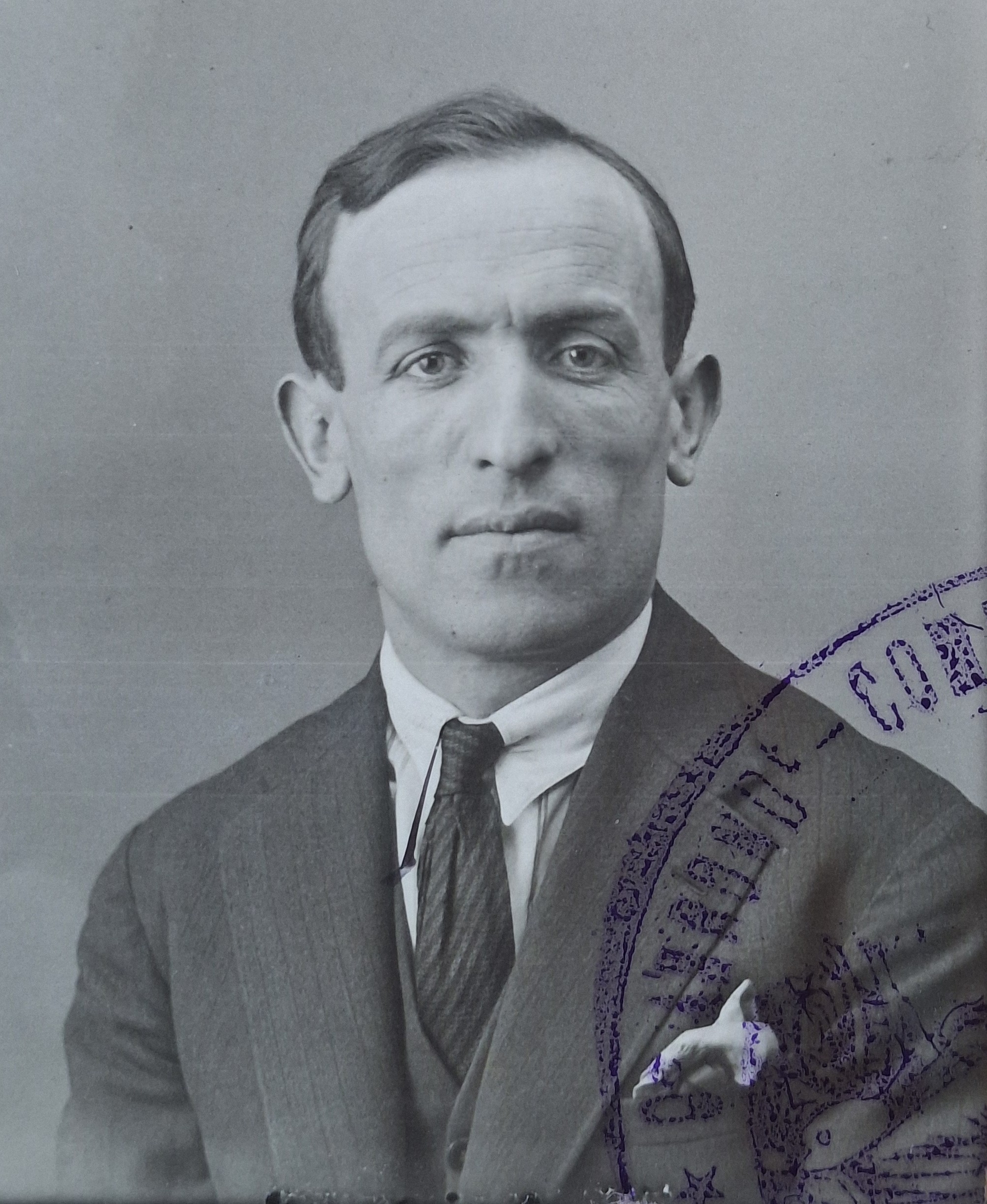
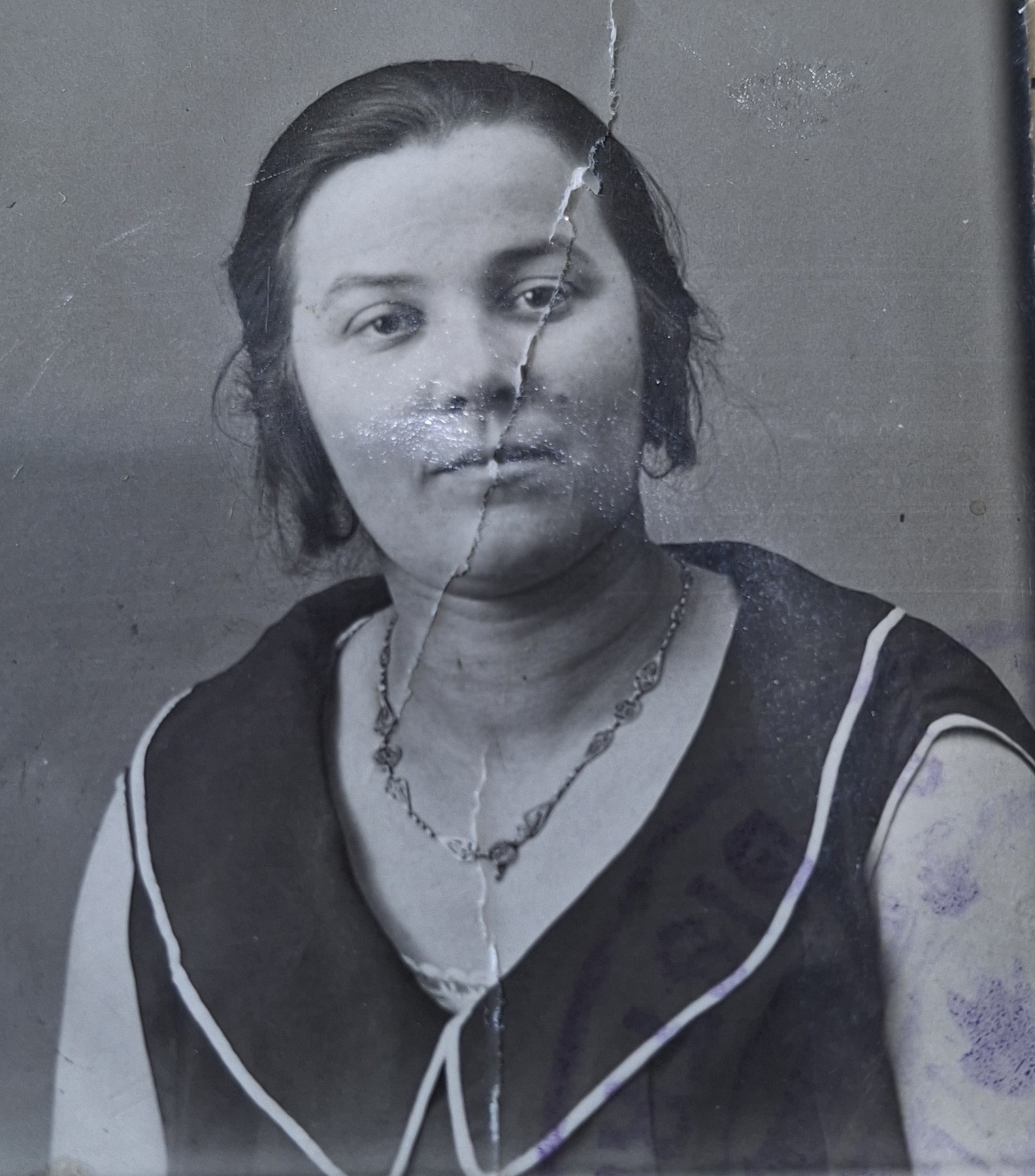
Jankiel and Etia Meistelman (photos taken in 1925 and 1929 respectively)
© Paris Police Headquarters archives, ref. IA140.
In November 1926, when she was just 14 years old, Rosa placed three classified advertisements in Le Petit Journal, looking for a job as a typist[12] : “Young woman available for secretarial, telephone or filing work. Write to Rosa Meistelman, 20 rue Labat.” Given that she then stopped advertising, we suppose she must have found a job fairly quickly. Also, when she completed the 1931 census, she stated that she was a stenographer in the 10th district of Paris[13].
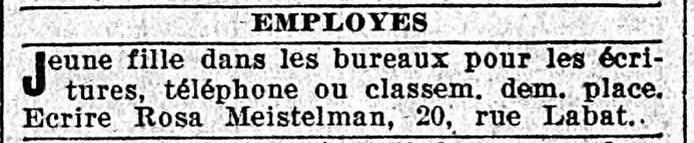
The advert that Rosa Meistelman placed in le Petit Journal on November 11, 1926
© French National Library, Gallica.
In March 1934, Rosa appears to have requested a birth certificate from the relevant authorities. The certificate she received in reply[14] states: “The Russian Refugee Office hereby certifies that Miss Reisel, known as Rose, Meistelman, daughter of David Meistelman and his wife Berthe Kant and born in Solobkovsky, Podolia province, Russia, on January 9, 1912, is a refugee of Russian nationality.”
The first tragedy: the death of Isaac’s father
David, Isaac and Rosa’s father, died at his home at 20 rue Labat à Paris, a 3 a.m. on January 29, 1935, at the age of 52[15]. That same day, at 11 a.m., Isaac, who was 16 at the time, went to the local town hall to declare the death. According the burial register, David was buried in the Bagneux cemetery in Paris on January 31, 1935[16]. Her name is inscribed on a collective gravesite funded by a Jewish charity, which suggests that the family was struggling financially at the time. When his wife Berthe died eight years later, she was buried in a different grave, probably for the same reason.
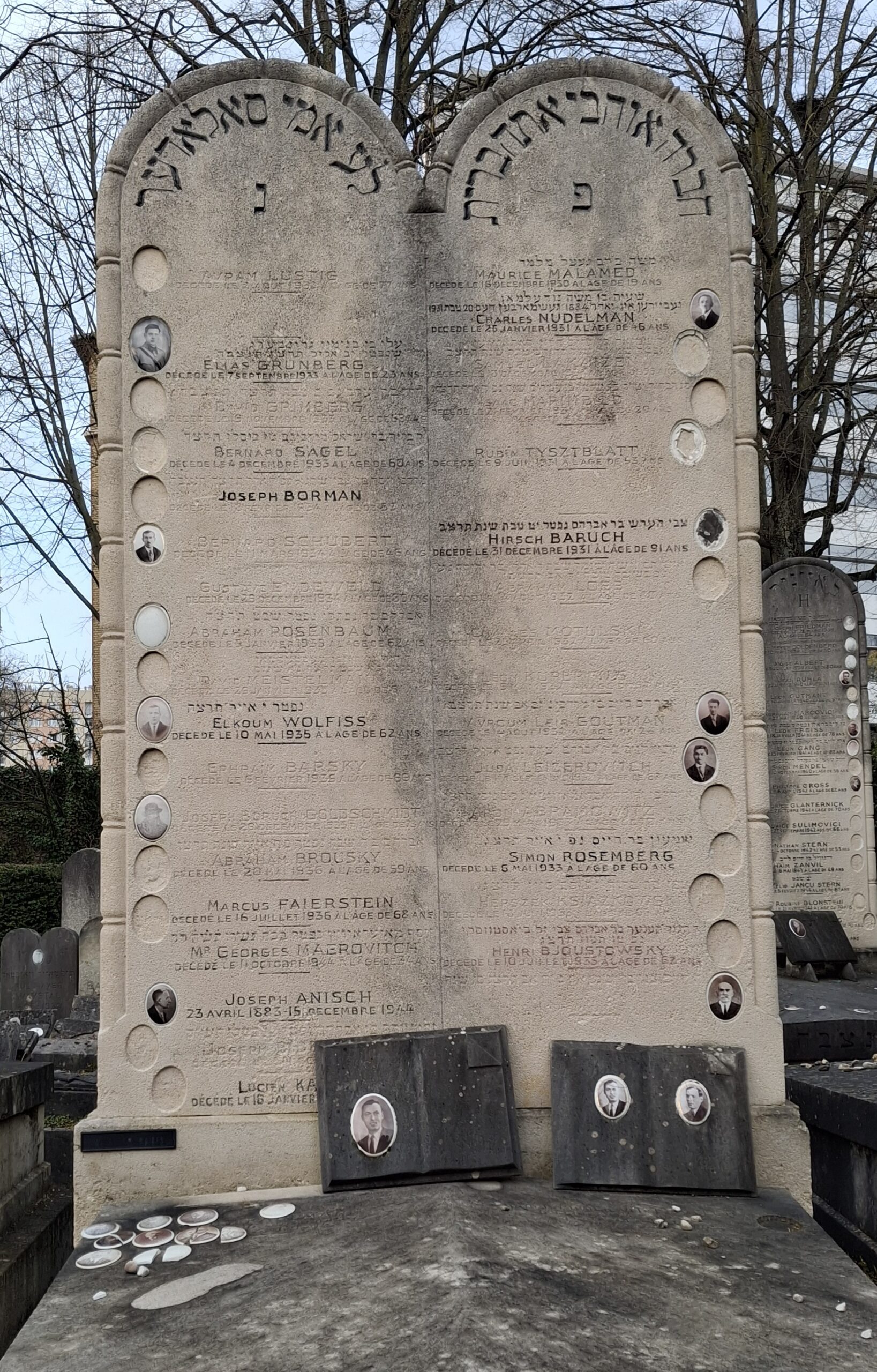
David Meisteman’s grave in the Bagneux cemetery © Marie Hurtevent
As far as we can tell, Isaac’s mother was still not working, so he must have taken over as the family breadwinner. Having become a French citizen by declaration, he had to do his military service in 1938. He was posted to the infantry base on 27 November 1939[17]. However, on January 5, 1940, he was temporarily discharged by a review board in Angers due to insufficient muscle mass and a “weak constitution.” As a result, he was unable to complete his military training and did not take part in the fighting when the Germans invaded France in May 1940.
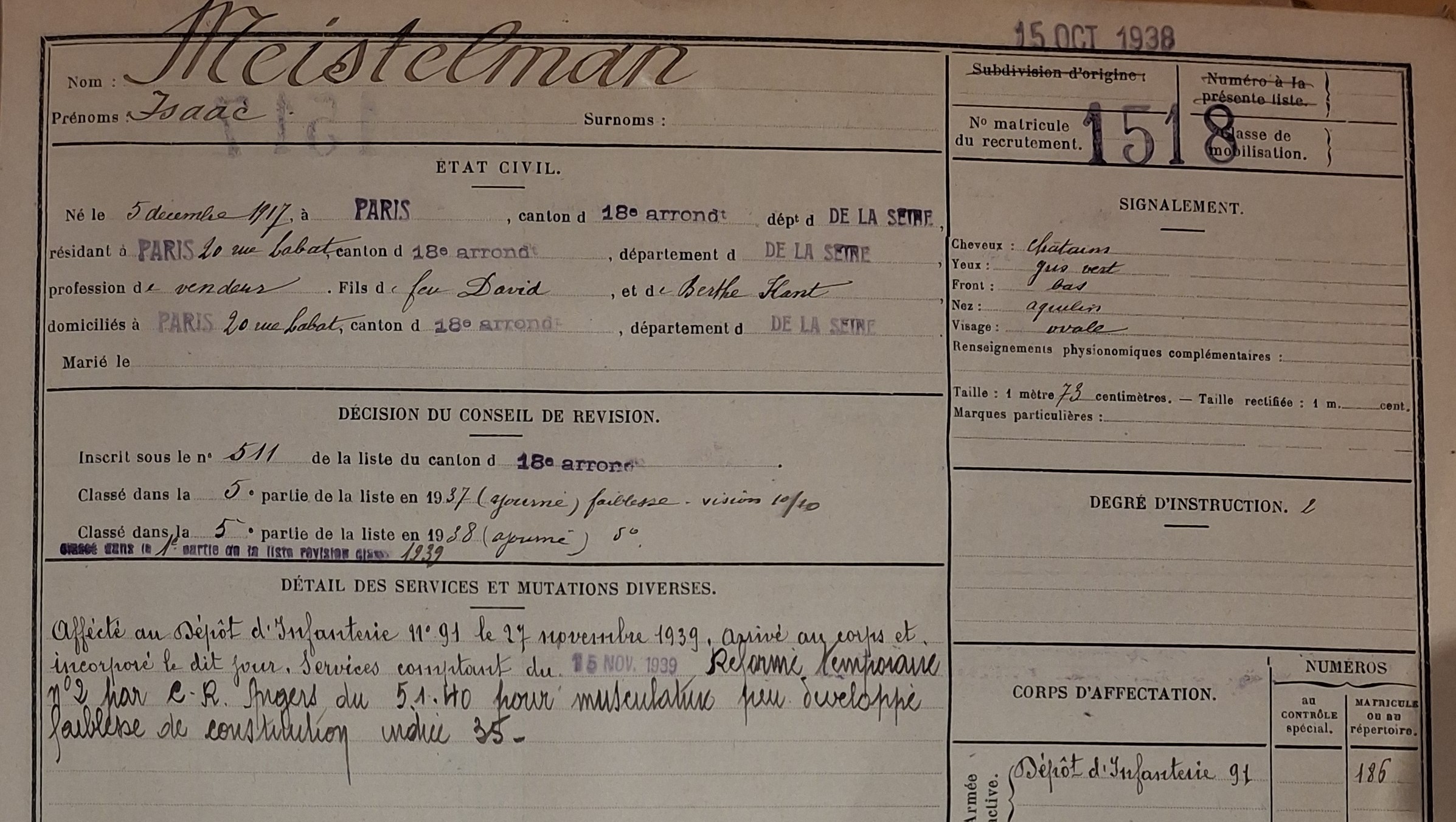
Isaac Meistelman’s army service record
© Paris archives. Ref. D3R1 426 (1937)
Based on our research, it appears that Isaac worked in various different jobs: he was an upholsterer in 1935, a salesman in October 1938, a laborer in 1943, and a packer in June 1944. According to Michel Brodsky, his nephew by marriage, he is also said to have been a cabinetmaker. Isaac must therefore have managed to hold down all these jobs despite having no qualifications. We do not have enough information to get a clear picture of the Meistelman family’s financial circumstances following David’s death. The only thing we know for sure is that their home at 20 Rue Labat was not in a low-income apartment building. We do not know how big the apartment was, nor how much the rent was, but it appears that Rosa and Isaac between them managed to earn enough to support the household.
Incidentally, thanks to some information that turned up at the last minute, we discovered that Berthe Meistelman was naturalized as a French citizen by decree on October 15, 1939, although we were unable to find her file in the French National Archives.
Isaac, Rosa and Berthe: a family confronted with the government’s anti-Semitic policies
It was only thanks to the official documents pertaining to Rosa that we were able to piece together what happened to the Meistelman family amid the twists and turns of the anti-Semitic policies put in place by the German authorities and the French government.
On October 3, 1940, the French government passed a decree that required all Jews had to take part in a census, which involved registering with their local prefecture. We know from the Paris Police Headquarters’ Jewish register that Rosa Meistelman went to register herself as a Jew sometime between October 3 and 19, 1940. The other family members did the same, although their records are no longer in the archives. The Jewish register was subsequently used to target people for arrest and deportation. Rosa’s name, like those of tens of thousands of other people, was on the list. The census made it possible to keep records on 149,734 people from Paris alone.
Rosa’s record[18], which is in the name of Rosine Meistelman, is on orange paper, which means that she was a foreign Jewish woman. It has been stamped with the letter “J” (Jewish), and states that she was a shorthand typist. Her file number is 47.312, and this same number would have been on the records for all of the family members. A handwritten note, which was added later in pencil reads “Convoy 27.7.42,” a reference to the date on which she was deported: July 27, 1942.
All Jews who registered in the fall of 1940 were then summoned to report to an annex of the Paris Police Headquarters between October 1 and November 21, 1941 in order to update their records. This time, Rosa’s record[19], was on beige paper (again meaning that she was a “foreign Jewish woman”), states that she was an “ex-shorthand typist”, which suggests that she had lost her job by then, probably as a result of government-imposed restrictions on the employment of Jews. At some point after 1941, two notes, handwritten in pencil, were added: “arrested 7/16/42” and “convoy 7/27/42,” which correspond to the dates on which Rosa was arrested and deported, July 16 and 27, 1942. We know that Isaac also took in both of the censuses because this is noted on his U.G.I.F. membership form[20], which was filled out in 1943.
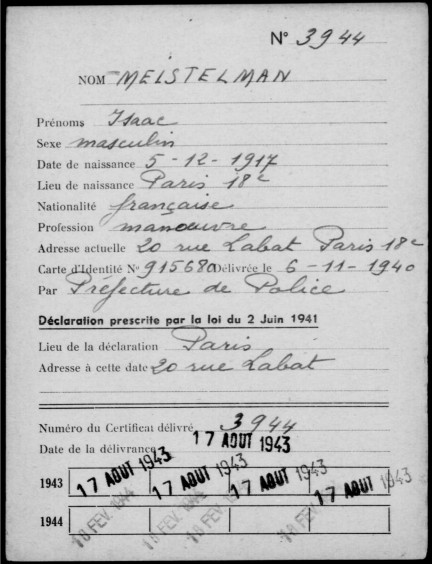
Isaac Brodsky’s U.G.I.F. membership form © YIVO Institute for Jewish research.
Register of U.G.I.F. members in the occupied zone (1943-1944), file no. 22.3.1
We know very little about Isaac’s life in Paris during the first two years of the Occupation. We assume that he must have found a job that paid enough to cover the rent on the apartment. Aside from that, the Meistelman family was hit hard by the new anti-Semitic legislation in force in occupied France, particularly in 1942. First, from February onwards, there was a curfew for Jews that ran from 8pm to 6am. Then, as of 7 June 1942, they were required to wear the yellow star.
A further tragedy struck the family home on rue Labat in July 1942. On July 16, 1942, Paris awoke to the news of an unprecedented crackdown: the Vélodrome d’Hiver roundup, better known as the Vel’ d’Hiv roundup. In a joint operation with the German authorities and the French government, the French police sprang into action. They hunted down foreign Jews all over the city center: Germans, Austrians, Polish, Czechoslovakians, Russians, and other nationalities. In two days, they rounded up more than 13,000 people, including men aged from 16 to 60, women from 16 to 55, plus their children, even if they the children were French citizens. All the people without children were taken straight to the Drancy transit camp, north of the city.
It was during this roundup that Rosa, as a 30-year-old stateless Jew originally from Russia, was arrested. She was the only member of the family who was taken. She was unmarried and had no children, so the police took her straight to Drancy. It was July 16, 1942, and she had been living in France for at least twenty-five years by then! Isaac and her mother probably witnessed the arrest, which must have been deeply traumatic. At 57 years old, Berthe herself only narrowly escaped being arrested, due to her age, while Isaac, who was 25, was “saved” because he was a French national.
Drancy camp was the largest transit camp in France: more than 60,000 people were interned there pending deportation to concentration and extermination camps. Rosa was taken there on the very day of the roundup, which suggests that the French authorities were highly organized and efficient. A handwritten form was filled out for each new arrival. We found Rosa’s internment record[21], which lists her personal details (first name surname, date and place of birth, address, nationality and occupation). There is also a red cross in red pencil in the lower right corner, but we have been unable to determine its significance.
When people first arrived at the camp, they were searched and made to hand over all their money and valuables. To maintain the illusion that their personal belongings would eventually be given back to them, the camp authorities drew up receipts listing the items that had been confiscated. The internees were given a copy of their receipt. We found out from the search register[22], held in the Drancy camp archives, that Rosa had 2,100 francs taken from her, which was among the highest sums on the page. On January 26, 1944, the money was paid into the Caisse des Dépôts et Consignations (the French National depository account)[23]. We have no idea why Rosa took so much money with her: perhaps her mother or Isaac gave her the entire family’s savings when she was arrested, in the hope that it would prove useful to her later on? Or could it be that Rosa herself decided to take it? It is impossible to answer these questions, in the same way that it is impossible to reconstruct the exact circumstances surrounding her arrest.
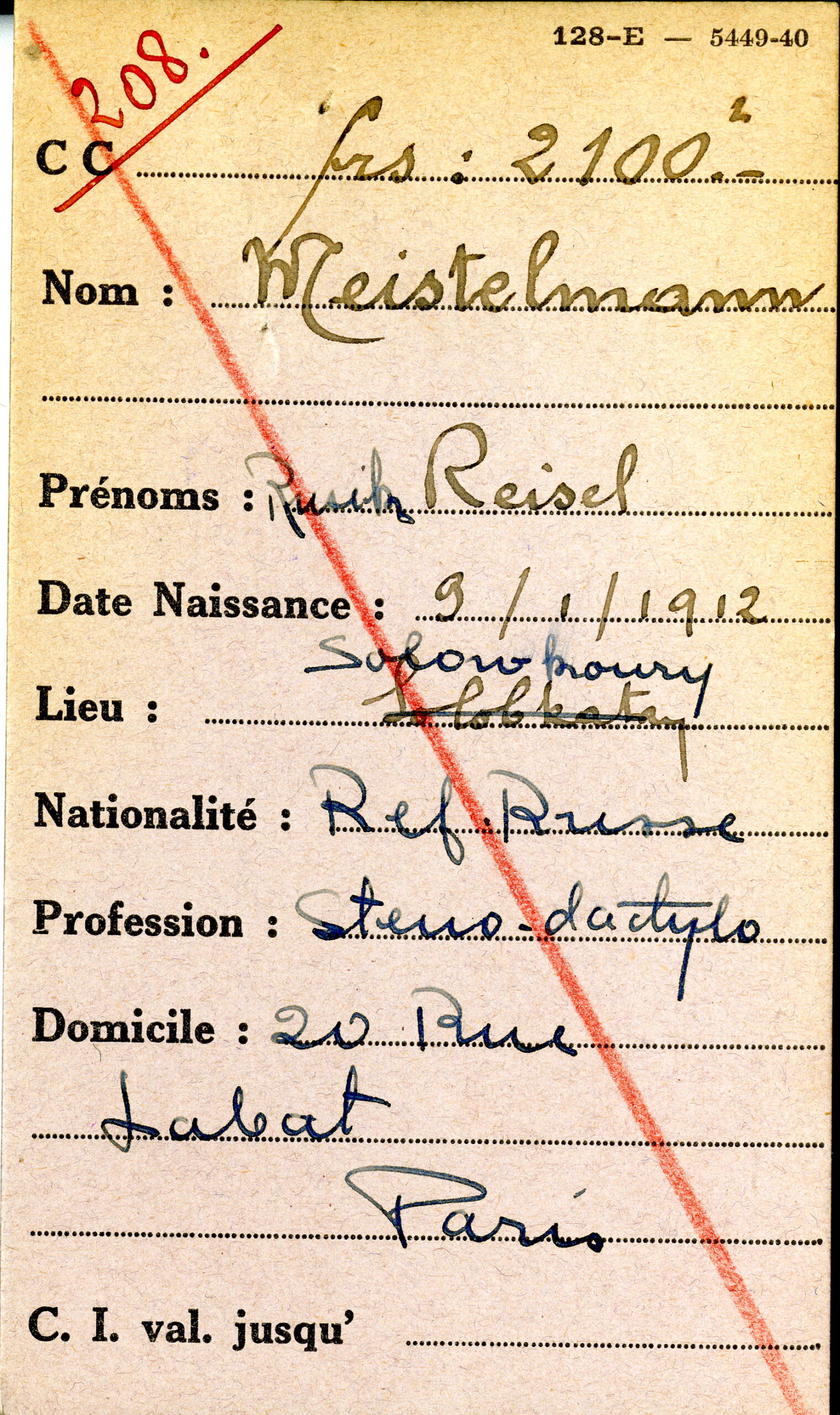
Rosa Meistelman’s search receipt
© Paris Police Headquarters archives, ID14/07/0583
Rosa only spent eleven days in Drancy. Her name is on the transport list for Convoy 11, which confirms that she was deported from Drancy on July 27, 1942. When the train arrived in Auschwitz-Birkenau on July 29, she must have been terrified and disoriented. She would have got off the train along with the other 999 deportees that made up on the convoy, after which the men and women were segregated. Rosa was one of 742 women.
The gas chambers were not yet operational at that point, so the notorious selection process did not happen immediately. The women, most of whom were between 32 and 53 years old, walked to the camp unaware of what lay ahead. Rosa and the others had to get undressed and hand over their personal belongings, after which they were searched. They were probably made to take disinfectant showers and change their clothes, and then each of them was assigned a registration number between 12340 and 13081.
Of all the people deported on Convoy 11, only 13 survived, including one woman. Sadly, it was not Rosa. There is no trace of her whatsoever in the Auschwitz camp archives, so we do not know when or how she died.
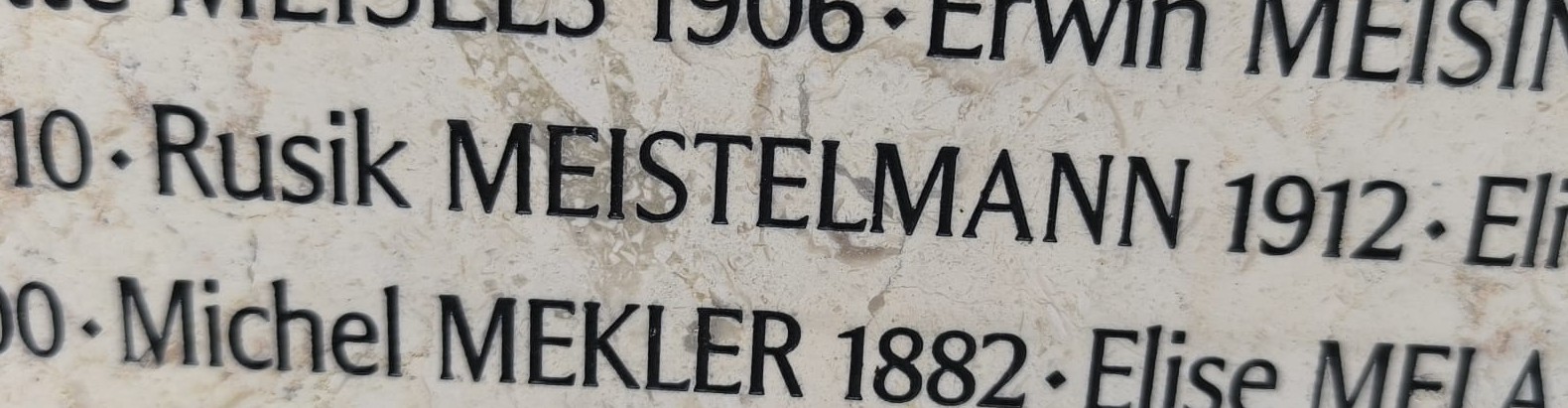
The Wall of Names at the Shoah Memorial in Paris © Joanna Barbosa
Isaac, a son struggling with his mother’s mental condition
Overwhelmed by anxiety and the lack of information in the wake of her daughter’s disappearance, Berthe fell into despair. On September 25, 1942, unable to bear the waiting and Rosa’s absence any longer, she jumped from the fourth floor of the building at 7 bis Boulevard Rochechouart, where Jankiel and Etia Meistelman, her husband David’s brother and sister-in-law, lived. We found a note about this incident, written by the police commissioner of the 18th district, in the Paris Police Headquarters archives[24].
Berthe, who was seriously injured as a result of the fall, was taken to Marmottan Hospital in Paris, a facility that specialized in emergency trauma care. Her desperate attempt to take her own life reflects how deeply distressed she was by the unbearable uncertainty about what had become of her daughter, who had been arrested in front of her very eyes. Two months later, Berthe told the staff at another medical facility, Maison Blanche, that she “threw herself out of the window heartbroken at not having had any news of her daughter, who had been taken to a camp five months earlier.”[25]
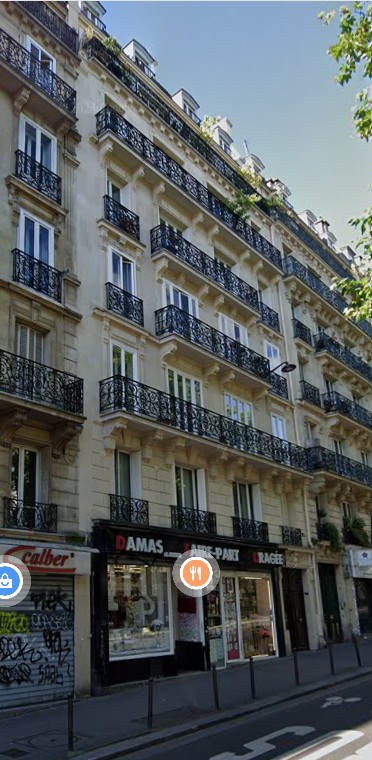
Recent photo of 7 bis boulevard Rochechouart (18th district) © Google Maps
On October 17, 1942, Berthe was admitted to the Henri Rousselle Hospital in Paris “for observation.”[26]. This hospital, which first opened in the early 1920s, was a small facility within the Sainte-Anne asylum. Founded by Dr. Édouard Toulouse, it took in patients who were not subject to the provisions of a law enacted on June 30, 1838, which set out the rules for committing people to asylums (it was not until the late 1930s that the terms “lunatic asylum”, “insane asylum”, “mental asylum” etc. were replaced by “psychiatric hospital”). As was the case in other types of hospital, patients could refer themselves for both consultations and admission. However, when a patient was first admitted or at any time during their stay, if a doctor deemed it necessary, they could be transferred to an asylum and held there either of their own accord (at their own request or that of their family) or against their will (by order of the authorities, often the local prefect, in cases where they were deemed to be a danger to themselves or others).
On October 25, 1942, Isaac requested that his mother be committed to a psychiatric unit. The doctor recommended the psychiatric ward at Sainte-Anne. According to a medical report dated November 14, 1942, shortly before she was admitted, Berthe was suffering from severe depression: “Melancholic depression, sadness, abulia (neurological disorder, slowing of mental activity), frequent bouts of anxiety, severe insomnia, refusal of food and medication, weight loss.” [27]. These symptoms are indicative of severe psychological distress. Abulia is often seen in cases of severe depression: the person loses interest in everything, even the most basic activities, such as eating or talking.
Berthe was admitted to the Sainte-Anne asylum on November 16, 1942[28]. The doctor who examined her noted that she had “scars in the left scapular region and numerous superficial abrasions, presumably the result of jumping out of the window two months earlier. The doctor also referred to “previous mental impairment” resulting from “an emotional shock.”[29].
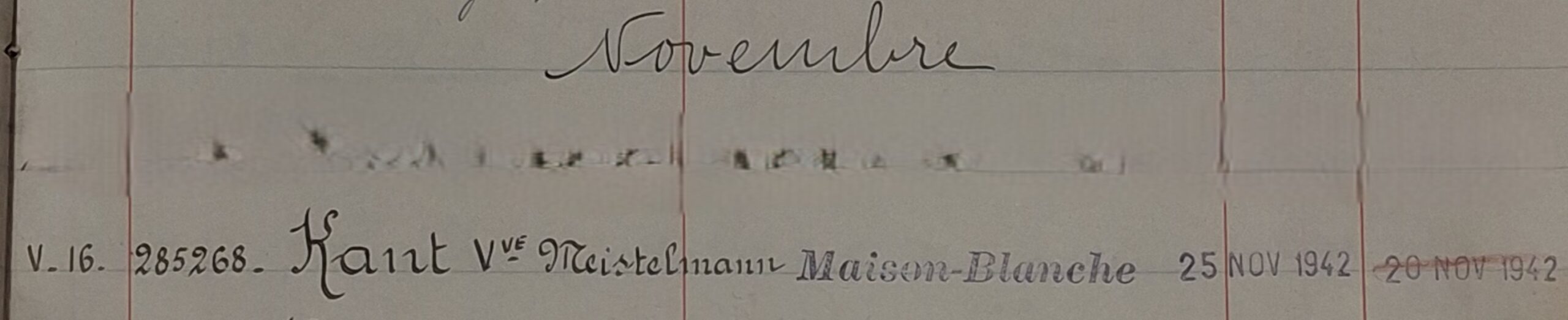
Entry in the Sainte-Anne hospital admissions register, year 1942, letter K
© Paris archives, Register 3581W 13
On November 25, 1942, Berthe Meistelman, then aged 57, was admitted to the Maison-Blanche hospital in Neuilly-sur-Marne, under patient number 285,268. Once again, she was there under her own free will. In 1945, the Maison-Blanche hospital was one of the largest asylums in Paris and the surrounding area. It was founded in 1887 and run by the public psychiatric service, it took in patients from the Seine department, mainly from the city of Paris and the inner suburbs. It continued to operate during the Occupation according to the law passed on June 30, 1838, which set out the rules for the internment of people with mental disorders. There were separate buildings for men and women, and patients were grouped according to their psychiatric disorder, the degree of danger they posed, and the level of supervision required.
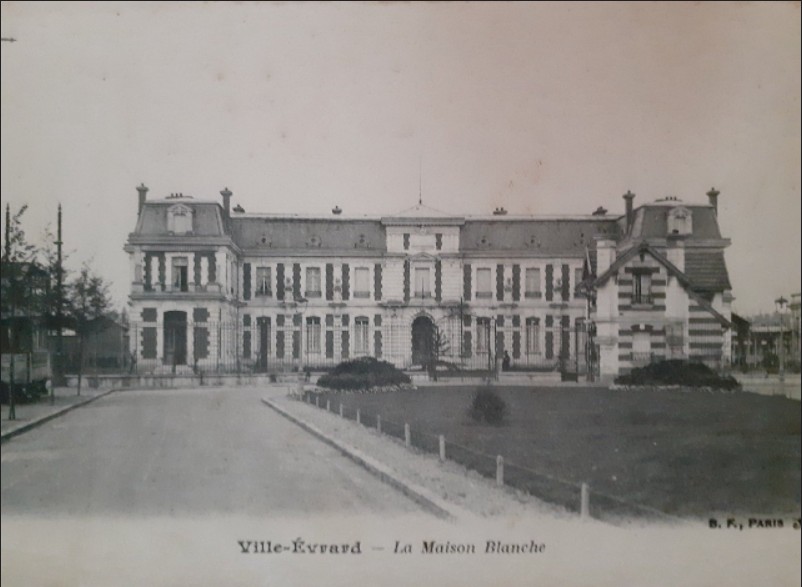
Old postcard of the Maison Blanche hospital (now in the Seine-Sainte-Denis department of France) © Maison Blanche History & Heritage Association.
Life in such institutions was hard, especially during and just after the war, due to food rationing, medication shortages, understaffing, and the patients’ lack of social interaction. Many patients suffered from malnutrition or were in very poor health. Maison-Blanche, like other asylums in the area, was hit particularly hard during the Occupation. Between 1940 and 1945, the situation became dire, with high mortality rates, mainly due to malnutrition: experts estimate that thousands of patients in French psychiatric hospitals died of starvation during this period.
For the first two months she was there, the doctors made relatively positive comments in her medical file. They also said that her son Isaac and sister-in-law, Etia Meistelman visited her regularly. However, in early January 1943, Berthe’s mental and physical health started to deteriorate. Her medical records include some details about this, with notes such as: “in very poor general condition,” “considerable and continuous weight loss despite daily tube feeding,” “progressive cachexia but no fever.”[30].
Cachexia is a state of extreme malnutrition, characterized by severe weight loss, muscle wasting, and overall weakness. In Berthe’s case, it seems to have been caused as much by her refusal to eat as by clinical depression. The fact that the staff resorted feeding her through a tube clearly shows that they were trying to keep her alive despite her being totally disinterested.
In his last report, dated October 1, 1943, the doctor wrote to Isaac: “Your mother is in a very serious condition: she has lost a great deal of weight and serious complications could develop at any moment. The day before yesterday, she had a blackout that lasted several minutes. The prognosis is therefore very grim. You are allowed to visit her every day and, in exceptional circumstances, outside visiting hours.”[31] We do not know if Isaac went to visit his mother after he received this alarming news.
The deaths of his father and his sister, followed by his mother’s suicide attempt and admission to hospital, must have left Isaac in shock. We can only imagine how hard it must have been for him to go to Neuilly-sur-Marne to visit Berthe in hospital. It would have been a long, stressful, tiring journey, made even more difficult because the hospital was outside Paris: he had to wear the yellow star, was only allowed to ride in the last car of the subway, and was not allowed out between 8 p.m. and 6 a.m. due to the curfew. He must also have been worried about what state she would be in when he got there. Would she speak to him? Would she even recognize him? Did she still have the will to live?
The fact that his aunt Etia was there for him, and that she too received some of the medical reports, must have helped him to cope. He must have felt utterly helpless as he watched his mother’s condition deteriorate day by day. As such a young man, he must have felt desperately lonely.
On October 9, 1943, after a long struggle with both her mental and physical health, Berthe passed away[32]. We can only imagine how angry and upset Isaac must have been at such a terrible time. Berthe was buried in the Jewish section of Bagneux Cemetery at 10:15 a.m. on October 13, 1943[33].

Bagneux cemetery burial register, entry for October 12-13, 1943
© Paris archives ref. BAG/RJ19431943/01
Although we found the details in the burial register[34], we were unable to locate the communal grave in which Berthe was laid to rest. Did Isaac go to his mother’s funeral? Did Jankiel and Etia Meistelman go with him? Given that Jews were in constant danger of being arrested in places they were known to frequent, it is quite possible that none of the family members took the risk of going to Bagneux that day.
Isaac, a young man who fell in love
After his mother went into hospital, Isaac was left all alone in the apartment on Rue Labat. He appears to have managed on his own, in particular as regards dealing with Berthe. But how was he really?
We know that by the spring of 1943, he had already been in a romantic relationship with a 23-year-old French woman for some time. Her name was Thérèse Brodsky, and like Isaac, she had Russian roots. Both lived in the same neighborhood, Isaac alone and Thérèse with her parents, Leiba and Luba Brodsky, and her younger sister, Claire. She also had an older brother, Jacques, who married Rose Kouczynski in 1938 and by 1943 they already had a little boy, called Michel. We have no idea how Isaac and Thérèse met: did they perhaps have friends in common, was it a chance encounter in the street, or maybe it was at work, when Isaac occasionally worked as a packer for Jacques Brodsky? Anyway, regardless of how or when they met, Isaac must surely have told Thérèse that his sister Rosa had been arrested and that his mother was suffering from a mental illness.
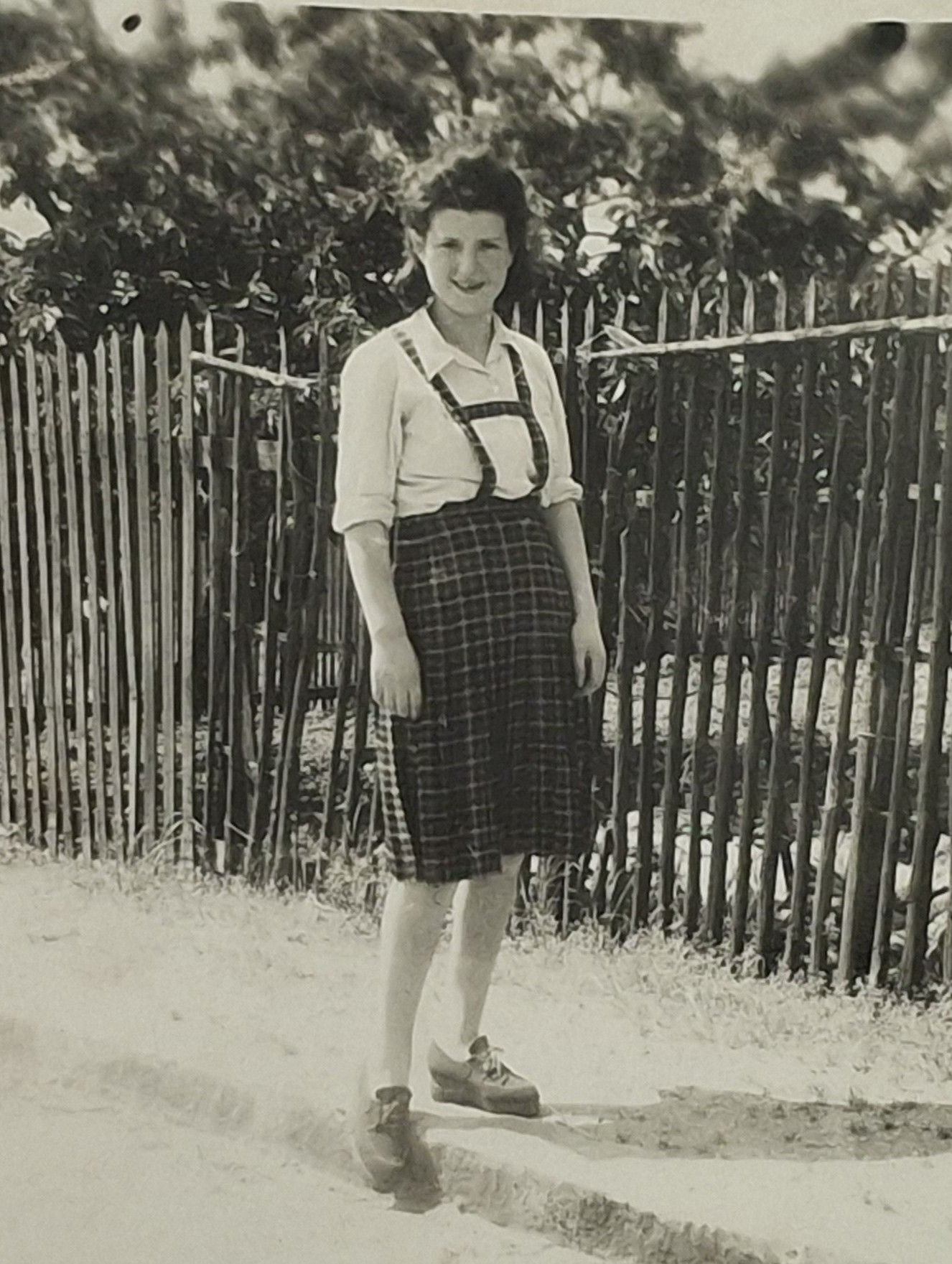
Photo of Thérèse Brodsky, undated
© Michel Brodsky’s personal collection
We discovered some information that shows that the Brodskys welcomed Isaac into the family and that he spent increasing amounts of time with them from 1943 onwards. We arrived at this conclusion after analyzing the U.G.I.F. membership records, as Isaac’s membership number, (3944)[35], falls between those of Thérèse’s father, Leiba Brodsky,( 3943)[36] and Rose Brodsky, Jacques Brodsky’s wife (3945)[37].
Isaac is also in some of the Brodsky family photos, which were taken in the spring of 1943 in Montigny-Beauchamps, where Leiba Brodsky or his son Jacques owned some land on which the family had built a little cabin. The family often went on weekends to spend time in the countryside, even during the Occupation when Jews’ movements were restricted. Thérèse’s nephew, Michel Brodsky, kindly shared these photos with us. We managed to contact Michel, who is the last person to have known Isaac and Thérese during their lifetime, after an extensive search. He was just four years old when the photos of him and his aunt were taken in 1943. Although he must also have known Isaac quite well at the time, he has no memory of him now, but he knows from his parents’ accounts that Isaac was a charming young man who was well-liked by the Brodsky family.
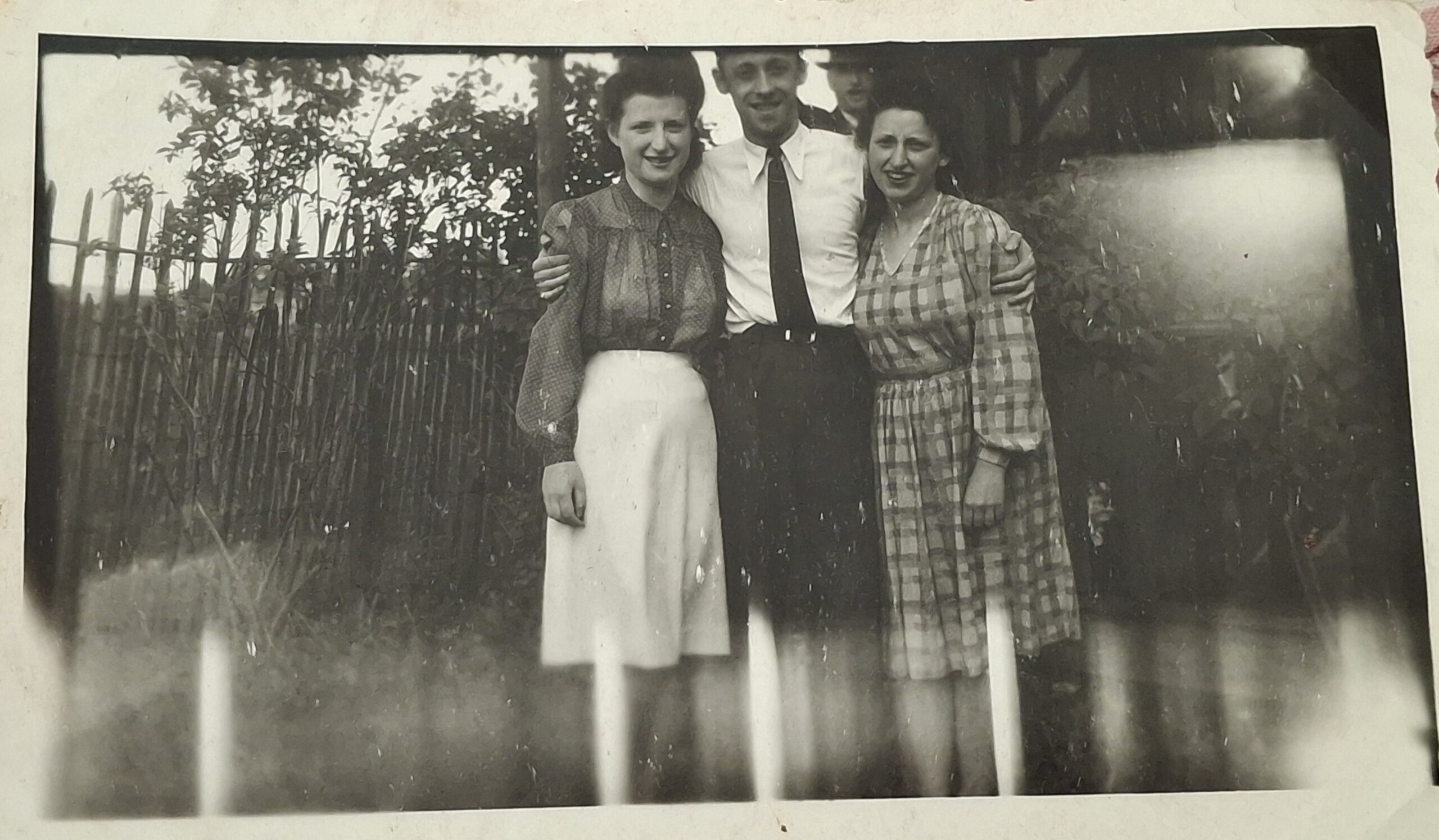
Isaac, Thérèse and Claire Brodsky, Montigny-Beauchamp, undated
© Michel Brodsky’s personal collection
The photographs taken in Montigny-Beauchamps show how close Isaac and Thérès were, as they pose for the camera with their arms around each other. Michel also showed us two undated photographs of Isaac: one with him lying on the grass just outside his tent and the other with him sitting in a kayak on the grass. We found these black-and-white snapshots a touching testament to the family’s happy, close-knit relationship when we first saw them during our visit to Michel’s home last June.
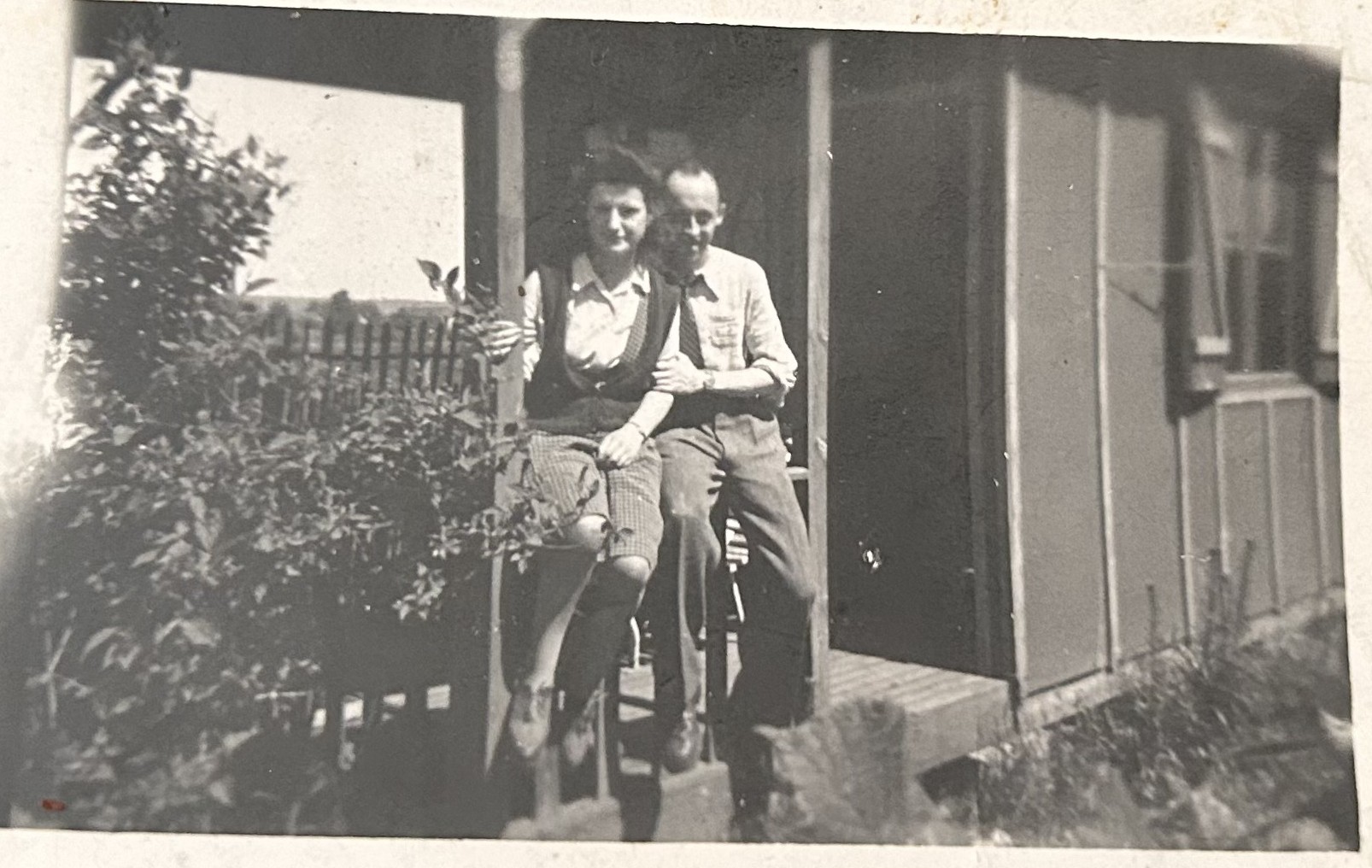
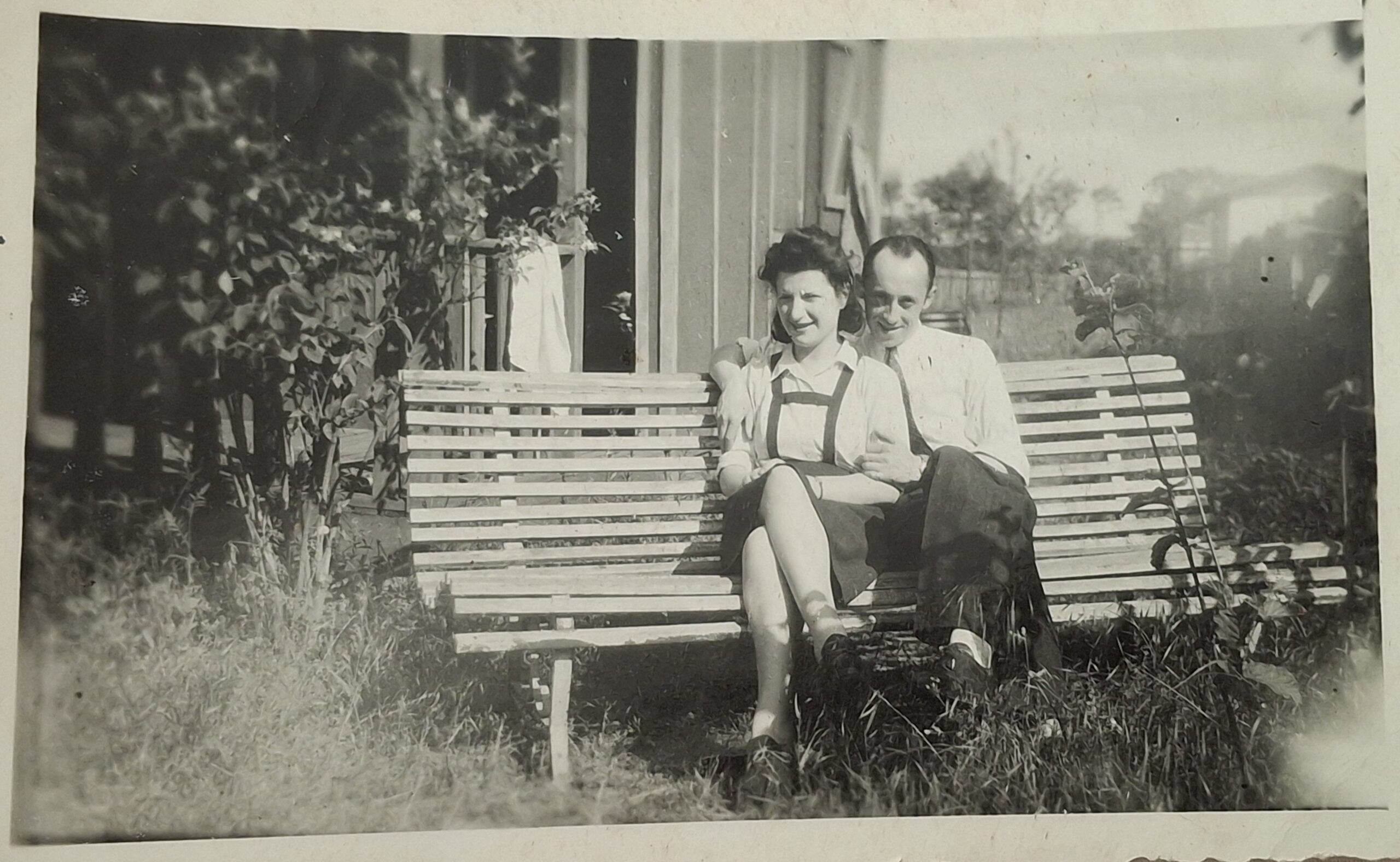
Thérèse and Isaac, Montigny-Beauchamp, 1943
© Michel Brodsky’s personal collection
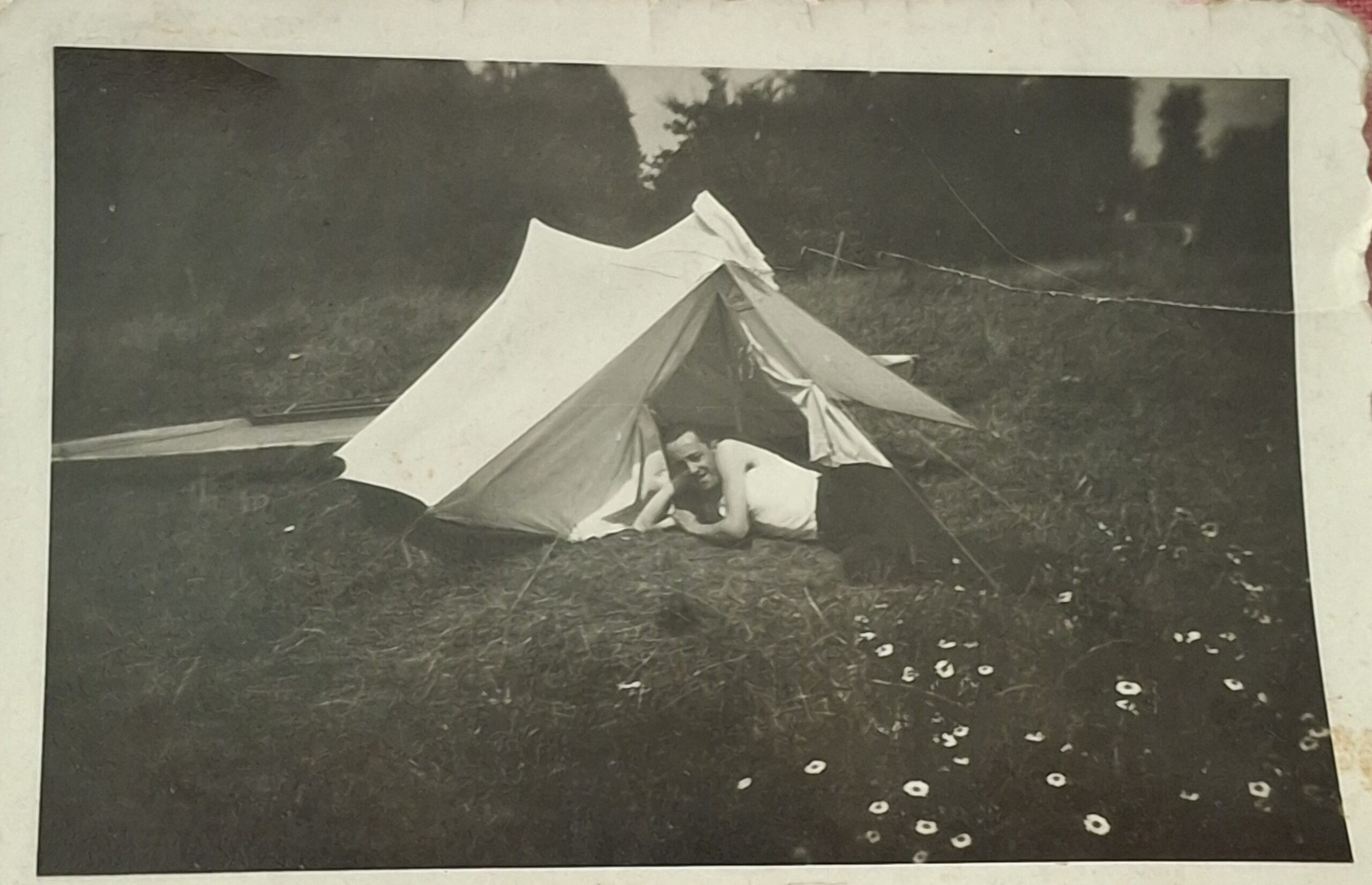
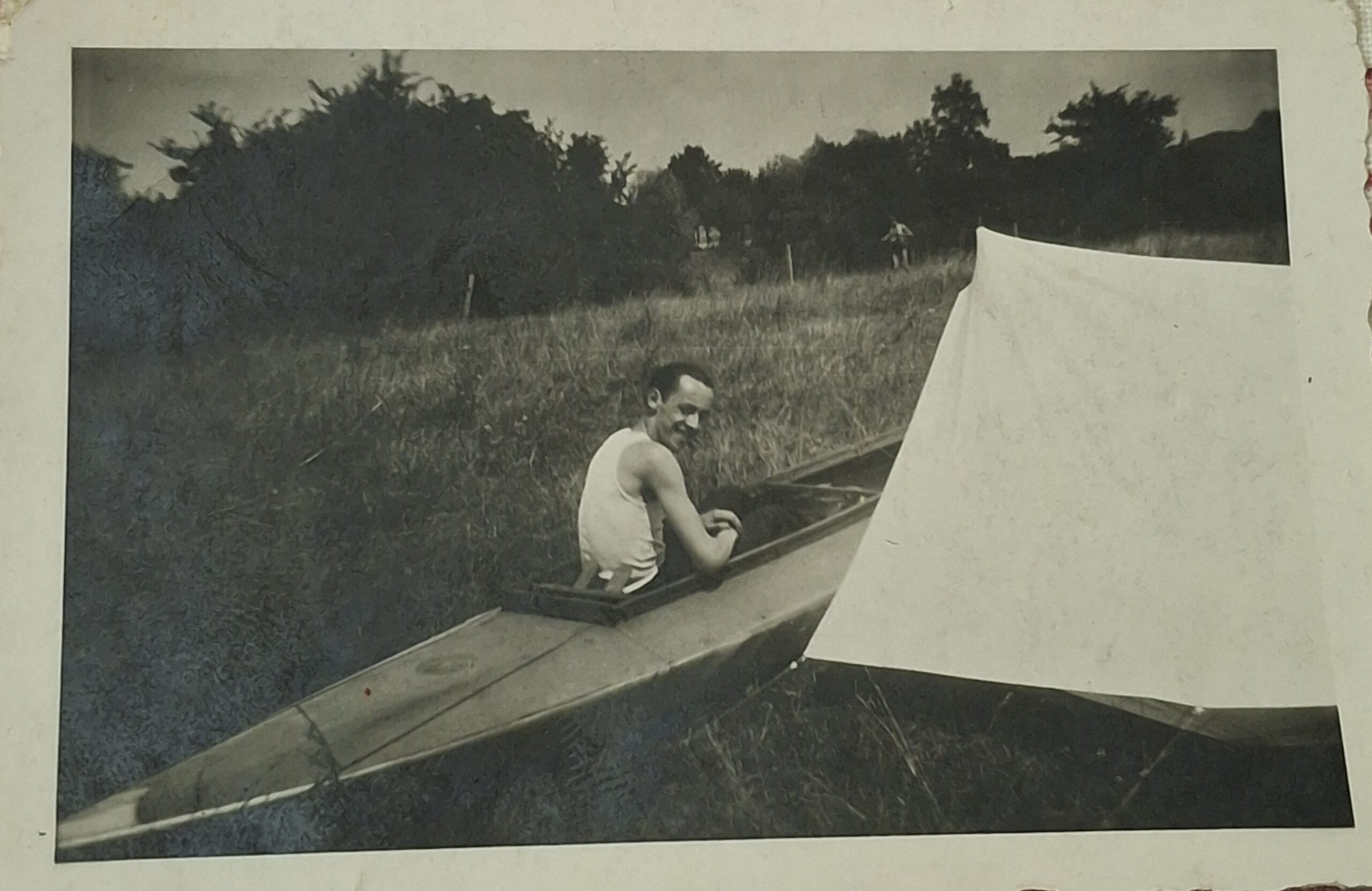
Isaac beside his tent, undated
© Michel Brodsky’s personal collection
Thérèse and Isaac, newlyweds caught up in the deportation machine
On June 8, 1944, 10:20 a.m., Isaac Meistelman married Thérèse Brodsky in the town hall of the 18th district of Paris. Their marriage certificate[38] states that Isaac was working as a packer at the time, while Thérèse was unemployed. There is no mention of a marriage contract. Their witnesses were Théodore Bunoust, an accountant, and Henri Dumont, a shipping clerk.. We did not know who these men were when we began our investigation, but subsequently managed to identify them through the Aryanization file for the Brodsky family business[39]: they were the two “Aryans” who bought the family firm and who agreed to allow Thérèse’s brother Jacques to resume ownership of his business after the Liberation. Why did Thérèse and Isaac’s choose them as witnesses to the wedding? Both spouses had several family members who could have signed the marriage certificate. Did they feel it was too risky to have Jewish people attend the ceremony? Did Isaac’s uncle Jankiel and aunt Etia go with him at least?
Michel Brodsky has no memory of Isaac and Thérèse’s wedding. He thinks that the ceremony at the town hall must have been followed by a meal on Rue Damrémont. Nevertheless, he sent us a much-cherished wedding photo, dated June 8, 1944. We can see the joy and light in their eyes, despite the cloud of war hanging over them.
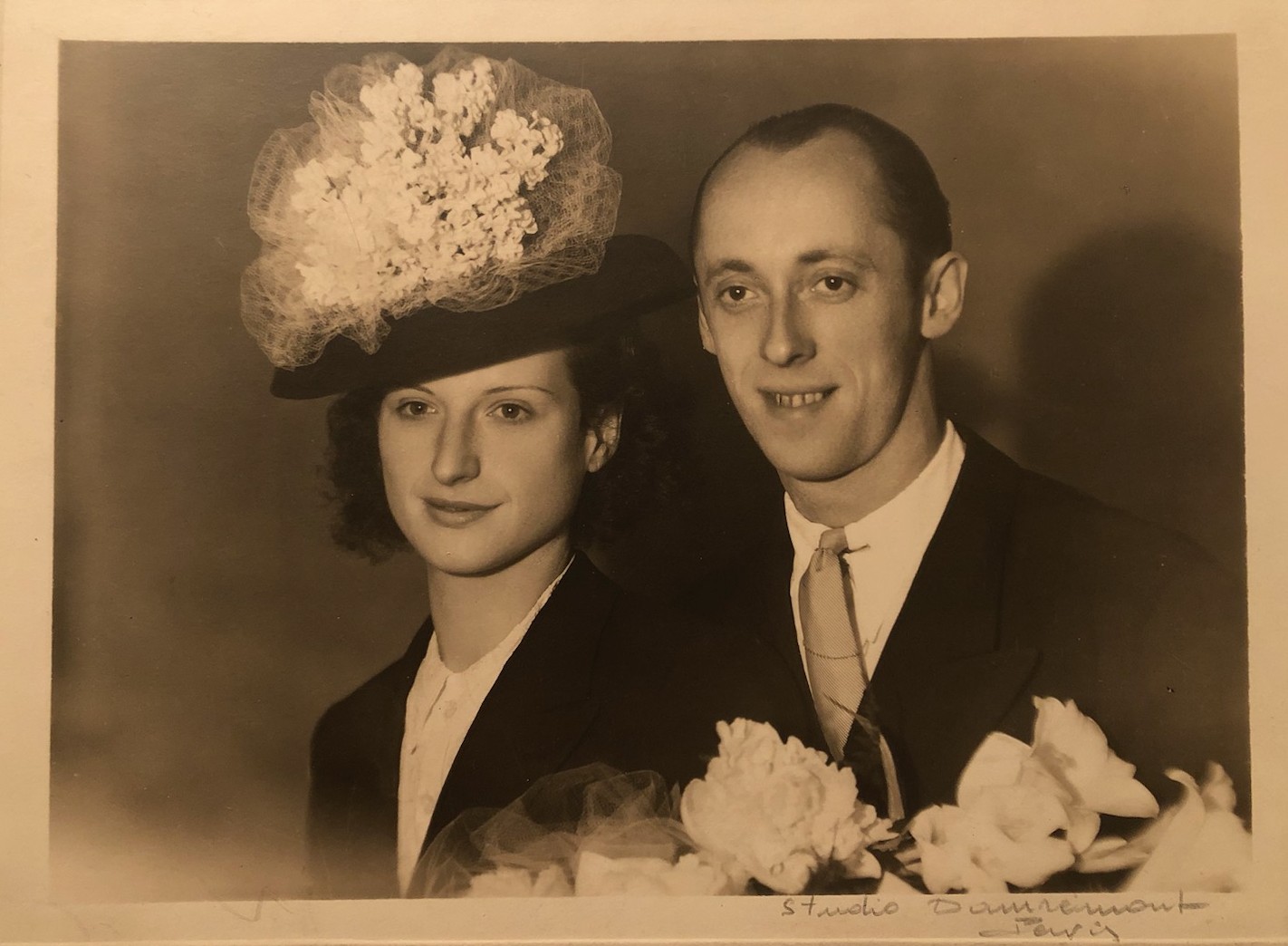
Isaac et Thérèse, June 8, 1944
© Michel Brodsky’s personal collection
Soon after they were married, Thérèse moved in with Isaac at 20 rue Labat. Michel, who was five years old at the time, visited them often with his mother Rose, who was very close to Thérèse. His parents used to tell him how he adored his aunt Thérèse and often stayed the night in her apartment, first on Rue Damrémont and then, after she got married, on Rue Labat. Sadly, however, he does not remember her at all.
During the month of June, the newlyweds got a taste of the simple pleasures of married life. Their happiness was short-lived, however, as it came to an abrupt end on the evening of June 30, 1944. That fateful evening, on which their lives were turned upside down, Michel was due to spend the night at their house, but he was sick so he stayed at home. This seemingly insignificant turn of events saved his life.
According to the testimony of the concierge at 20 rue Labat, a Mrs. T.[40], at around 12:40 a.m. on July 1, 1944, the Gestapo arrested at Thérèse and Isaac Meistelman in their apartment. They were not the only people in the building to be arrested that night. The Germans also arrested an elderly couple, Guita and Léon Greitzer, who must have known Isaac as a child, as well as Sura Glattleider and her daughter Adèle, Sarah Bouaniche, her presumed sister Haia Nejman and their father Abraham Samter and also a single woman by the name of Cyvia Scherman. All of them were later deported on Convoy 77 except for Haia Nejman, who was deported to Bergen-Belsen on Convoy 80.
Later that morning, Thérèse, Isaac, and the eight other unfortunate souls were taken to Drancy internment camp. The Drancy transfer log lists all the internees from 20 rue Labat as having come from “K. Drancy”[41]. This most likely stands for “Kommando Drancy,” a group of Jewish prisoners who collaborated with the SS. Our research suggests that this Kommando was responsible for a number of Jews in Paris in return for assurances that they and their families would not be deported[42]. It is therefore possible that the Drancy Kommando was responsible for the arrest of Thérèse, Isaac, and the other people in their building as well as some others who lived on Rue Labat, including Youssef Choichet, his sons Michel and Maurice, and Juliette Drucker.

An entry in the Drancy arrivals log © French National archives, ref. F/95787/0142/L. Serge Klarsfeld, in his book Calendar of the Deportation, refers to “K Drancy” as Kommando Drancy
We know from the Drancy search log records that when Isaac arrived in the camp on July 1, he was assigned the serial number 24660 and that he handed over the 130 francs in cash that he had on him at the time[43]. His internment card[44] includes his serial number, the note “+61”, which linked him to Thérèse (her number was 24661), and the letter B, in red, which meant that he could be deported immediately. On the top right of the card there are notes about where he stayed: 19.4, 7.3, and lastly 7.1. The first number denotes the stairwell, the second the floor number. The last note is written in blue. We therefore know that Isaac was initially interned on the fourth floor on staircase 19, was then moved to the third floor on staircase 7, and from there to the first floor on staircase 7. His route through the camp culminated in what was to be his final journey, to Auschwitz.
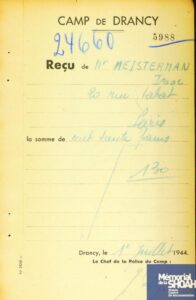
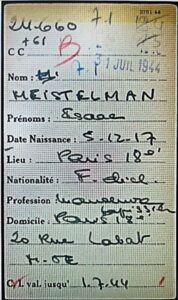
Isaac’s search receipt © CDJC, Drancy search logbook and Thérèse’s internment record © French National archives, ref. F/9/5715/193575/L
The note “F.decl,” indicates that he had become a French citizen by declaration. The letter “M” beneath the address “20 rue Labat” means that he was married. The abbreviation “SE” stands for “sans enfant” (no children). The figures at the bottom of the card, 1.7.44, refer to the date on which he entered the camp, July 1, 1944. On the back, in blue, is the number 1083: this refers to his place on the deportation list. Lastly, the words “cert. remis à sa belle-mère” (certificate given to his mother-in-law) mean that an internment certificate was issued to Luba Brodsky on March 6, 1945.
Thérèse’s internment record[45] reveals similar details. She was assigned the serial number 24661. The note “+60” refers back to Isaac’s record. She too could be deported immediately, as indicated by the letter B. Thérèse was initially separated from her husband, as she was put on the third floor on staircase 19. She later joined him and remained with him until they were sent to the extermination camp, first on the third floor of staircase 7, then on the first floor. The date stamped on the card, although not entirely legible, is the date on which the transport left Drancy, July 31, 1944. The inscription “F. decl” means that Thérèse had become a French citizen by declaration. Like Isaac, Thérèse was listed as married and with no children. On the back of the internment card, the number “1084”, written in blue , shows that Thérèse was listed right below her husband on the deportation list.
The couple remained in Drancy camp for thirty days, after which they were deported on Convoy 77 to Auschwitz-Birkenau. The convoy left Bobigny station on July 31, 1944. It passed through the gates of hell and arrived during the night of August 2-3, 1944. As soon as they got off the train, Thérèse and Isaac were separated once more: Isaac was sent to line up with the men, while Thérèse was sent to the women’s line.
Thérèse and Isaac, never to be seen again …
The rest of Thérèse and Isaac’s story is unclear. It is based on research undertaken by Thérèse’s parents, the Brodskys, beginning in 1945, and referred to in the file on Thérèse held by the French Ministry of Defense Historical Service in Caen, Normandy.
After Paris was liberated, Thérèse’s parents tried desperately hard to find out what had happened to their daughter and son-in-law. Luba managed to obtain an internment certificate for Isaac in March 1945[46], which proved that he had been interned in Drancy. The family most likely also went to the reception center at the Lutetia Hotel in Paris when people who had survived the concentration and extermination camps arrived there, hoping against hope to spot Thérèse or Isaac themselves, or at least to find someone who might know what had happened to them.
Luba appears to have been able to collect statements from some witnesses who saw Isaac and Thérèse in Auschwitz-Birkenau sometime after the convoy arrived. This means that they must both have been selected to enter the camp to work. We therefore decided to study some of Convoy 77 survivors’ testimonies in order to find out what might have happened to Thérèse and Isaac.
After the selection, Thérèse would have been taken into a barrack within the camp where, along with all of the other women who had been selected to work, she would have had to get undressed and would then have been shaved, shorn, and disinfected. She would then have been tattooed with a number between A16676 and A16833. Luba Brodsky referred to a testimony from one of her daughter’s friends who survived and returned to France. She said in 1945 that she had seen Thérèse alive and well on October 27, 1944[47]. If this is true, the date is highly significant, because it coincides with several transfers of Jewish women from Birkenau to other camps, in particular Kratzau and Bergen-Belsen. We do not know the identity of Thérèse’s friend, nor do we know what became of Thérèse after she was last seen alive. The only thing we know for sure is that Thérèse never returned from the camps.
As for Isaac, he would have undergone a similar ordeal as his young wife: stripped naked, shaved all over, hair shorn and. disinfected. He would have been tattooed with a number between B3673 and B3963. Luba Brodsky managed to obtain another testimony that states that Isaac was still alive, albeit very sick, in September 1944[48]. Isaac most likely died in the camp, possibly after being selected for the gas chambers during one of the regular selections, possibly a particularly large selection that took place in October 1944. Once again, the only thing we know for sure is that he never made it back to France.
While Thérèse’s parents attempted to find out what had happened to their daughter and later registered her death, the same cannot be said for Isaac. No missing person’s report was ever filed and no death certificate was ever issued. Isaac, like his sister Rosa, simply vanished in the hell of Auschwitz-Birkenau…
Thérèse and Isaac will remain in our memories forever, and their story has become part of our own. Their names are engraved on the Wall of Names at the Shoah Memorial in Paris, alongside those of so many others whose lives were cut short by the Nazi barbarity.

The Wall of Names at the Shoah Memorial in Paris © Manel Turmeau
A number of people were kind enough to help us as we were writing Isaac and Thérèse’s biographies. We would like to extend our heartfelt thanks to Michel Brodsky for welcoming us into his home and sharing his family’s treasured memories with us. Without him, we would never have seen Thérèse and Isaac’s happy faces.
Thanks also to Martin Brody, the cousin in the United States, and Barbara Miller, the cousin in New Zealand, for their willingness to share their stories.
In order to better understand Berthe Meistelman’s journey through the hospital system, we reached out to historian and psychiatrist, Michel Caire . He was kind enough to explain to us the various types of psychiatric institutions that existed at that time, for which we are very grateful!
We would also like to thank all the archivists whose assistance was invaluable in helping us locate and view the documentation that chronicles Thérèse’s life: Claire Stanislawski Birencwajg and Laura Paoli at the Shoah Memorial and the staff at the Paris Police Prefecture Archives, the Paris Archives, and the French National Archives.
Lastly, we would like thank the Convoy 77 project team, Claire Podetti and Laurence Klejman in particular, for their help and support throughout our investigation.
We would also like to spare a thought for Catherine Meistelman, Jankiel and Etia Meistelman’s granddaughter and Isaac’s second cousin. She never knew Isaac, and only discovered what happened to him and Rosa as a result of our research.
Students’ comments:
“This year’s workshop was truly fascinating. It was easy to carry out the research because we had plenty of documentation to work with. Thank you to Michel Brodsky for welcoming us and for the photographs.” – Rebecca
“The workshop, organized by Convoy 77, was a welcome surprise. I did not think we would come this far.” – Loris
“It has been really amazing to work on this project and to retrace Thérèse and Isaac’s life stories” – Léonie
“I particularly enjoyed the investigative work. The extensive research we undertook was educational and exciting. Thank you to our teachers for putting together this wonderful workshop! And thank you to the Brodsky family for helping us in our historical quest.” – Emma
Notes & references
[1] Jankiel Meistelman’s naturalization application: © French National archives, ref. 1258X30
[2] Berthe Meistelman (1943) © Seine-Saint-Denis Departmental archives, Neuilly-sur-Marne civil register
[3] David Meistelman’s death certificate (1935) © Paris archives. 18th district civil register
[4] File on Rosa Meistelman © OFPRA (French Office for the Protection of Refugees and Stateless Persons). OR 027, OR 060.
[5] Isaac Meistelman’s birth certificate © Paris archives. 18th district civil register
[6] 1926 census. Clignancourt quarter, 20 rue Labat © Paris archives
[7] 1931 census. Clignancourt quarter, 20 rue Labat © Paris archives
[8] Enrollment register, nursery school at 29 rue Marcadet © Paris archives. 2738W5
[9] Enrollment register, boys’ school at 43 rue des Poissonniers © Paris archives. 2733W13
[10] Jankiel Meistelman’s naturalization application: © French National archives, ref.. 1258X30
[11] Jankiel Meistelman’s naturalization application: © French National archives, ref.. 1258X30.
[12] French National Library, Gallica. Petit Journal. Issues dated November 11, 14 and 16, 1926.
[13] 1931 census. Clignancourt quarter, 20 rue Labat © Paris archives
[14] Rosa Meistelman © OFPRA (French Office for the Protection of Refugees and Stateless Persons) OR 027, OR 060.
[15] David Meistelman’s death certificate (1935) © Paris archives. 18th district civil register.
[16] Burial register, January 1935 © Paris archives. BAG/RJ19331935/01
[17] Isaac Meistelman © Paris archives. D3R1 426 Military service record (1937).
[18] Census record for Rosa Meistelman: © French National archives, ref. F/9/5654/061908/L.
[19] Census record for Rosa Meistelman: © French National archives, ref. F/9/5620/018008/L.
[20] Isaac Meistelman © YIVO Institute for Jewish research. Register of U.G.I.F. members in the Occupied zone (1943-1944), dossier 22.3.1.
[21] Rosa Meistelman © French National archives, ref.. F/9/5715/193576/L.
[22] Rosa Meistelman (search log register) © Paris Police Headquarters archives, ID01/03/0008
[23] Rosa Meistelman (search log register) © Paris Police Headquarters archives, ID14/07/0583
[24] File on Berthe Meistelman © Paris Police Headquarters archives. 77W178-909.
[25] Berthe Kant’s medical records © Paris archives: Maison Blanche hospital archives, 3619W144.
[26] Register of women’s admissions and discharges from May 1942 to September 1943 © Paris archives, Henri Rousselle hospital archives, 3687W27.
[27] Berthe Kant’s admission record © Paris archives: Maison Blanche hospital archives, 3689W48.
[28] Admissions register © Paris archives : Sainte Anne hospital archives, 4340W15
[29] Berthe Kant’s admission record © Paris archives : Maison Blanche hospital archives,, 3689W48.
[30] Berthe Kant’s medical records © Paris archives : Maison Blanche hospital archives, 3619W144.
[31] Berthe Kant’s medical records © Paris archives : Maison Blanche hospital archives, 3619W144.
[32] Berthe Meistelman’s death certificate (1943) © Seine-Saint-Denis Departmental archives, Neuilly-sur-Marne civil register
[33] Berthe Kant’s medical records © Paris archives : Maison Blanche hospital archives, 3619W144
[34] Daily burial register, October 1943 © Paris archives. BAG/RJ19431943/01
[35] Isaac Meistelman © YIVO Institute for Jewish research. Register of U.G.I.F. members in the Occupied zone (1943-1944), dossier 22.3.1
[36] Leiba Brodsky © YIVO Institute for Jewish research. Register of U.G.I.F. members in the Occupied zone (1943-1944), dossier 22.3.1
[37] Rose Brodsky © YIVO Institute for Jewish research. Register of U.G.I.F. members in the Occupied zone (1943-1944), dossier 22.3.1
[38] Meistelman – Brodsky marriage certificate © Paris archives. 18th district civil register
[39] Spoilation file for Jacques Brodsky’s business © French National archives, ref. AJ38/1586, dossier 5650.
[40] Thérèse Meistelman © Victims of Contemporary Conflicts Archives Division of the French Ministry of Defense Historical Service, in Caen, dosser no. 21P514 995
[41] Drancy transfer logbook: © French National archives, ref. F/95787/0142/L
[42] Annette Wieviorka, Michel Laffitte, A l’intérieur du camp de Drancy. Paris, Perrin, 2012.
[43] Isaac Meistelman © CJDC. Drancy search logbook
[44] Isaac Meistelman © French National archives, ref. F/9/5715/193575/L
[45] Thérèse Meistelman © French National archives, ref. F/9/5715/193574/L
[46] Isaac Meistelman © French Ministry of Defense Historical Service in Caen. National deportee database.
[47] Thérèse Meistelman © Victims of Contemporary Conflicts Archives Division of the French Ministry of Defense Historical Service, in Caen, dosser no. 21P514 995
[48] Thérèse Meistelman © Victims of Contemporary Conflicts Archives Division of the French Ministry of Defense Historical Service, in Caen, dosser no. 21P514 995


