

 Français
 Polski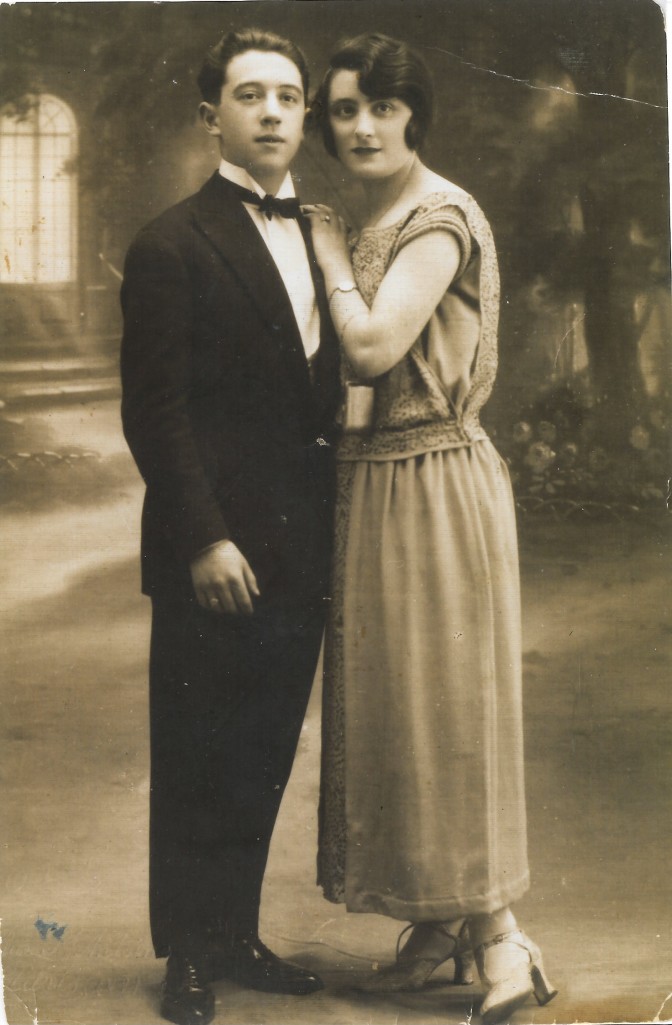
Biography of Brana Blanche BROÏDO, née WEINTRAUB
The first version of this biography was written by a class of 11th grade students at the French high school in Cairo, Egypt, under the supervision of their history and geography teacher, Mr. Ali Chikouche.
Following the discovery of some additional documentation, a second version was written by a group of 9th grade students at Paul Eluard Middle School in Bonneuil-sur-Marne, with the guidance of their teacher, Ms. Giovanna Borie, in 2025. It is below the first biography.
Brana Blanche Broïdo (whose maiden name was Weintraub) was born in Alexandria, Egypt on May 7, 1905.
She was deported in « Convoy 77 », to become, along with six million other Jews, a victim of the Shoah in Europe.
Brana Broïdo was the daughter of Marco Weintraub and Ida Zeneinbaum (or Tenenbaum) ; nothing is known of either’s life or social milieu. They spent part of their lives in Alexandria, Egypt.
On August 28, 1924 Brana Broïdo, who worked as a secretary, married Isaac Broïdo, born on April 4, 1905 to Nathan and Anne Lou Broydo.
They lived in Cannes in the Alpes Maritimes department on the Avenue du Commandant Bret. They had a son named Claude on May 5, 1940.
According to letters sent to the Town Hall in Nice, Claude had an older brother Marc, born on January 13, 1928, who was not arrested and who wrote letters searching for his family. Unfortunately, we have but little information about Marc, who lived in Paris after the war.
Brana, her son Claude, and her husband Isaac were arrested on the same day in June 1944 by the Gestapo (the Nazi regime’s secret police, assigned to fighting internal or external opponents, real and perceived, and then against enemies and resistance groups in the occupied countries, where their name invoked terror and arbitrary action). It played an essential role in the extermination of the Jews of Europe.
After their arrest they were interned from June 27 to July 12, 1944 at Nice. From there they were transferred to the camp at Drancy, located to the northeast of Paris, a transit camp before deportation to the extermination camps in Nazi territory.
Thus was Brana Blanche Broïdo deported on July 31, 1944 at the age of 39 in convoy 77, one of the last to leave France, to the camp at Auschwitz, one of the biggest concentration and extermination camps. She died several days later on August 18, 1944, according to the testimony of a fellow deportee (see below).
Annexes below:
- death certificate
- testimony of a fellow deportee
- marriage certificate
————————————————————————————————–
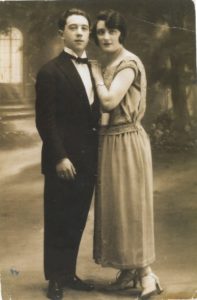 Brana Blanche BROÏDO
This biography was written by the ninth-grade students at the Paul Eluard middle school in Bonneuil-sur-Marne, with the guidance of their teacher, Ms. Borie Giovanna.
Brana Blanche Broïdo (or Broÿdo), née Weintraub (or Veintraub), was among the 1,306 Jews deported on Convoy 77, the last large convoy to leave France for the Auschwitz-Birkenau extermination camp. She and her family were victims of the Holocaust.
From Ukraine to the Marais district in Paris, via the Ottoman Empire
Brana was born into a Jewish family in Alexandria, Egypt (which at that time was under Turkish rule) on May 7, 1905. Her parents were Ida Teneinbaum (Tenenbaum, Tenembaum)[1] and Mordouch “Marco” Weintraub[2].
On all the records relating to Blanche, including her marriage certificate, her father’s first name is listed as “Marco”. However, the 1926 census listing for 17 Rue du Pont-Louis-Philippe in the 4th district of Paris (which is where Blanche lived before she was married) includes Mordouch Weintraub, born in 1877 (although he was actually born in 1873) in Russia (although his death certificate says he was born in Odessa, now in Ukraine), a salesman; Annette, born in 1877, also born in Russia; Jacob, born (on July 21) 1902 in Egypt and Wolff, born in 1909, also in Egypt. Mordouch’s death certificate, issued by the civil registry office of the 4th district of Paris, states that he died at his home on February 14, 1927, and that his wife was Annette Tenenbaum. Ida or Ita must therefore have adopted the French version of her name, “Annette,” while Mordouch used the name “Marco”.
Both of them were born in Russia (now Ukraine) but emigrated to the Ottoman Empire, although we do not know when, or why. Nor is it clear why the family left Egypt, but the political, economic, and military climate was unstable in the years 1905-10, as the British sought to gain control of the region. Brana had a younger brother, who was born in Alexandria in Egypt 1909, so we assume that the family moved to France after that. One of their sons died in Paris in 1914 at the age of seven. Blanche must therefore have been under ten when she arrived in France.
The reason that they chose France is another mystery. While the French language was growing in popularity in both Turkey and Egypt, among both wealthy folk and Jews who attended schools run by the Alliance Israélite Universelle, (Universal Jewish Alliance,) which may have made France a more attractive destination for would-be emigrants, it is also possible that the Weintraubs initially planned to use France as a stepping stone to the United States.
They set up home in Paris. All of the family’s addresses were in the in Marais district, in the Ashkenazi Jewish quarter known as the “Pletzl”. Increasing numbers of Jewish migrants from Central and Eastern Europe arrived there in the early 1900s. Later on, Brana/Blanche and her husband Isaac Albert did not stray far from this area: they lived a little further north, in the 3rd district.
Brana/Blanche had three brothers: Jacob, who was born in Alexandria in 1902; Armand, who was born in Alexandria in 1907 and died at his parents’ home at 8 Rue des Guillemites in the 4th district of Paris on December 18, 1914; and Wolff, who was born in Alexandria in 1909.
Marco Weintraub, who was born in 1894, could well have been the eldest child in his family, as the first son was often named after his father. His name appears several times in L’Univers israélite, (Jewish Universe) as someone who made donations to the Paris Jewish Community. In 1926, Marco Weintraub married Sarah Meyer at the town hall in the 18th district of Paris and at the synagogue on Rue Notre-Dame de Nazareth. The couple set up home at 55 Boulevard Barbès. He was naturalized as a French citizen in 1933.
In 1927, when Jacob Beer Weintraub[3] went to register his father’s death, he was a soldier in the 22nd company of administration workers. When he married Mathilde Segal, on March 13, 1928, in the Tournelles synagogue, he was working in the hat trade. The couple had one daughter, Liliane, who was born July 10, 1932. They lived with their family at 9 Rue Sainte-Croix de la Bretonnerie in the Marais district until they were arrested in late September 1943. On October 7, they were deported on Convoy 60 to Auschwitz-Birkenau, where they were murdered[4].
In 1931, Wolff, the youngest sibling, was living with his mother and stepfather at 35 Rue des Archives, in the Saint-Merri neighborhood. He worked in the 12th district. Hermann Grunstein, his stepfather (who had been in France since at least 1886), had been naturalized as a French citizen, as had his mother, Annette. In 1936, when Hermann, who was a bootmaker or furrier (depending on the source), was described as an “industrialist,” Wolff was no longer living with them.
Married at the age of 19
Brana Veintraub (this was the spelling used on the certificate, and how she signed her name) married Isaac Albert Broÿdo on August 28, 1924 at the town hall in the 4th district of Paris[5]. Albert was living with his parents at 2, rue des Hospitalières Saint-Gervais, and Brana with her parents Marco Weintraub et Ida Teneinbaum, at 17, rue du Pont-Louis-Philippe, not far from Albert’s house. As the bride and groom were both under the age of majority, their parents, who attended the wedding, had to give their consent. A note states that their mothers were unable to sign their names. We do not know how they met but perhaps Albert was helping his mother, who sold secondhand clothes at the Carreau du Temple, a popular Jewish gathering place between the Marais and Place de la République, and Blanche used to shop there?
Blanche became a French citizen through marriage[6], as her husband had already become French “by declaration” on June 8, 1923, which he was able to do because he was born in France (in 1905).
The newly married couple first set up home on rue de Turbigo, in the 3rd district of Paris, then moved a short distance away to 33, boulevard Saint-Martin[7]. They also had a second home in Cannes, on the south coast of France.
When they got married, Albert had just turned 19 and was a street vendor, while Brana was a shorthand typist[8]. We were unable to find out where she went to school, but it was probably in the Saint-Gervais neighborhood. She must have passed her elementary school certificate, and most likely trained as a stenographer with the O.R.T., a vocational training center for young Jews. However, she may also have attended one of the newly-opened vocational schools that catered for the increasing numbers of young women entering the workplace, for whom shorthand and typing were an attractive career choices.
The young couple was soon separated however, as Albert had to do his 18 months of national service, although fortunately he was based in Paris for some of the time. When he returned to civilian life, he went into business with a partner, dealing in wholesale porcelain and glassware. Blanche may have worked for her husband’s company. The couple had their first child, Marc, on January 13, 1928[9].
As Albert expanded his business ventures and got involved in trade associations, did Blanche, who was a mother by this time, continue to work? When Albert submitted the necessary paperwork to claim his rights when he returned to France after he was deported, he never failed to mention Blanche’s occupation.
THE WAR, THE ARMISTICE, THE NAZI OCCUPATION AND FRENCH GOVERNMENT ANTISEMITISM
In 1938, France was becoming increasingly alarmed about Germany’s intentions towards Poland and mobilized its troops for a short time. Albert was called up for army duty, but was soon discharged. However, by the end of August 1939, war was looming. On September 1, Hitler invaded Poland. On September 3, France and the United Kingdom allied themselves with Poland and declared war on Germany. Albert was called up again. This marked the beginning of the “exodus”. Did Blanche, like so many other people in Paris and the north of France, head south in panic as the German army approached? Did she stay on in the city to run Albert’s businesses? We simply do not know. Whatever the case, Albert, who was not far away, came back to find her. When he was demobilized after France surrendered in June 1940, he returned home. Their son Claude had been born a few weeks earlier, on May 5, 1940[10].
But Albert was no coward. Although he did not join General De Gaulle in London, he soon joined the French Resistance. At the same time, the Vichy government was gradually putting in place an anti-Semitic policy modeled on that of the Nazis, which did not bode well. It enacted a series of decrees on the “Status of the Jews”. Albert, who was already well known in the business world, must have registered himself, his wife, and their two children as “Jews.” Both his Resistance work and the fact that he was Jewish put him at risk. He left Paris for the Normandy region, where he continued his anti-German activities.
Meanwhile, life for Jews in Paris became increasingly precarious. State-sponsored anti-Semitism, which served the interests of the Nazis, made their lives a living hell. The number of roundups increased, and one of Albert’s brothers was caught and sent to Drancy camp. As of June 1942, Jews had to wear the yellow star clearly visible on the left side of the chest. Although Claude, who was under six years old, was exempt, Blanche and Marc had to comply with this infamous requirement.
In 1942, Albert returned to Paris to move Blanche and the two children to the safety of the “free” zone, in the southern half of France. We do not know how they managed to cross the demarcation line, but one way or another, Blanche, Marc, and Claude set up home in Cannes. Albert then traveled back to Normandy to continue his work with his fellow Resistance fighters.
Blanche stayed behind with the children[11], the money and the jewelry, in the Villa Cacho Maïo on avenue Commandant Bret. Cannes was under Italian occupation at the time, and Jews living there were in much less danger than elsewhere in France. At least for the time being.
ARREST, INTERNMENT AND DEPORTATION
When the noose began to tighten, Albert left Normandy and headed south to his family. As soon as he got there, he resumed his Resistance work in the Mithridate network. However, in June 1944, the German police spotted him and began tailing him. On June 27, 1944, the Gestapo and the French militia arrested Albert and Blanche at their home in the Villa Cacho Maïo, ostensibly on account of the family’s Jewish roots[12]. According to Martine Broïdo, one of Albert’s daughters born after the war, little Claude was playing at the neighbors’ house at the time. The Gestapo agents spotted him and decided to leave him be, but the militiaman insisted that he too be arrested. Marc, who was 16 at the time, managed to climb onto the roof of the house and stay hidden until he could make his escape[13]. He then went to stay with his parternal grandparents[14].
The Broïdo family was taken straight to the Hôtel Excelsior in Nice, where Jews were detained and tortured, and Albert was interrogated there for several days. We can only imagine how worried Blanche must have been about her eldest son, given that she had no idea where he was, and how distressed she must have been about what was happening to her, Albert and Claude. They were not alone there however; a number of other Jews had also been arrested, including some elderly people.
The Gestapo confiscated almost everything that the family had managed to take with them[15]. Apparently, the Broïdo’s home was also ransacked by some of their “friends” soon after they were arrested. Albert filed a lawsuit against these people in 1947 and won the case, at least in part[16].
Blanche, together with Albert and Claude, was then transferred to Drancy camp, northeast of Paris. They arrived there on July 12, 1944, along with a number of other people who had been arrested in Cannes and Nice. Blanche was assigned the registration number 25,075 and classified as “ deportable immediately.” She must have been carrying false identity papers, which (according to her Drancy record) stated that she was born in Lens, in the north of France. She gave her maiden name as “Veiret” rather than Weintraub and her first name as Blanche, probably to conceal her Jewish roots[17]. While in Drancy, her husband compiled an inventory of all the property the Gestapo had confiscated from them in Nice. Blanche and Albert had left the villa with a significant sum of money and some jewelry[18]. The family spent over a fortnight in Drancy camp. At one point, Blanche and Claude were housed in room 1 on staircase 3[19].
The conditions in Drancy were very tough during the sweltering summer of 1944. Did Blanche believe the Nazis’ assurances that she was to be deported to Eastern Europe, to some kind of ghetto where she would be put to work? How did she react, as the mother of a young child, when more than 200 children, including babies and toddlers, were rounded up from the UGIF children’s homes and crammed into the rooms in Drancy? How did she cope with being separated from Albert, as the men and women were kept apart and on separate staircases, until the day before the convoy was due to leave?
This convoy, later known as “Convoy 77,” left Drancy on July 31, 1944. Blanche, Albert, and Claude travelled together in the same cattle car, with straw on the floor, the terrified little boy clinging to his father[20]. The train arrived in Auschwitz-Birkenau during the night of August 3-4, 1944. Blanche was murdered in the gas chambers, together with her son Claude, that same day[21]. She was only 39 years old.
ALBERT’S POST-WAR EFFORTS
Albert was selected to enter the concentration camp to work, and survived[22]. Sick and exhausted by life in the concentration camp, Albert was reunited with their eldest son Marc in 1945. Starting in 1947, he requested that Blanche be declared to have “died for France” and be granted the status of “political deportee” (i.e., deported on political grounds, simply because he was Jewish). She was granted the first in 1947[23] and the second in 1953[24]. At the same time, Albert and Marc filed a lawsuit to obtain full compensation, made possible by Blanche’s status as a political deportee, for the loss of her assets during the war: in 1956,, Marc was awarded the sum of 12,000 francs[25]. The lawsuit was still ongoing in the 1960s, as Marc tried to recover the full amount estimated by the court as compensation for the property stolen from the family villa. Since his father had remarried, he could no longer claim to be Blanche’s legal heir.
In 1990, forty-six years after she died, Blanche’s sister-in-law, the well-known French gynecologist and feminist Suzanne Képès (née Broïdo), paid her a final tribute by submitting a “testimony sheet” to the Yad Vashem memorial in Jerusalem[26].
Notes & references
[1] We know little about Ida/Annette Tenenbaum/Teneinbaum, Blanche’s mother, except that she was still alive after the war and that Albert, Blanche’s husband, who survived his time in the camps, was devastated at the thought of having to break the news of the deaths of her daughter and grandson to her. She was born in Odessa on May 15, 1877. Her parents were Jankel Ber Tenenbaum and Rachel Toker. Widowed in 1927, she got married again on August 13, 1929, to widower, Heymann Grunstein, who was born in Warsaw in 1861.
[2] File on Brana Blanche Broïdo © Victims of Contemporary Conflicts Archives Division of the French Ministry of Defense Historical Service, in Caen, dossier n°21P431077(29)
[3] File on Jacob Beer Weintraub © Shoah Memorial, Paris (FRAN107_F_9_5737_249415_L). We found out about Jacob Beer Weintraub when we visited the Shoah Memorial in Drancy, Paris, where we found his name and that of his wife. In the archives, we found his Drancy record, which revealed that he too was born in Alexandria, in Egypt.
[4] File on Jacob Beer Weintraub © Shoah Memorial, Paris (FRAN107_F_9_5737_249415_L)
[5] File on Brana Blanche Broïdo © Victims of Contemporary Conflicts Archives Division of the French Ministry of Defense Historical Service, in Caen, dossier n°21P431077(24)
[6] File on Brana Blanche Broïdo © Victims of Contemporary Conflicts Archives Division of the French Ministry of Defense Historical Service, in Caen, dossier n°21P431077(33). See also the biographies of Albert and Claude here on the Convoy 77 website.
[7] File on Brana Blanche Broïdo © Victims of Contemporary Conflicts Archives Division of the French Ministry of Defense Historical Service, in Caen, dossier n°21P431077(33)
[8] File on Brana Blanche Broïdo © Victims of Contemporary Conflicts Archives Division of the French Ministry of Defense Historical Service, in Caen, dossier n°21P431077(36)
[9] File on Brana Blanche Broïdo © Victims of Contemporary Conflicts Archives Division of the French Ministry of Defense Historical Service, in Caen, dossier n°21P431077(49)
[10] File on Brana Blanche Broïdo © Victims of Contemporary Conflicts Archives Division of the French Ministry of Defense Historical Service, in Caen, dossier n°21P43107876973
[11] File on Brana Blanche Broïdo © Victims of Contemporary Conflicts Archives Division of the French Ministry of Defense Historical Service, in Caen, dossier n°21P431077(44) / File on Albert Brîdo © French Ministry of Defense Historical Service in Vincennes, ref. GR 16 P 92380
[12] File on Claude Broïdo © Victims of Contemporary Conflicts Archives Division of the French Ministry of Defense Historical Service, in Caen, dossier n°21P43107876973
[13] File on Brana Blanche Broïdo © Victims of Contemporary Conflicts Archives Division of the French Ministry of Defense Historical Service, in Caen, dossier n°21P431077(44-45)
[14] See her full account further on.
[15] File on Isaac Albert Broïdo © Victims of Contemporary Conflicts Archives Division of the French Ministry of Defense Historical Service, in Caen, dossier n°21P71845476971
[16] File on Isaac Albert Broïdo © Victims of Contemporary Conflicts Archives Division of the French Ministry of Defense Historical Service, in Caen, dossier n°21P71845476971
[17] File on Brana Broïdo © Shoah Memorial, Paris (FRAN107_F_9_5683_114079_L)
[18] File on Isaac Albert Broïdo © Shoah Memorial, Paris
[19] File on Brana Broïdo © Shoah Memorial, Paris (FRAN107_F_9_5683_114079_L)
[20] File on Brana Blanche Broïdo © Victims of Contemporary Conflicts Archives Division of the French Ministry of Defense Historical Service, in Caen, dossier n°21P431077(35) and Albert Broïdo’s account as told by his daughter Martine, see further down.
[21] File on Brana Blanche Broïdo © Victims of Contemporary Conflicts Archives Division of the French Ministry of Defense Historical Service, in Caen, dossier n°21P431077(23). There are some errors as regards the dates, but Albert was very accurate in the documentation he completed on behalf of Blanche.
[22] See his biography on this website.
[23] File on Brana Blanche Broïdo © Victims of Contemporary Conflicts Archives Division of the French Ministry of Defense Historical Service, in Caen, dossier n°21P431077(15)
[24] File on Brana Blanche Broïdo © Victims of Contemporary Conflicts Archives Division of the French Ministry of Defense Historical Service, in Caen, dossier n°21P431077(40)
[25] File on Brana Blanche Broïdo © Victims of Contemporary Conflicts Archives Division of the French Ministry of Defense Historical Service, in Caen, dossier n°21P431077(16)
[26] Blanche Weintraub (married name Broïdo) © Yad Vashem
برانا بلانش برويدو
1905- 1944/ الولادة : القاهرة / الاعتقال : كــان / الإقامة : كــان، القاهرة
سيرة برانا بلانش برويدو–وينتروب
من إنجاز قسم السنة الأولى بالثانوية الفرنسية بالقاهرة تحت إشراف أستاذ التاريخ والجغرافيا، السيد علي شيكوش.
ولدت برانا بلانش برويدو (واسمها العائلي قبل الزواج وينتروب) بالإسكندرية في مصر يوم سابع ماي 1905. وقد ذهبت ضحية محرقة اليهود بأوربا، مثلها مثل أكثر من ستة ملايين يهودي، بعدما تم ترحيلها عبر القافلة 77.
ولدت برانا لأبويها ماركو وينتروب وعايدة زينينبوم أو تينينبوم اللذان لا نعرف عنهما لا الوسط الاجتماعي ولا مسار حياتهما. وقد قضيا جزءا من حياتهما بمدينة الإسكندرية في مصر.
اشتغلت برانا وينتروب ككاتبة اختزال، وتزوجت يوم 28 غشت 1924 بإسحاق برويدو، المزداد في رابع أبريل 1905 بباريس. عاش والداه، ناتان وآن-لو برويدو، بمدينة كان في إقليم الألب البحرية، شارع الكومندان بريت. وازدان فراشهما بولد، كلود، المزداد في باريس يوم خامس ماي 1940.
وحسب مراسلات وجهت إلى عمادة مدينة نيس، فقد كان لكلود أخ أكبر، مارك، ازداد في 13 يناير 1928، استطاع الإفلات من الاعتقال، وهو الذي كتب هذه المراسلات للبحث عن عائلته. إلا أنه للأسف لا نتوفر سوى على معطيات قليلة عن مارك، الذي عاش في باريس بعد نهاية الحرب العالمية.
وقد ألقي القبض على برانا وزوجها إسحاق برويدو وولدهما كلود في نفس اليوم من طرف الجستابو في يونيو 1944. والجستابو هي الشرطة السرية للنظام النازي المكلفة بالتصدي للمعارضين الداخليين والخارجيين، الحقيقيين والمفترضين، وكذلك مواجهة الخصوم والمقاومين بالدول المحتلة. وقد عرف هذا الجهاز بممارسة التعسف والبطش، كما لعب دورا بارزا في تصفية يهود أوربا.
بعد إلقاء القبض عليهم وضعوا في معسكر بمدينة نيس من يوم 27 يونيو 1944 إلى 12 يوليوز 1944. ومن هناك رحلوا إلى معسكر درانسي، الموجود بالشمال الشرقي لباريس، وهو معقل للاحتجاز قبل الترحيل نحو معسكرات الإبادة المشيدة من قبل ألمانيا النازية.
هكذا فإن برانا بلانش برويدو رحلت يوم 31 يوليوز 1944، في سن 39 عاما، عبر القافلة 77، وهي واحدة من أواخر القوافل الموجهة من فرنسا نحو معسكر أوشفيتز الذي يعد من أكبر معسكرات التجميع والتصفية. وتوفيت أياما بعد ذلك، يوم 18 غشت 1944، حسب شهادة مرحل في نفس القافلة.
مرفقات :
- شهادة الوفاة
- شهادة لأحد المرحلين
- عقد الزواج


Bonjour,
Je suis tombée par hasard sur votre page et je suis très troublée par ce que je viens d’y lire.
Je me présente : Marion Broïdo, petite fille de M Marc Broïdo dont vous avez écris que vous ne savez pas grand chose.
Je suis très émue de lire un petit peu sur mes arrières grands parents.
Oú et Comment avez vous trouvez ces informations ?
Bien à vous,
Chère madame, je lis, un peu tard, votre message. Auriez-vous la possibilité de rentrer en contact avec notre association Convoi 77 à cette adresse convoi77auschwitz@gmail.com
Nous pourrions échanger des informations… elles ne sont pas toutes dans cette bio et je me suis particulièrement intéressée à l’histoire de votre famille.
Laurence Klejman c77 et historienne