Français
 Polski
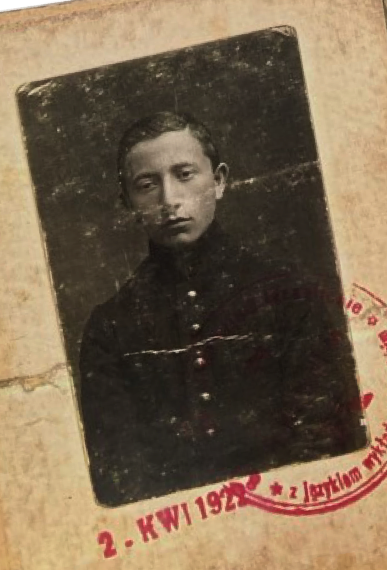
Joseph INSPEKTOR (1903–1944)
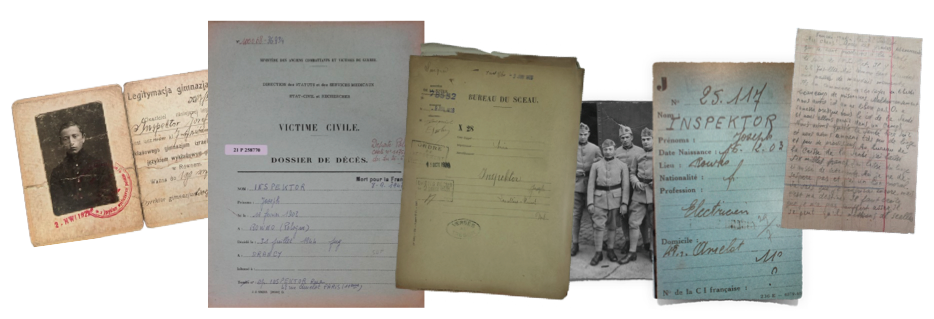
The 12th grade students (class TG1) at the Simone de Beauvoir high school in Gragnague, in the Haute-Garonne department of France, retraced Joseph Inspektor’s life story using the archives his descendants donated to the Shoah Memorial in Paris. They also studied his naturalization application and the police records held in the Paris Police Headquarters archives.
With the help of the Shoah Memorial in Paris and the Occitanie regional authorities, the students spent a day at Auschwitz-Birkenau in January 2025. In June 2025, they presented the results of their research to one of Joseph’s granddaughters and exhibited them in the school library. The images used in this biography were part of the exhibition.
Joseph Inspektor was born in 1903 in Równe, which was then in Russia and is now Rivne, in Ukraine. He was Jewish, as were more than 40% of the town’s population. The region had belonged to Poland until 1795, and when Poland took it back in 1920, Joseph became a Polish citizen.
As life grew more dangerous and the first pogroms broke out, some of the town’s residents emigrated. Joseph may have been one of them, although little is known about his youth apart from a few school records. He went to a private Jewish secondary school and graduated in 1922, after which he left for France on his own.
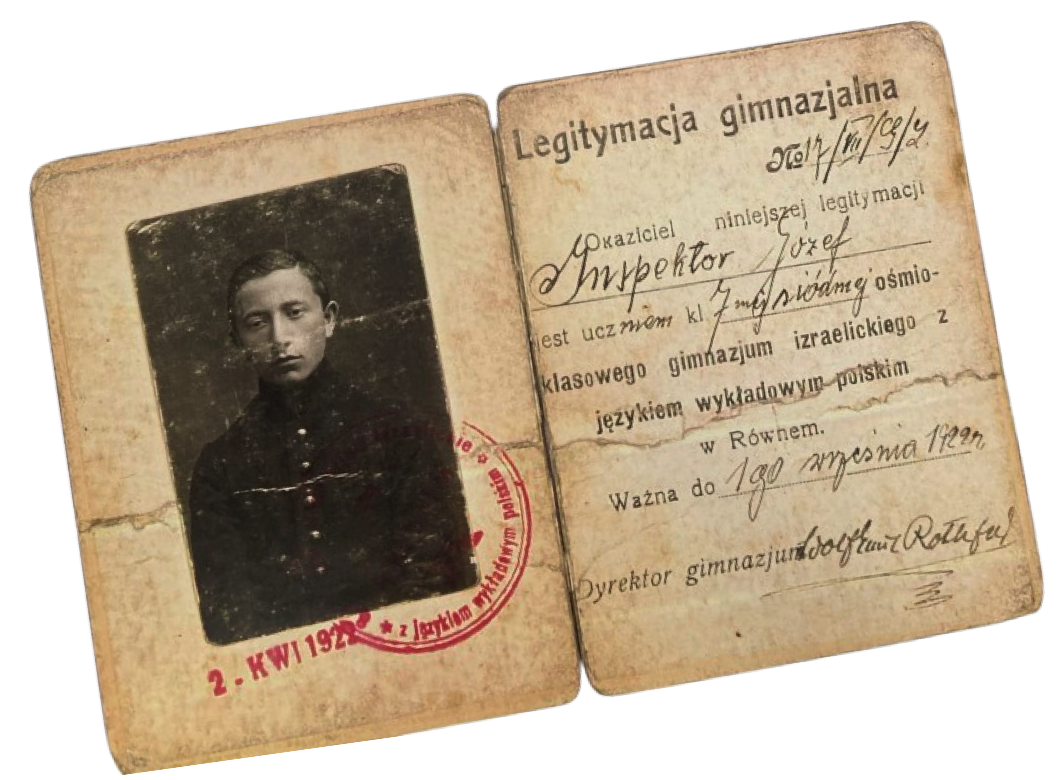
Shoah Memorial, Paris – CMLXXV(4)_3 (Inspektor donation)
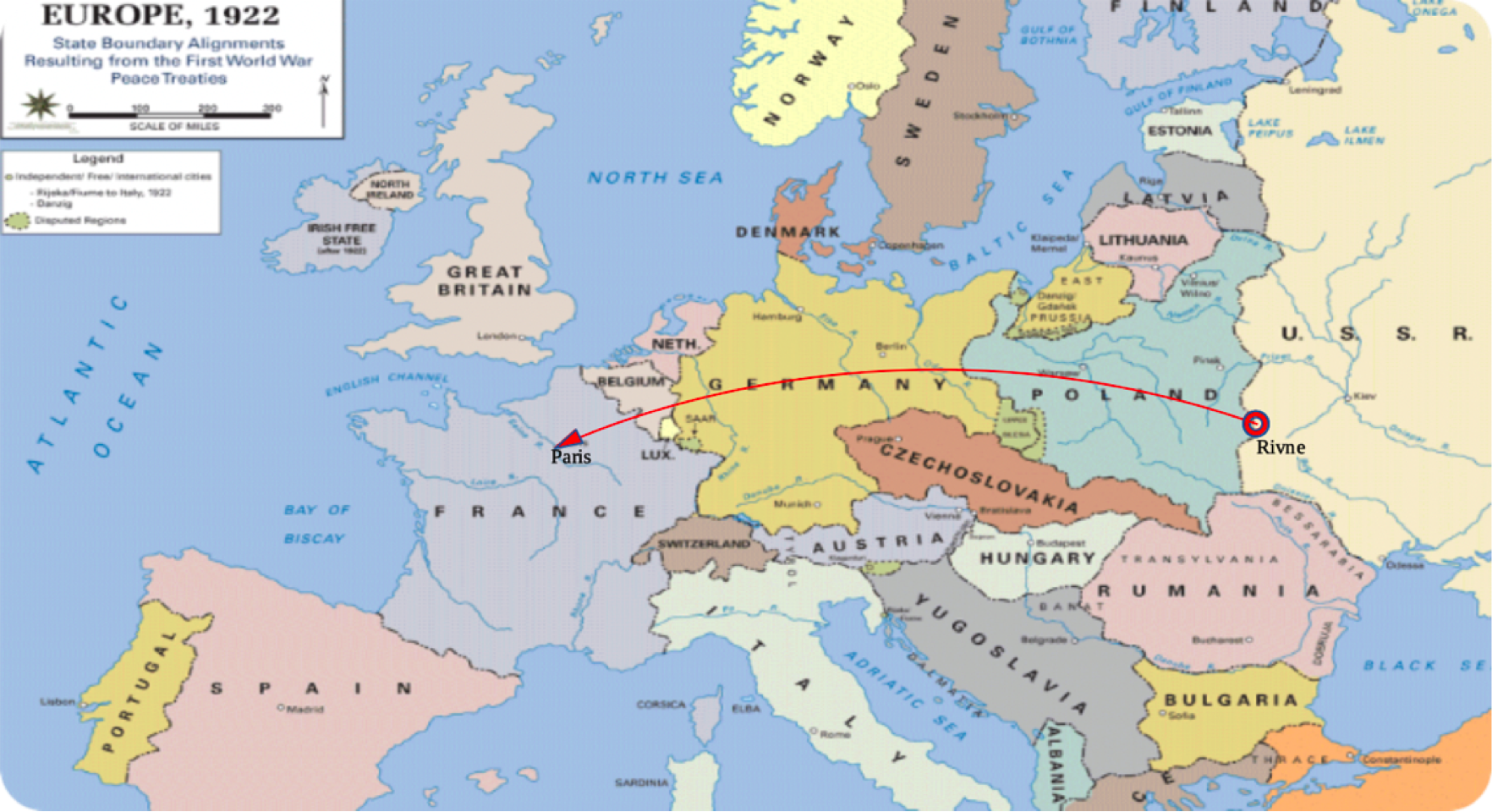
According to his naturalization application, Joseph arrived in France in September 1924. He left behind his father, Moïse Gersz Inspektor, a shopkeeper in Lodz, and his four brothers and three sisters. His mother, Osbe Kitinski / Doba Kitcicka, is not mentioned in the application, and she was recorded as deceased when Joseph got married in 1931, so his father was probably a widower by then. A letter written in Yiddish in 1939 reveals that Joseph was still in touch with his family in Poland.
By 1927, Joseph spoke fluent French, was working for a “radiophony” company and was living at 24 rue Gide in Levallois-Perret, a suburb of Paris.
Joseph wanted to make sure that his application for naturalization would succeed, so he volunteered to “enlist under the French colors.” Photos from his military service show that in 1929 he served with the 25th Artillery Workers Battalion, which was stationed in Mainz, Germany, as part of the army occupying the Ruhr.
On January 13, 1929, the naturalization decree for Joseph Inspektor, a laborer living in Levallois-Perret, was published in the Journal officiel (the French official gazette).
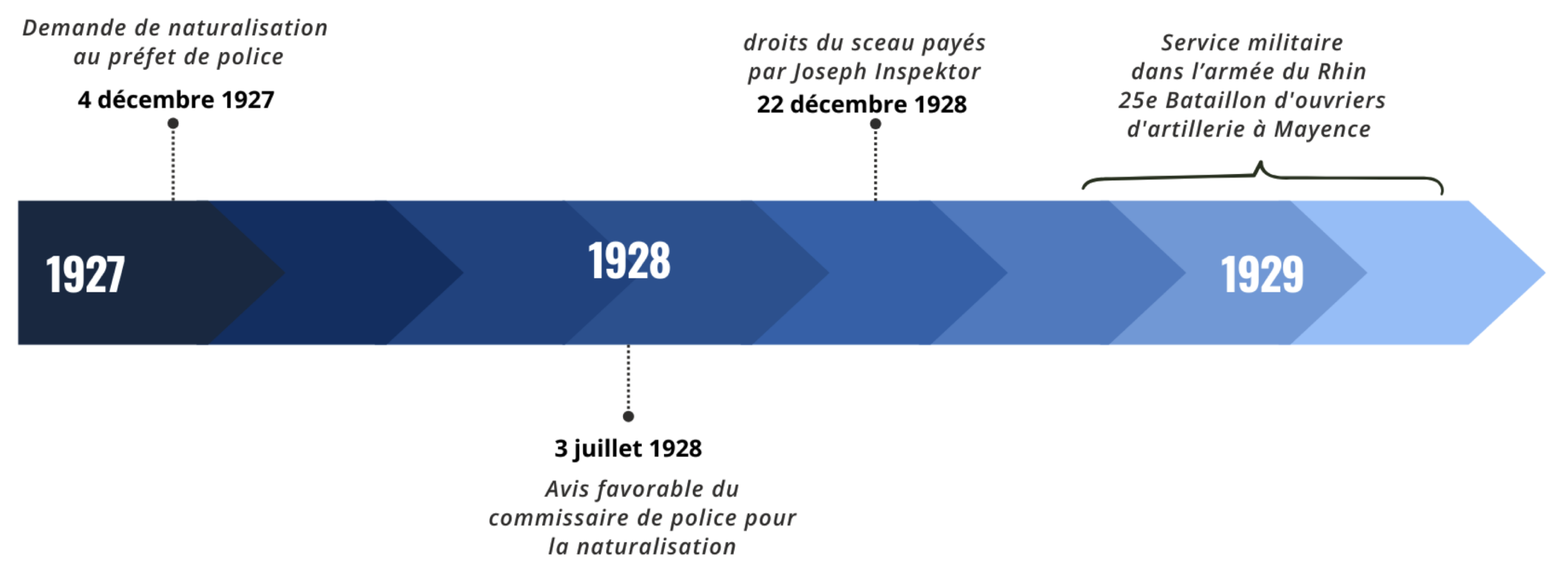
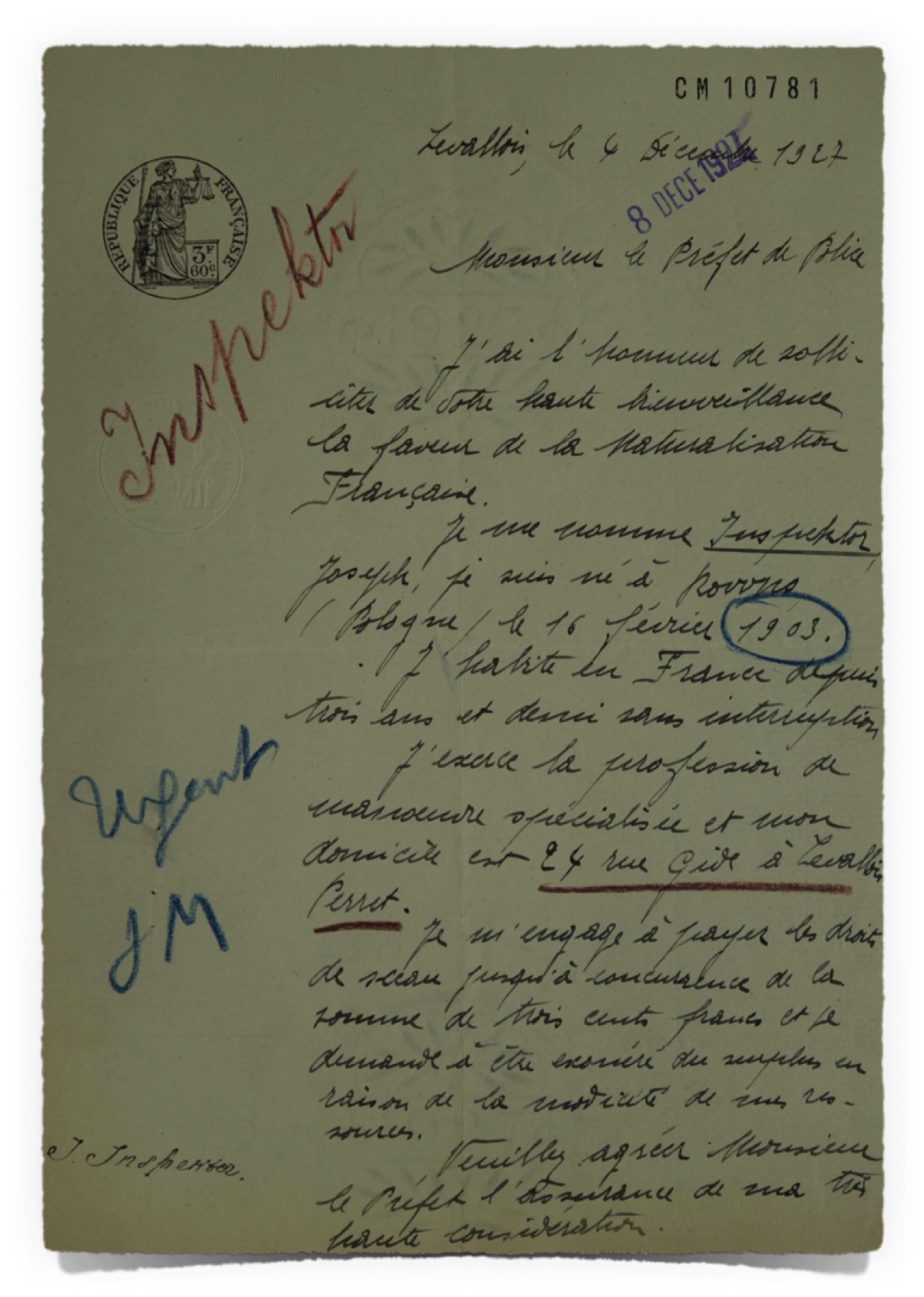
French National Archives, naturalization record, ref. BB11 / 11285.
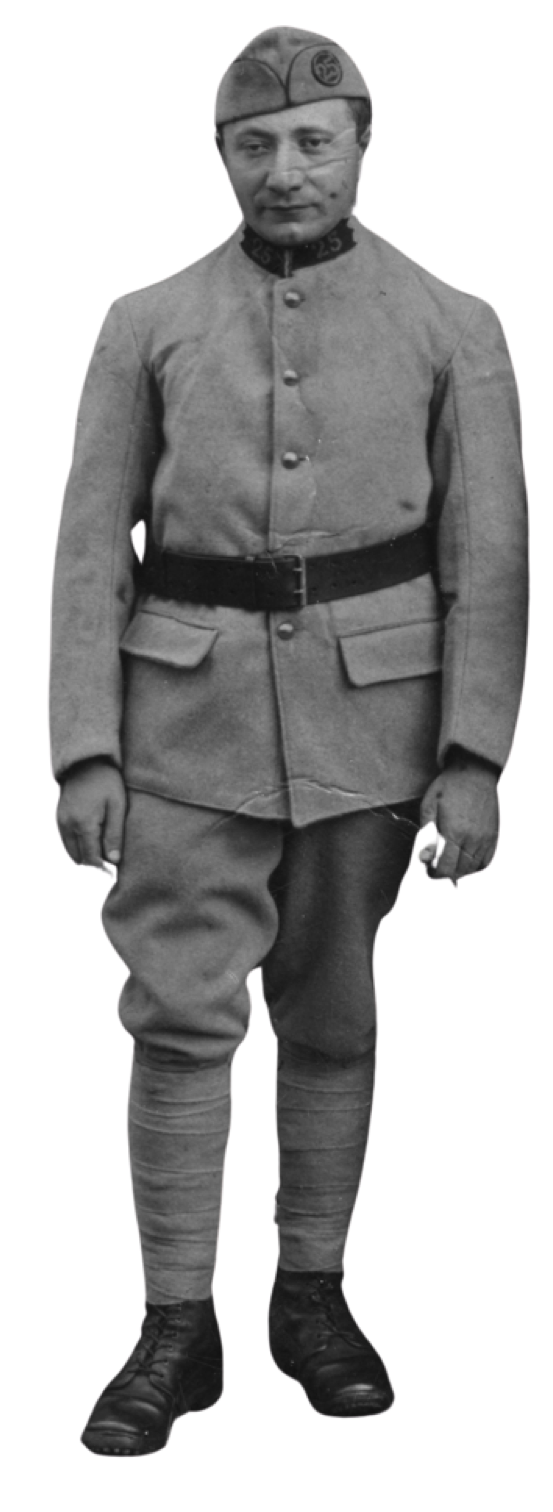
Shoah Memorial, Paris – MXII_1143
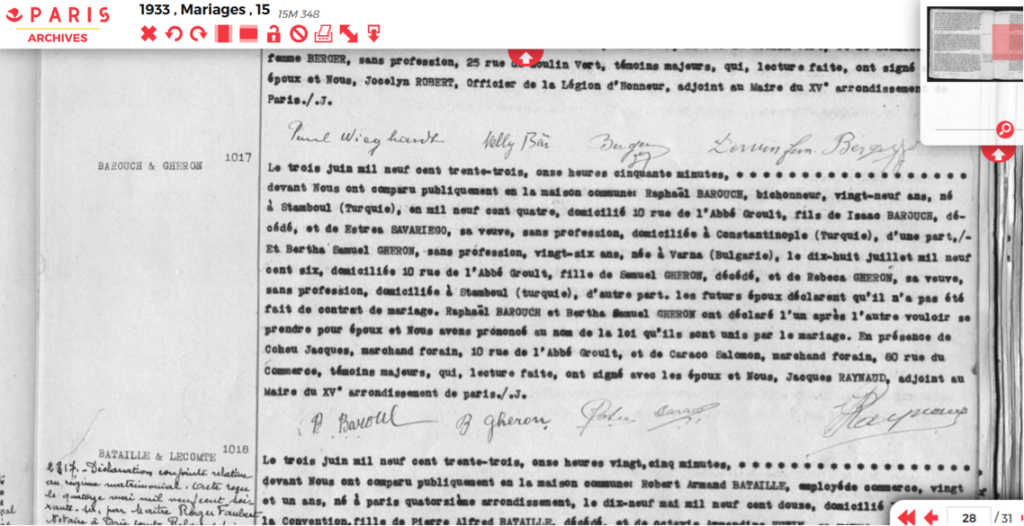
By the time he got married, Joseph was a French citizen. His bride, Rose Kessel, was a Jewish seamstress who, like him, had been born in Poland. She lived with her parents at 157 rue Saint-Martin, in the 3rd district of Paris, while Joseph was living at 33 rue Fouquet in Levallois-Perret. The couple had a civil wedding at the town hall of the 3rd district on February 19, 1931, followed by a Jewish ceremony on Sunday, March 15. Two days after their civil wedding, on February 21, Rose’s sister Annette got married too.
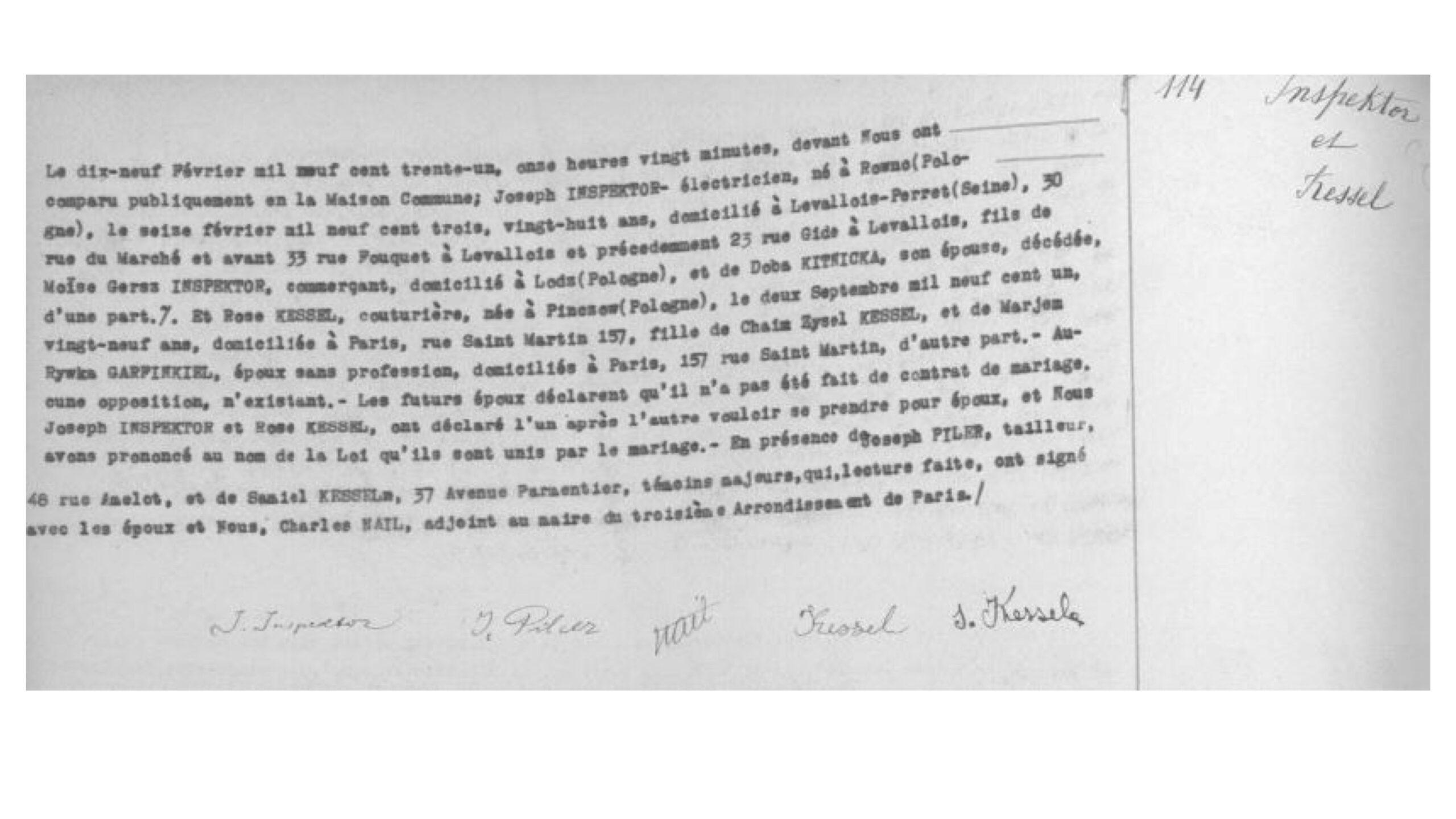
Joseph Inspektor and Rose Kessel’s marriage certificate, February 19, 1931. © Paris Archives (digitized records)
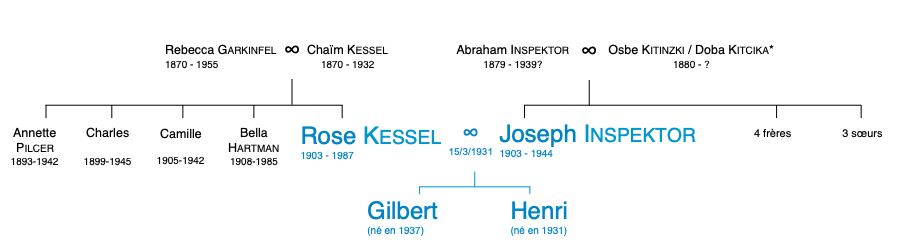
* The names differ depending on the source (naturalization record and death certificate)
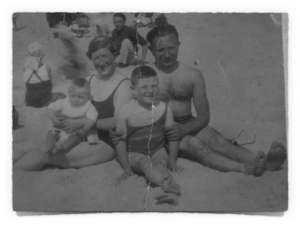
Shoah Memorial, Paris – MXII_1148
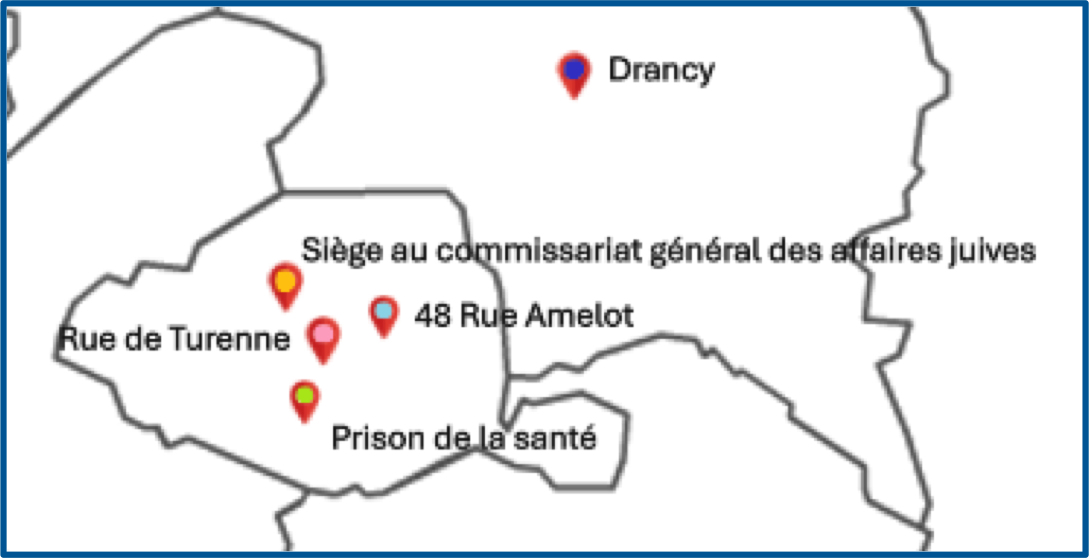
According to their wedding announcement and their son Henri’s recollections, Joseph and Rose then moved into a small apartment at 48 rue Amelot, on the edge of the Marais in the 11th district of Paris, close to Rose’s family. Her sister (Chana) Annette’s husband, Joseph Pilcer, who had been a witness at their wedding, also lived at number 48, and Rose worked in his dressmaking workshop. Henri was born that same year. Rose lost her father in January 1932, and in 1937 the couple had a second son, Gilbert.
When war broke out, Joseph was called up and sent to Bar-le-Duc, in the Lorraine region of northeastern France. Rose and the two boys were evacuated to Précy-sur-Cher, in line with the 1939 evacuation plan, under which residents of the 11th district of Paris were to be taken in by towns in the Cher department. Henri remembered his father taking them to the station. After the armistice was signed, Joseph and his family moved back to Paris.
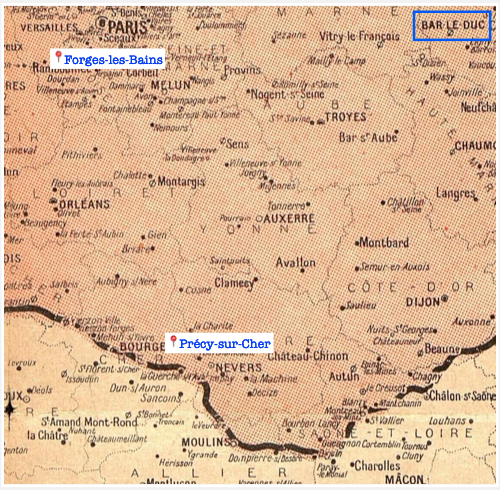
Map showing the demarcation line between the Occupied Zone and the Free Zone (Somme Departmental Archives)
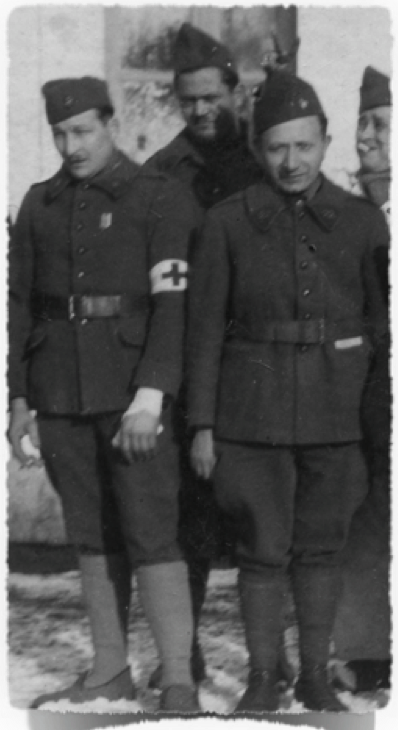
Bar-le-Duc hospital in February 1940 (family archives)
In July 1942 (although we do not know whether this was before or after the Vel’ d’Hiv roundup), Rose and the children went into hiding in the countryside, in the village of Forges-les-Bains, 20 miles (32 km) southwest of Paris (now in the Essonne department of France). Joseph stayed on in Paris, and Rose continued commuting to the city to work. According to Henri, none of them wore the yellow star during this period.
The Holocaust took a heavy toll on Rose’s family. Her brother Camille (Kelman) was arrested on May 14, 1941, during the “green ticket” roundup, and deported on Convoy 8. Her older sister, Annette Pilcer, who was a Polish citizen, was arrested at her home at 46 rue Amelot during the Vel’ d’Hiv roundup and deported on Convoy 12 on July 29, 1942. Annette’s husband, Joseph (whose first given name was Israël), was also arrested, possibly in Quevauvillers, in the Somme department of France. He was deported on Convoy 49 on March 2, 1943.
Samuel Kessel[1], Rose’s brother, who had been a witness at her wedding, was arrested in the Cantal department of France and deported in November 1943. However, we do not know whether the family was told about these deportations at the time.
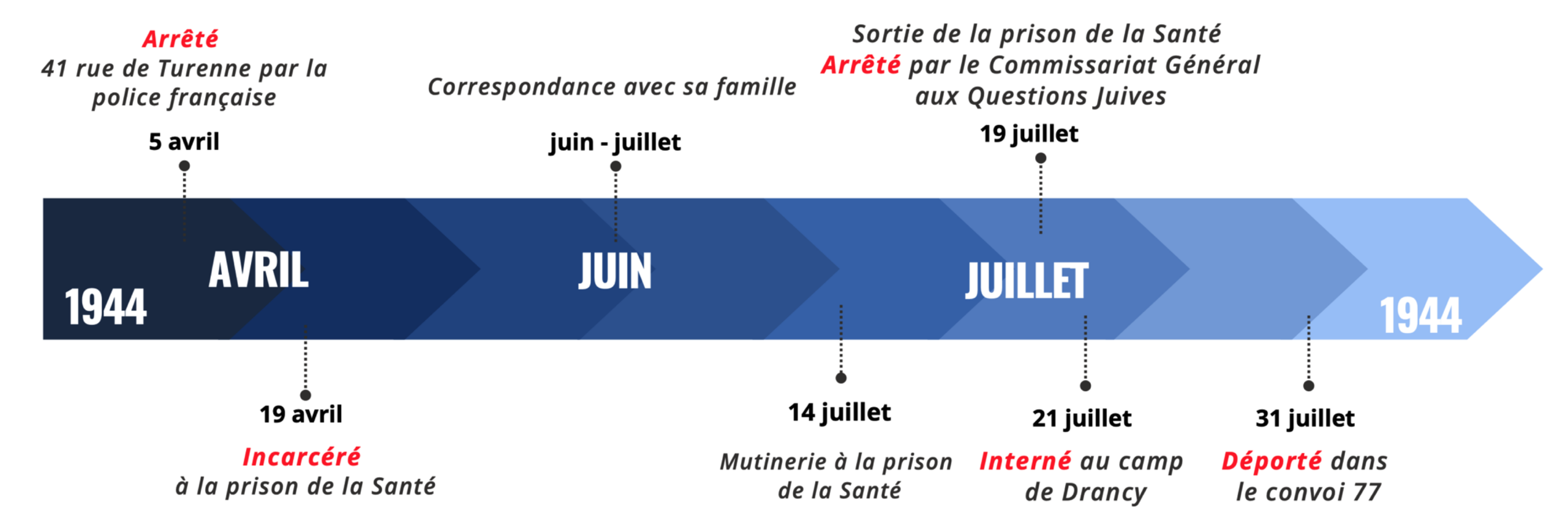
With the anti-Jewish decrees in force, Joseph could no longer work openly as an electrician, so he probably had to make a living on the black market. His life took a dramatic turn, however, on April 5, 1944, when French police stopped him for an identity check in the 3rd district of Paris and then arrested him. The word “Jew” had been “washed” off his identity card, but more importantly, he was accused of trafficking in ration coupons and handling stolen goods. In a 2021 article in the journal Les Annales (The Annals), Johanna Lehr suggests that Joseph may have exaggerated his criminal activities so that his case would be handled by the French authorities rather than the Germans.
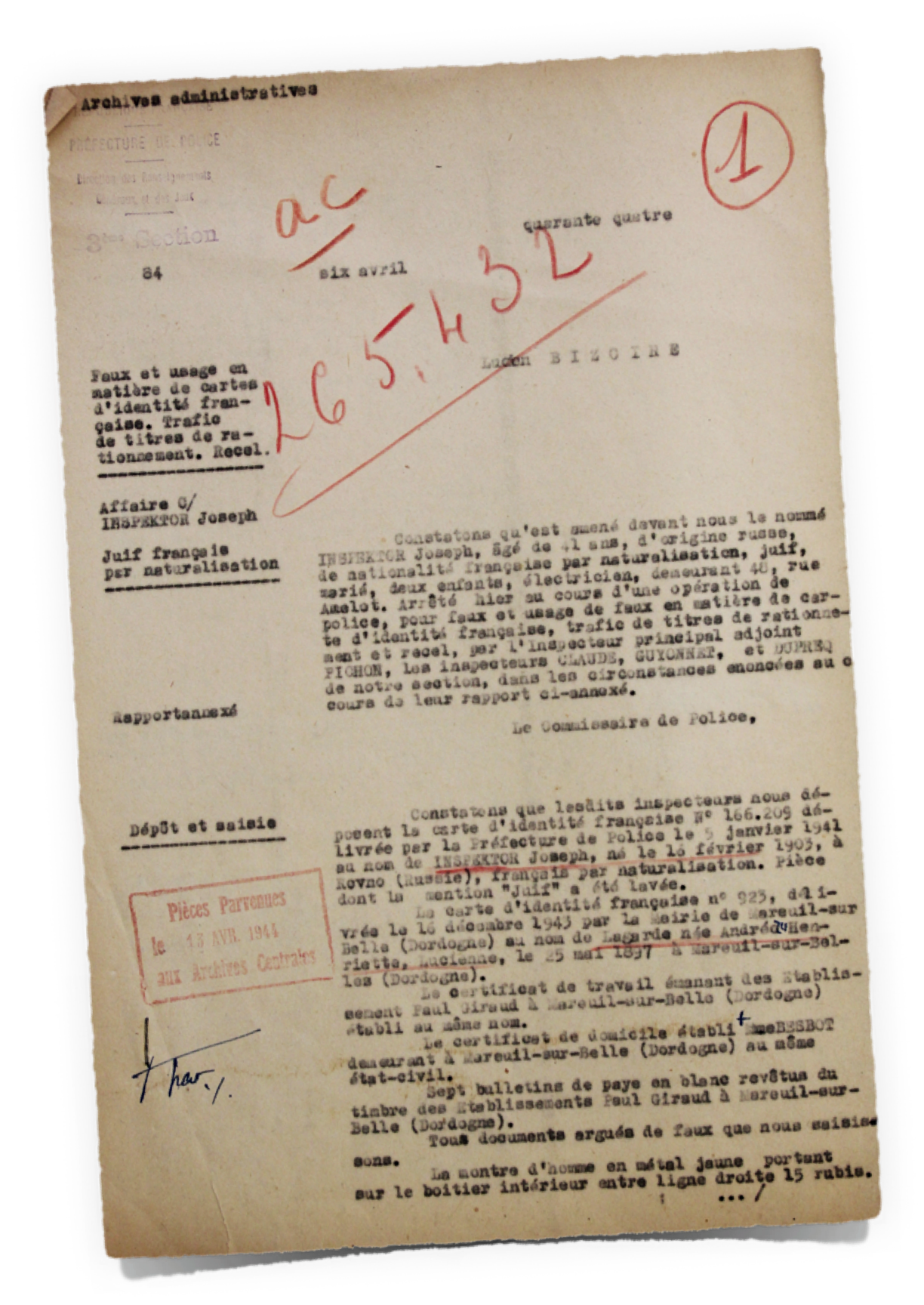
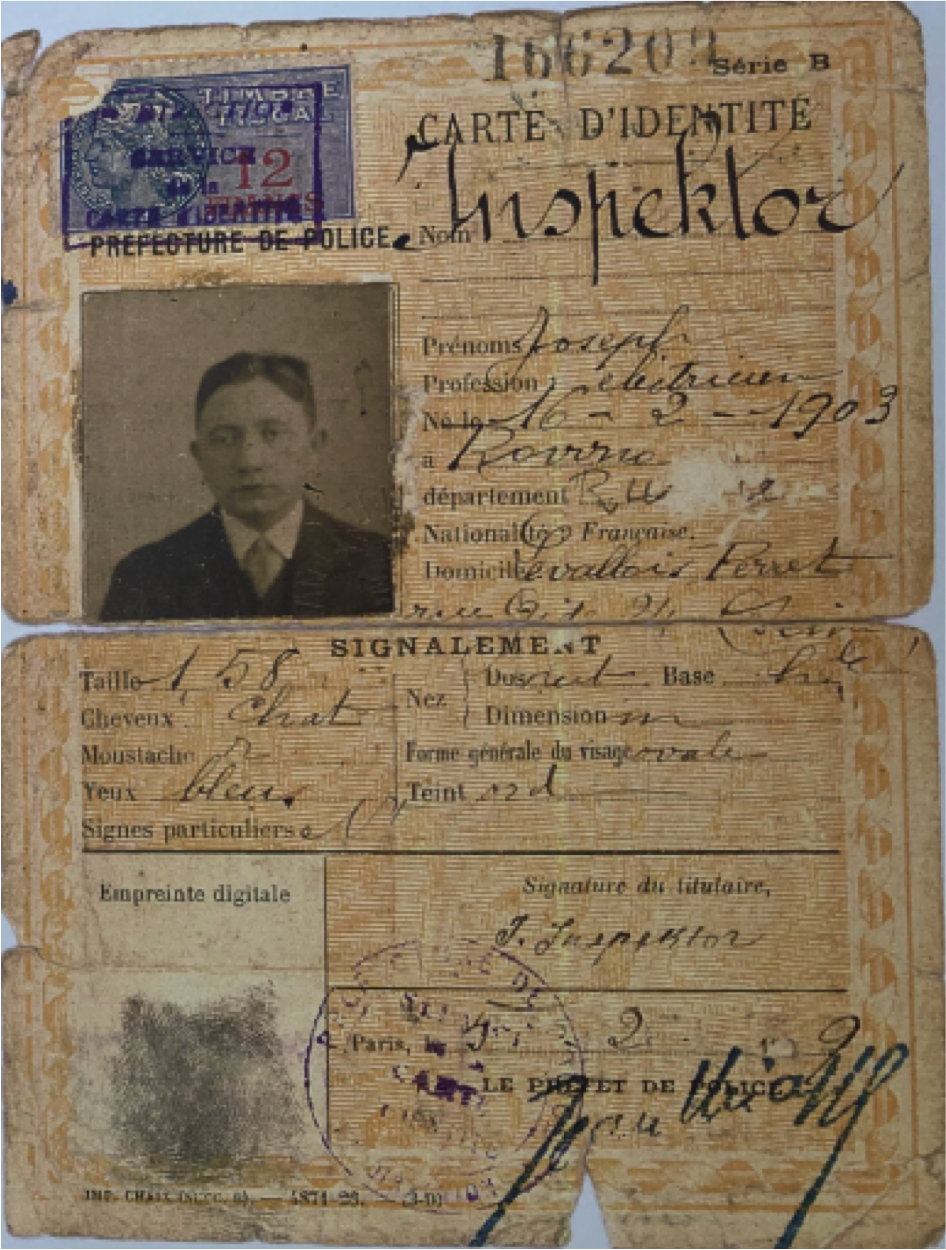
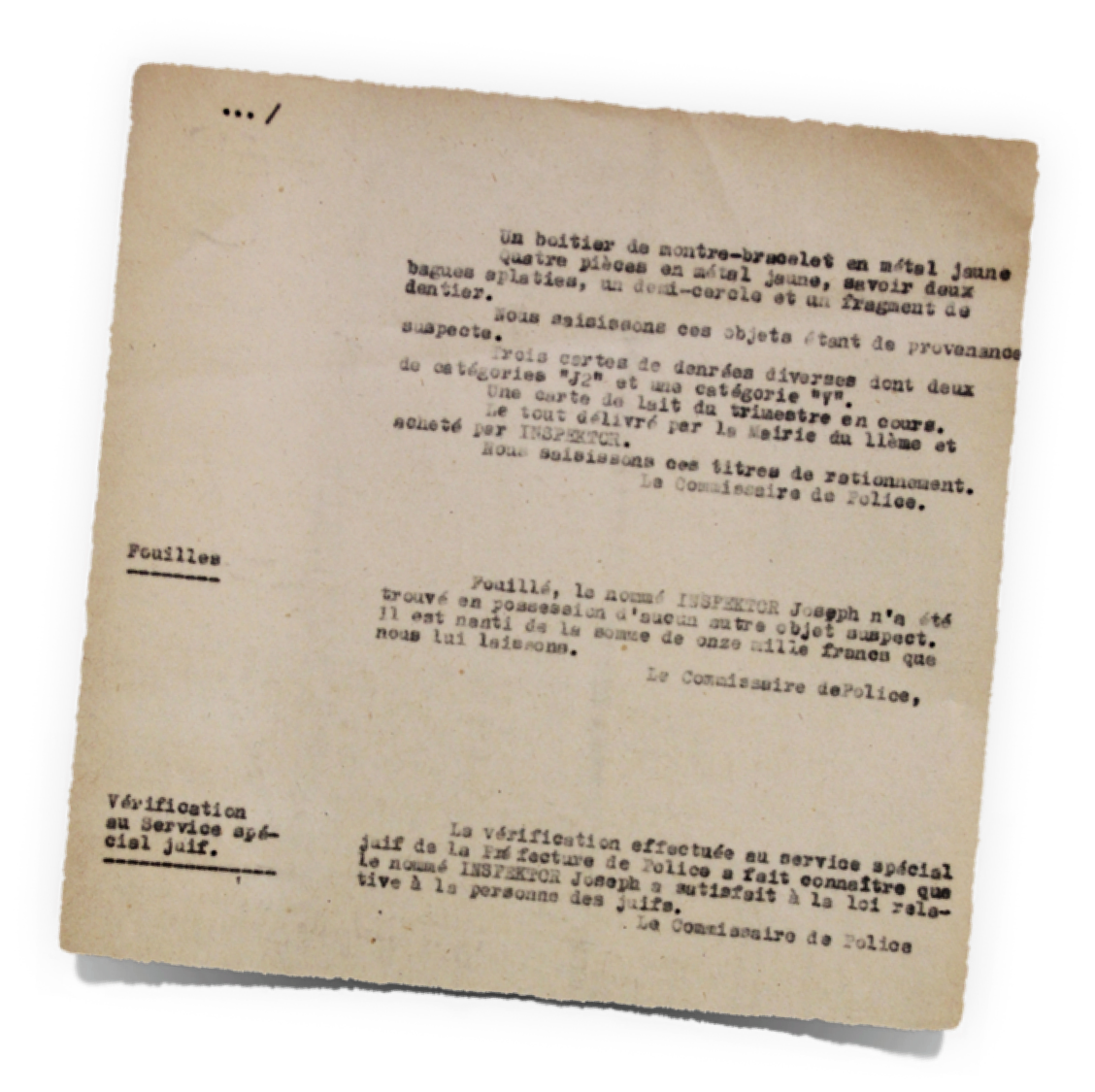
Paris Police Headquarters archives, file on Joseph Inspektor, ref. 77 W 815
He was jailed for these offenses, which meant that, as a Jew, he was spared being sent to Drancy internment camp. He spent April 19 to July 19, 1944, in La Santé prison in Paris, along with 4,634 other inmates.
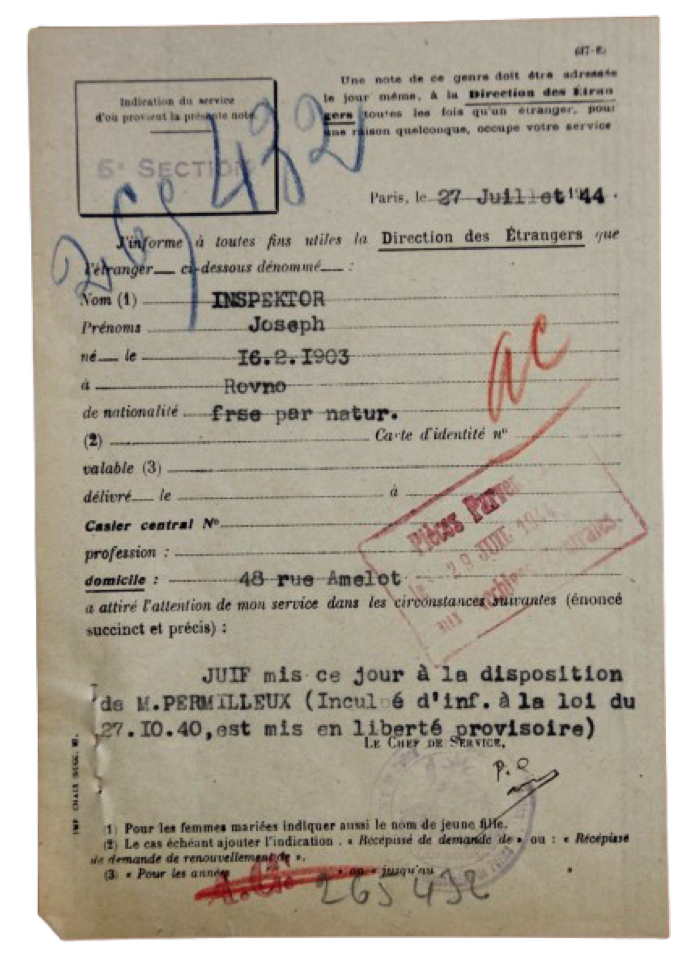
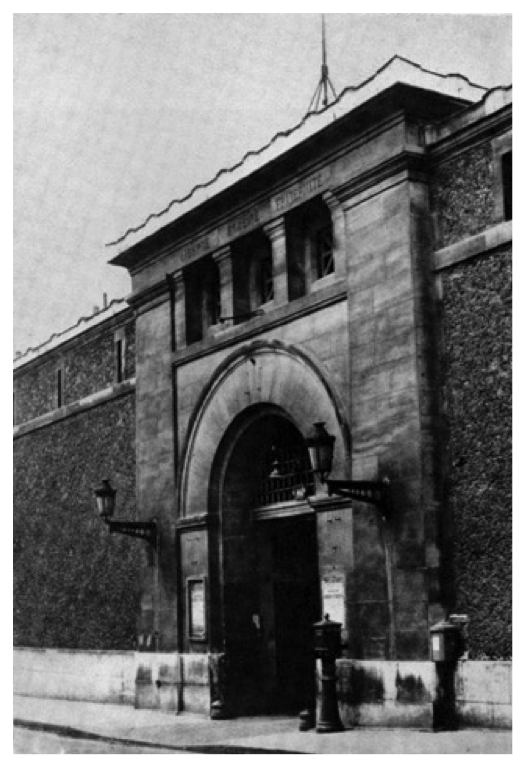
Paris Police Headquarters archives, ref. 77 W 815.
The family kept Joseph’s letters, and Johanna Lehr[2] found the report of his arrest in the Paris Police Headquarters archives. Together, these documents give a detailed picture of his four months in prison, and some insight into his state of mind and his concerns. He also received food parcels, which supplemented his prison rations.
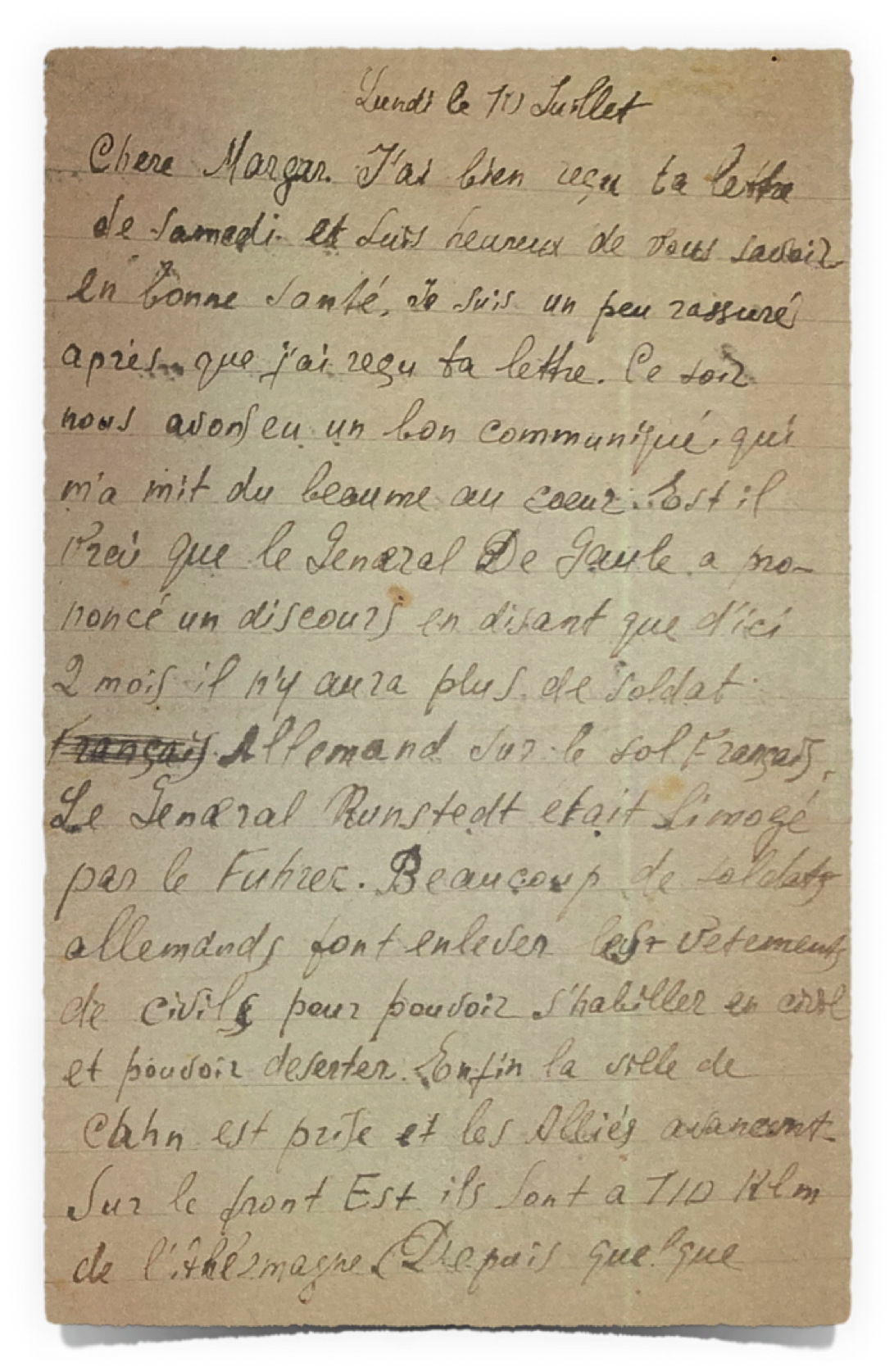
Letter from Joseph Inspektor
(Family archives / Shoah Memorial, Paris, CMLXXV(4)-3)
Joseph said little about himself in his letters. To protect his loved ones, he never gave the real names of the people he mentioned, but used code words instead. He asked how his children, “Riri” and “Gigi,” were doing, and gave his wife advice on where to find food and whom to turn to for help. He also worried about whether his food parcels would arrive, and sometimes he ran short of paper to write on. He described life in prison and how news got around: he knew the Allies were advancing, and he helped make French flags for Bastille Day.
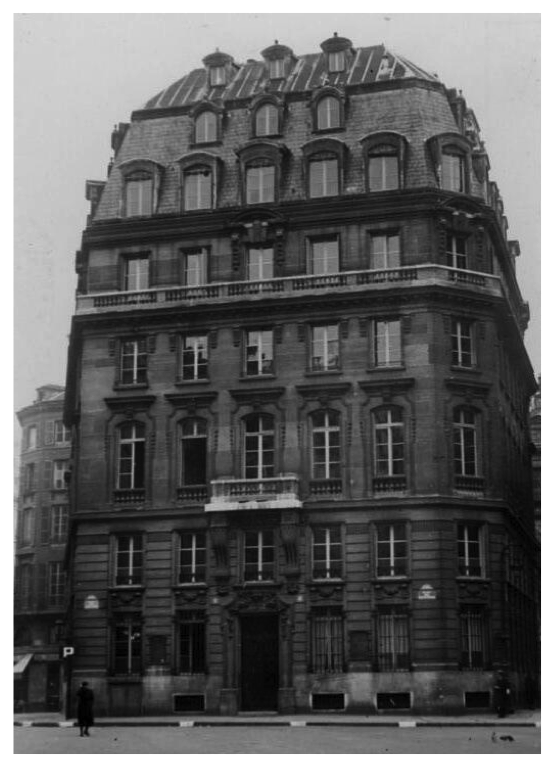
In one of his letters, Joseph wrote about the mutiny that broke out in the prison on July 14. The prison authorities crushed the revolt with the help of the French Militia and the Germans, and 34 people were killed. So many cells were left unusable that over the next few days the authorities decided to release large numbers of inmates held for non-political offenses, including Joseph Inspektor. On July 19, 1944, the investigating judge, Raymond Charles, put his name on the list of prisoners to be released. His lawyer stepped in at once, because this put her client in serious danger: as a Jew, he would have to go via the Paris Police Headquarters depot (detention center), which was standard procedure for Jews leaving prison. The judge refused to back down, however, and later that same day Joseph was handed over to the 5th section of the General Intelligence service, in other words the Jewish Affairs department run by Superintendent Charles Permilleux[3], which was to decide on his “situation.” This meant he was at risk of being sent to Drancy. For ten days, his fate hung in the balance. His letters show that he was moved back and forth between the police depot and La Santé prison, but he did not give up hope, as some of his fellow inmates had been sent back to prison. Then, on July 27, Superintendent Jean Dides, who worked for the Commissariat for Jewish Affairs from 1942 to 1944, sealed his fate. As Joseph was of the “Jewish race,” Dides “placed him at the disposal of Charles Permilleux,” who ordered that he be transferred to Drancy internment camp. He was taken there late on July 29.
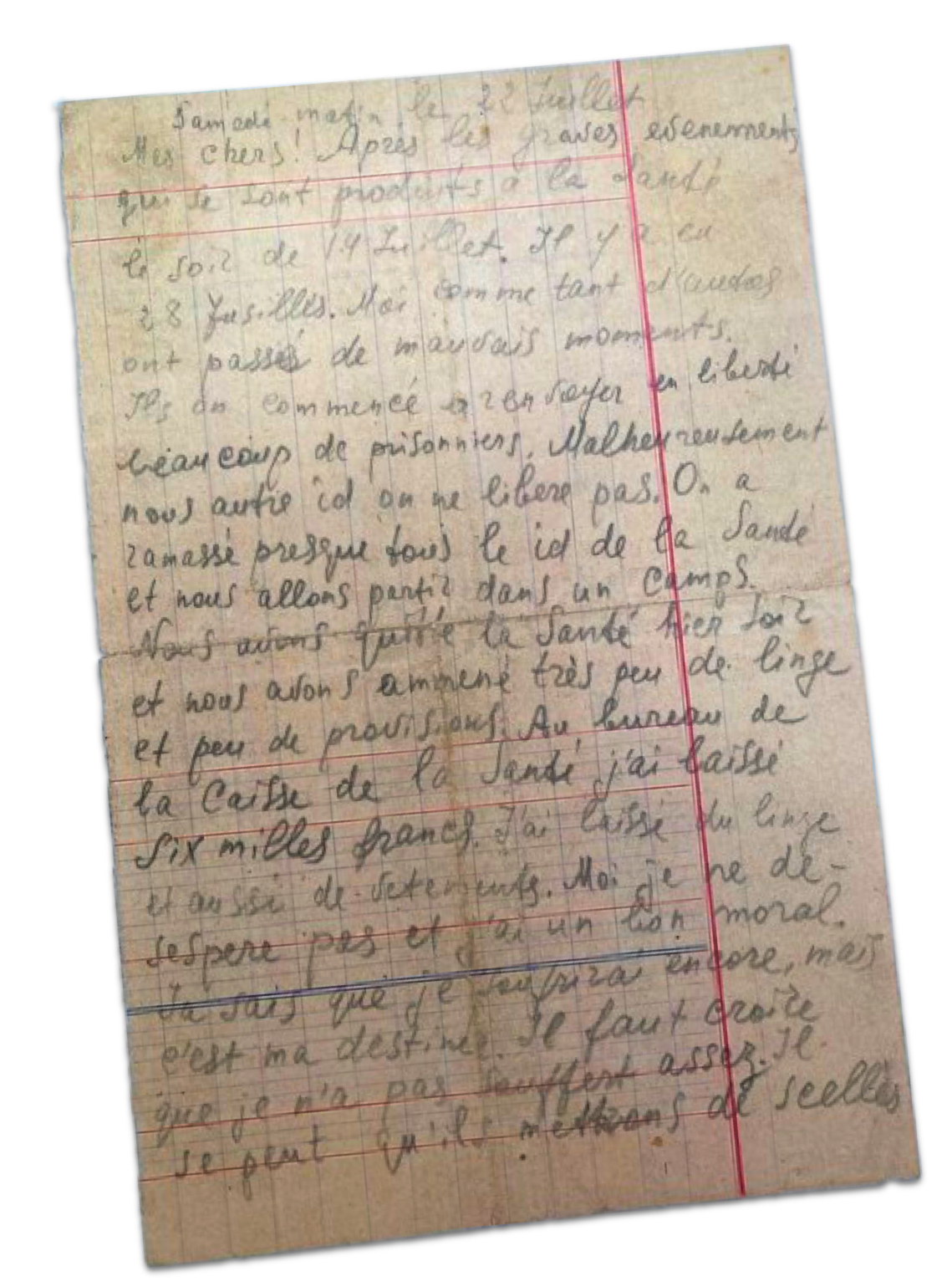
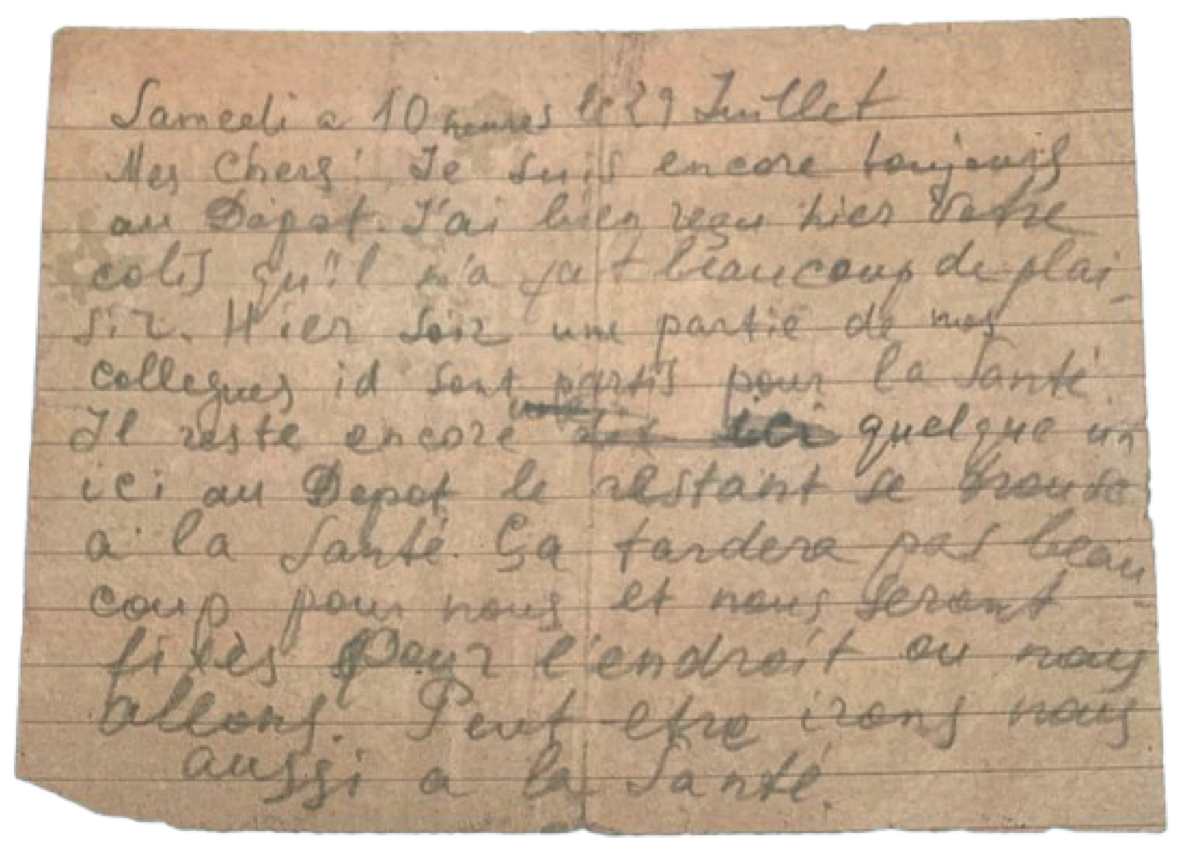
Letters from Joseph Inspektor
(Family archives / Shoah Memorial, Paris, CMLXXV(4)-3)
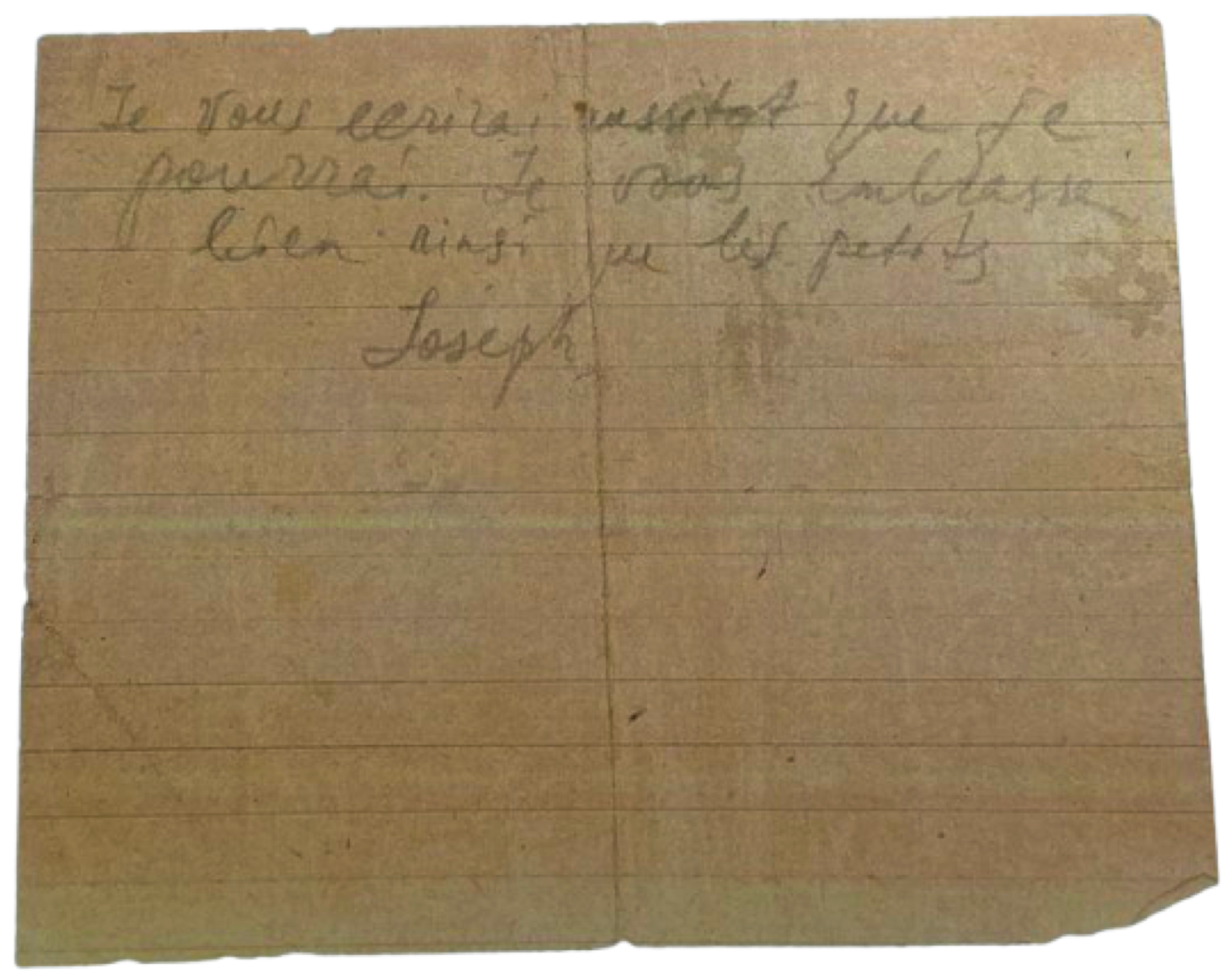
Joseph Inspektor’s final letter (July 29, 1944)
(Family archives / Shoah Memorial, Paris, CMLXXV(4)-3)
Joseph Inspektor spent just two days in Drancy camp, which, from 1942 to 1944, was used solely to hold Jews. On the morning of July 31, 1944, he and 1,305 other people of all ages were loaded onto buses and taken to Bobigny station, where they were crammed into cattle cars. As he had no family with him, he was probably put in a car with other men traveling alone, one of the so-called “bachelors’ cars.”
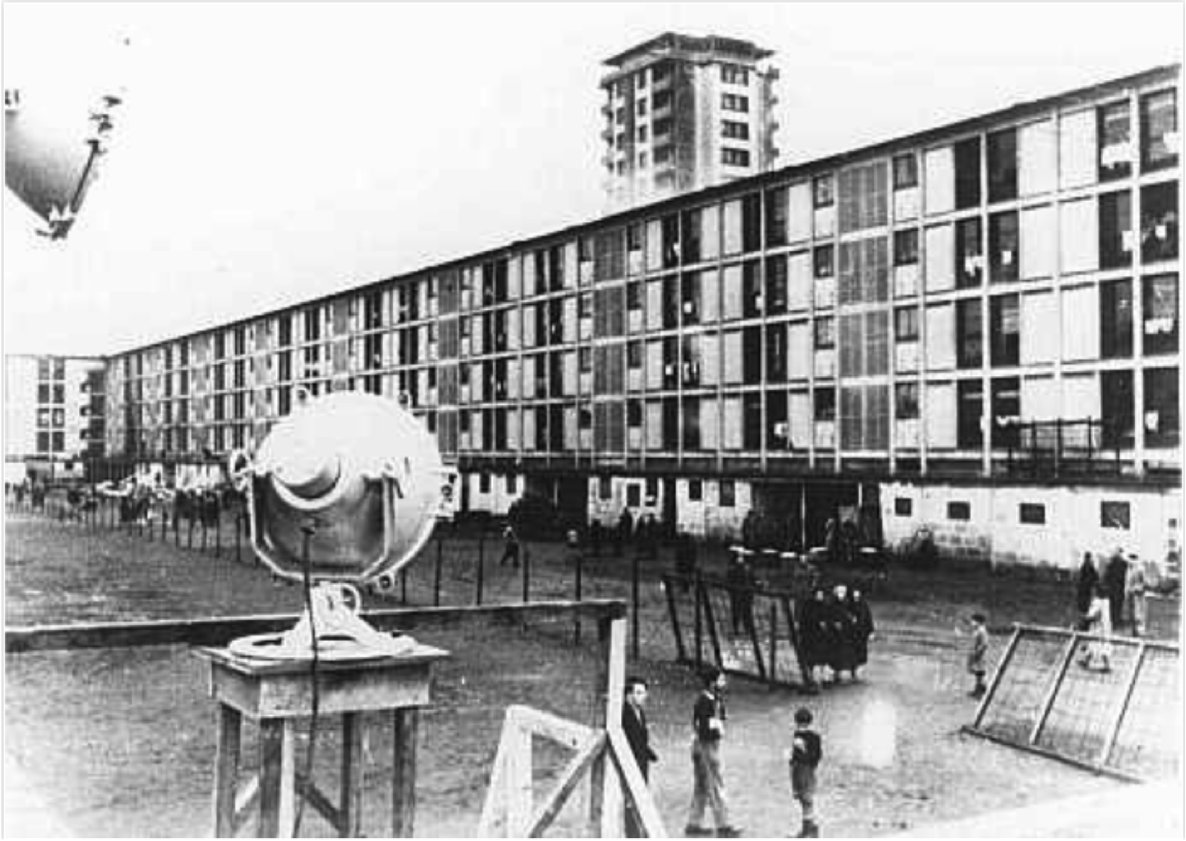
Jews interned in Drancy camp between 1941 and 1944.
(encyclopedia.ushmm.org)
Joseph Inspektor was deported on Convoy 77, bound for the Auschwitz-Birkenau killing center.
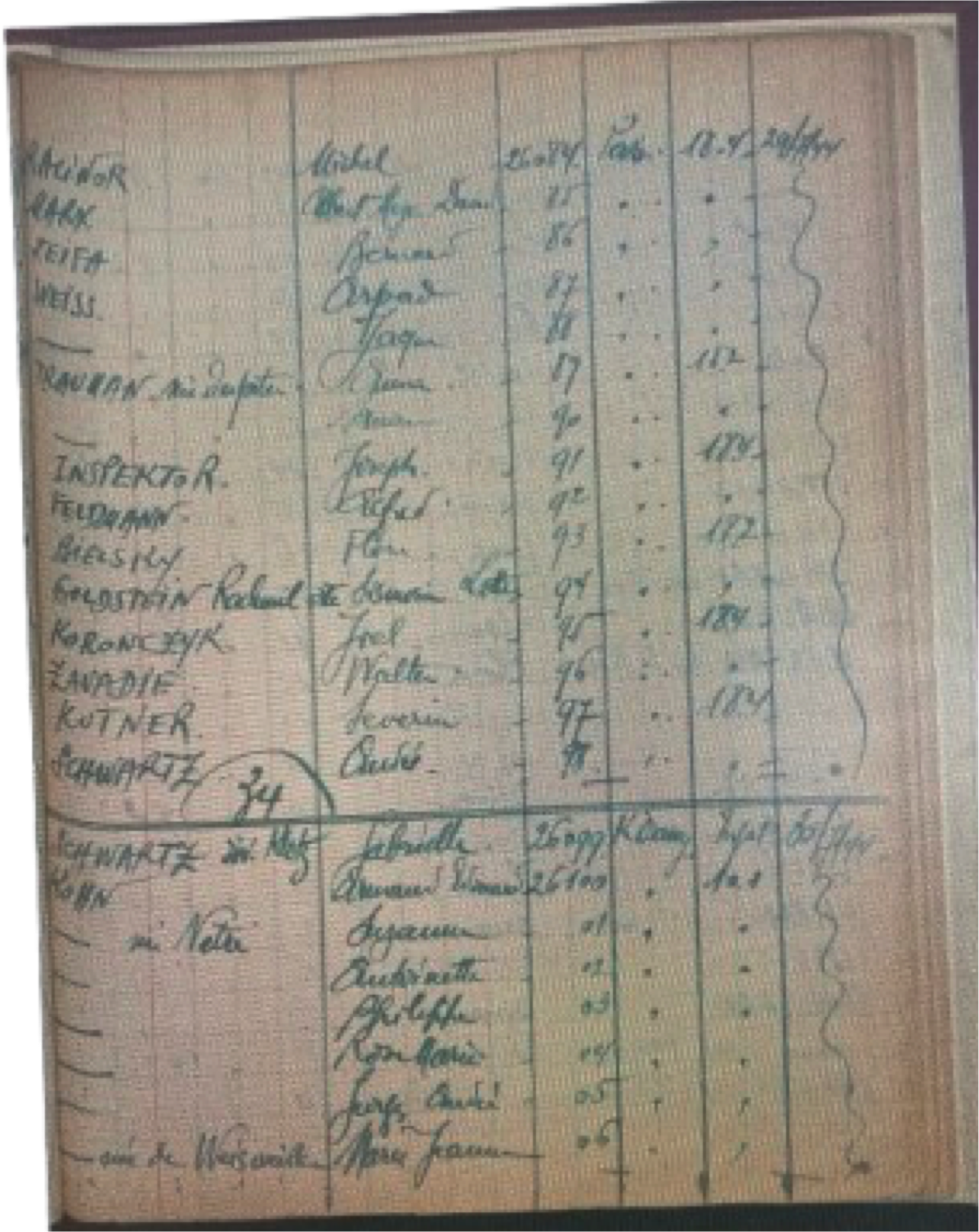
Drancy camp transfer register
French National Archives – F9-5788
When the train reached Auschwitz during the night of August 3–4, 1944, Joseph was not sent to the gas chambers but was selected to enter the camp to work.
Joseph Inspektor’s prisoner number, B-3803, tells us only a little about what happened to him during his time in the concentration camp.
After he was tattooed and had spent some time in “quarantine,” Joseph was sent to the Monowitz-Buna camp (Auschwitz III). He was assigned to work in the synthetic rubber factory, known as “Buna,” most likely because he was an electrician. The other prisoners there included not only Jews but also political prisoners and common criminals. Robert Waitz, a doctor who was himself a prisoner at Auschwitz III, referred to Monowitz as an “extermination camp” due to the grueling working conditions. Starving and beaten by the guards, the men who worked there often survived only three or four months.
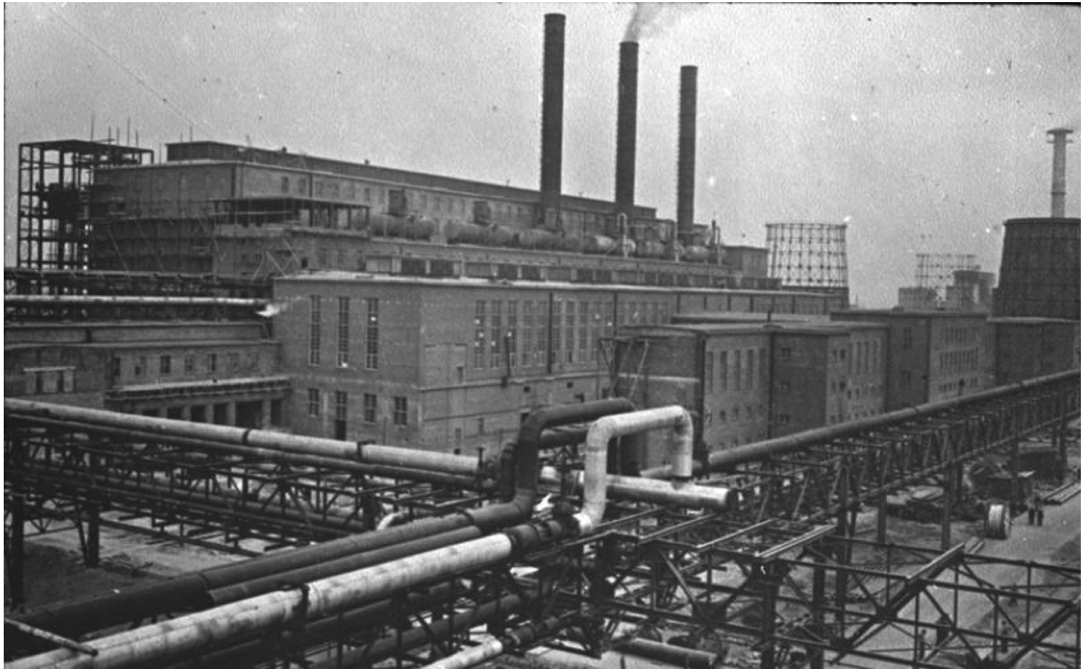
IG Farben factories at the Monowitz camp
(Creative Commons)
Joseph also fell victim to this violence. On September 16, a month after he arrived in Auschwitz, he was admitted to the camp infirmary, the “Revier,” with a broken jaw, and his name was entered in its register. Several other prisoners were admitted that same day with the same injury. His jaw was probably broken when he was beaten by the guards as punishment, which Primo Levi described in his book Si c’est un homme (If This Is a Man). The register shows that he was discharged a month later, on October 16, 1944. For many prisoners, the camp infirmary was the last stop before death, and there is no further record of Joseph after that date.
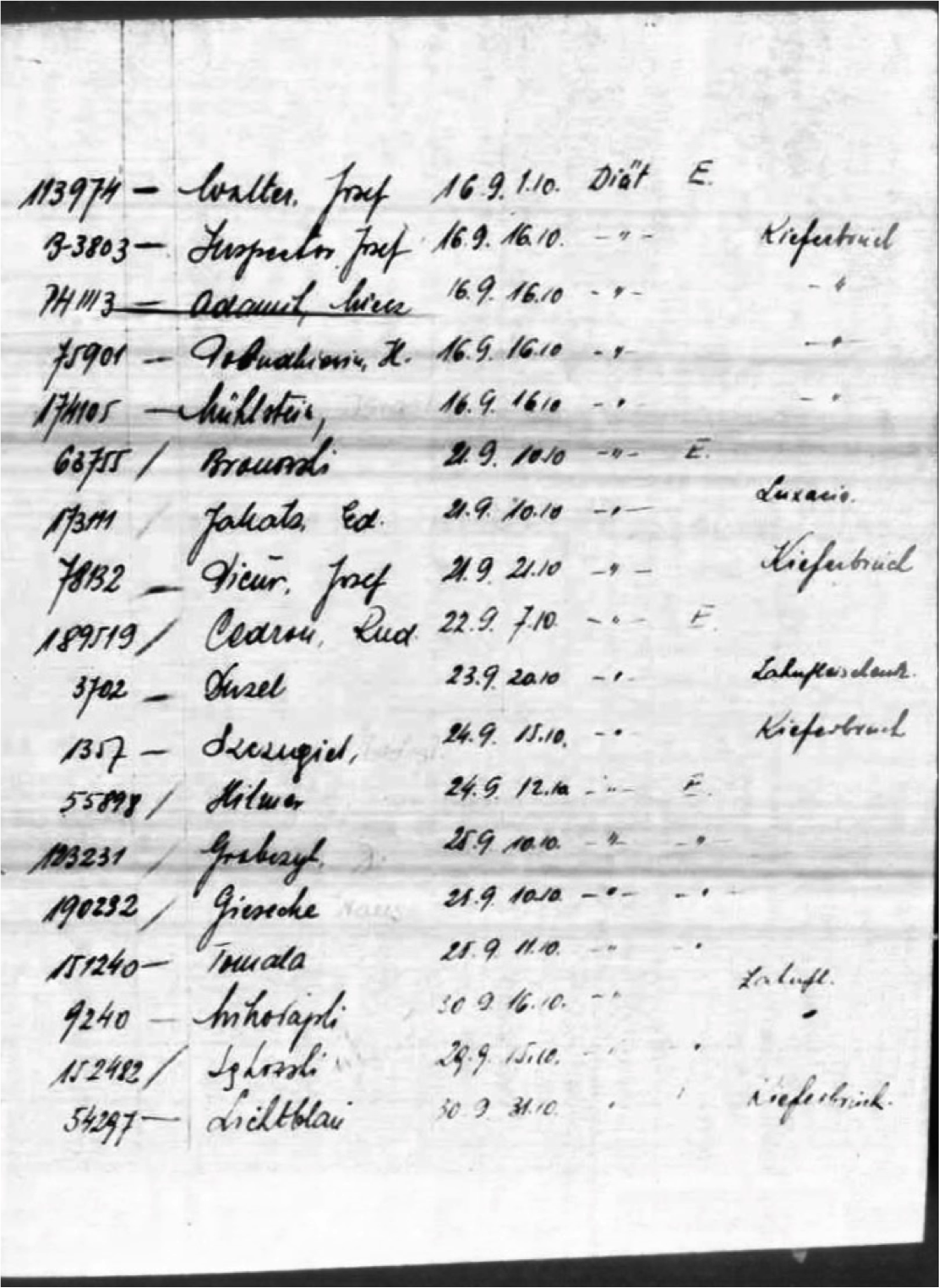
Entry for Joseph Inspektor in the infirmary register at KL Auschwitz-Monowitz.
Arolsen Archives / “Behandlungsbuch der Zahnstation des Häftlingskrankenhauses KL Auschwitz-Monowitz” (Treatment Book of the Dental Station of the KL Auschwitz-Monowitz Prisoners’ Hospital) (May 10, 1944 – January 12, 1945)
What happened to Joseph next?
Joseph may have been transferred to another camp, as some other Convoy 77 deportees were. On October 26, 1944, at least 75 men with registration numbers between B-3675 and B-3955 were sent to the Stutthof concentration camp. Joseph’s number falls within that range, so he may have been sent there before he died. However, the Nazi camp system worked prisoners to death, so the most likely explanation is that Joseph was deemed unfit for work and murdered in the gas chambers. Another possibility is that he perished on one of the “death marches.”
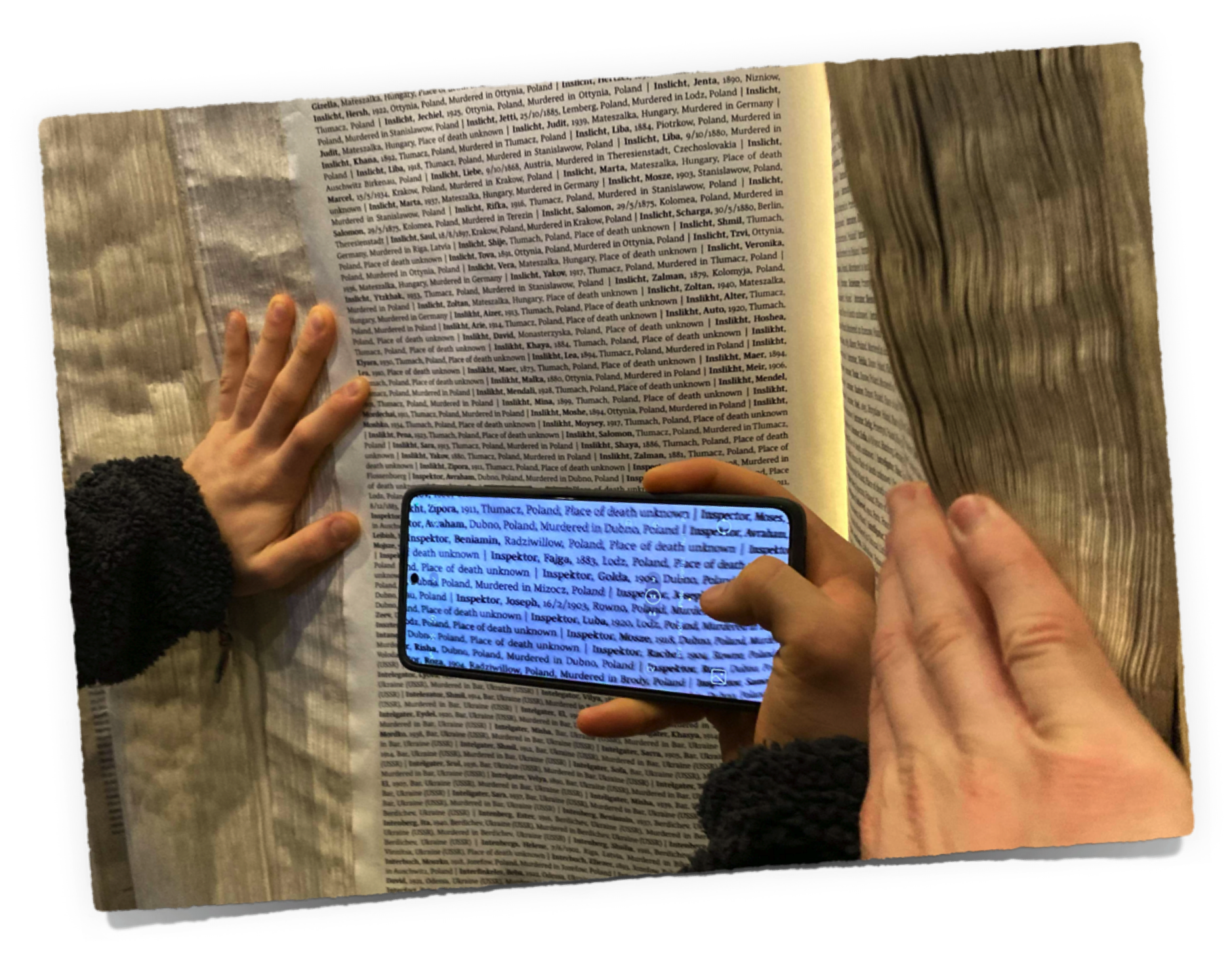
The students find Joseph Inspektor’s name in the Book of Names during their visit to Block 27 (Auschwitz Museum) in January 2025. (Photo: V. Garrigues)
Notes & references
[1] Samuel’s daughter, Odette Pluskwa, who was hidden as a child during the war, gave testimony about her family to the Shoah Memorial. Both in Poland and in France, the family held socialist beliefs.
[2] Johanna Lehr, Au nom de la loi. La persécution quotidienne des Juifs à Paris sous l’occupation (In the Name of the Law: The Daily Persecution of Jews in Paris under the Occupation), Gallimard, 2024.
[3] Laurent Joly, Dénoncer les Juifs sous l’Occupation (Denouncing Jews under the Occupation), CNRS éditions, 2017; Maurice Rajsfus, La Police de Vichy (The Vichy Police), éditions du Détour, 1995.
Archives
- French Ministry of Defense Historical Service
File on Joseph Inspektor as a civilian victim, ref. AC 21P 258770 - French National Archives
Naturalization application
File on Joseph Inspektor (1927), ref. BB11_11285 - Paris Police Headquarters archives
File on Joseph Inspektor, ref. 77 W 815
CC2 – register of persons provisionally held at the depot, July 1944 - Shoah Memorial, Paris
CMLXXXV (4)-3 – Inspektor donation
MXII_1129 to MXII_1151 Family photographs (some people are incorrectly identified in the online records) - Arolsen Archives
Behandlungsbuch der Zahnstation des Häftlingskrankenhauses KL Auschwitz-Monowitz (Treatment Book of the Dental Station of the KL Auschwitz-Monowitz Prisoners’ Hospital) (May 10, 1944 – January 12, 1945) - Inspektor family private archives