Français
 Polski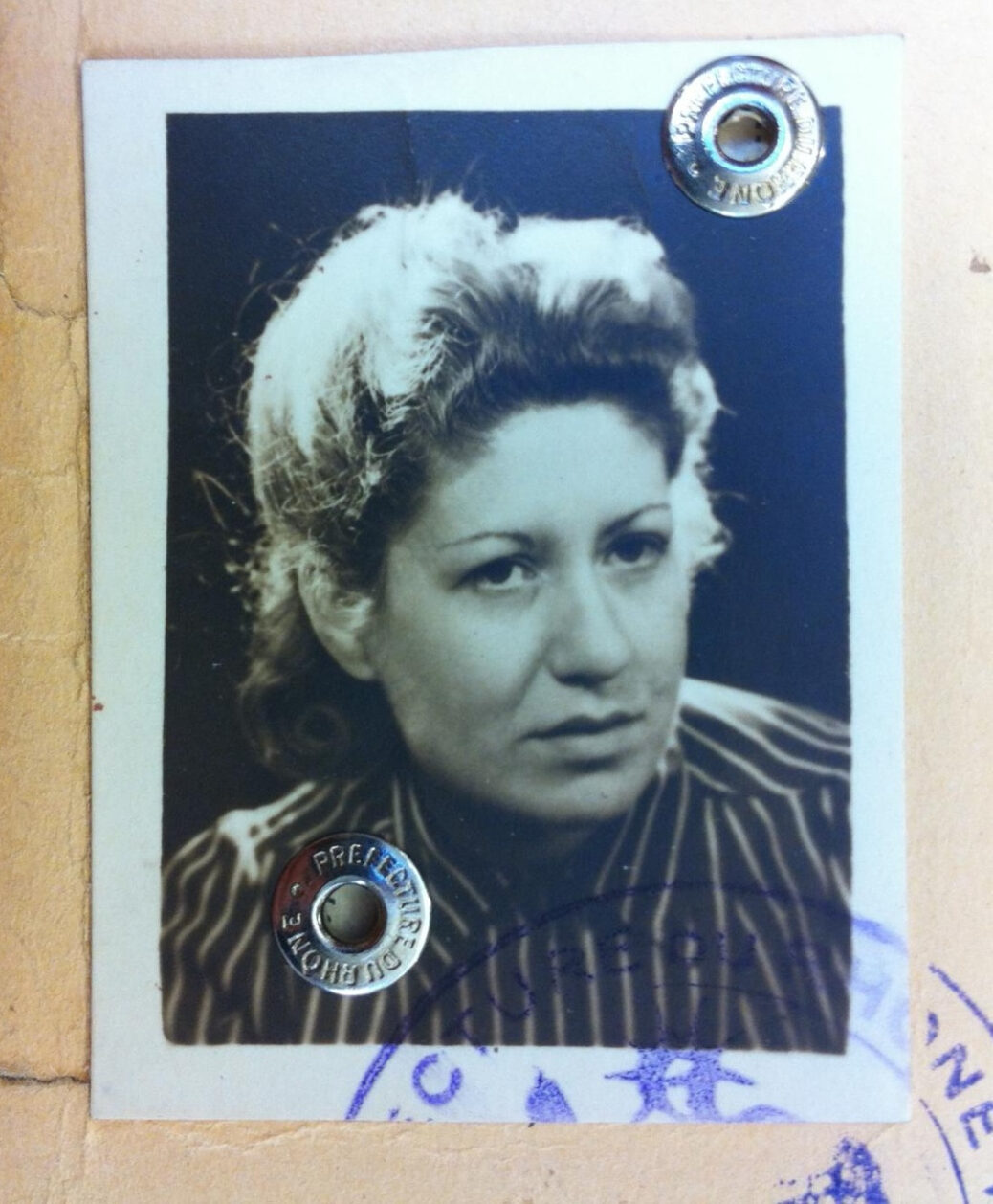
Eva GOLDBERG (1910-1944)
Birth and Origins: Leaving for France in Early Childhood
Eva Goldberg – also spelled Ewa Goldberg in some documents – was born on 10 June 1910 in Biecz (though 1916 is listed on many official records). At the time, Biecz was not part of Poland, but of the Austro-Hungarian Empire, in a region called Galicia. After the First World War, Austria-Hungary collapsed and Biecz became Polish again in 1918. The town of Biecz is located in southern Poland, in the Lesser Poland (Małopolska) region, about forty kilometres south-east of Kraków.
Eva was born into a Jewish family. Her parents were Juda Goldberg and Jocheveth Goldberg, née Spielmann. Some contacts found in Biecz suggest that the Goldberg family were prominent figures in the local Jewish community; however, we were unable to confirm this information or establish a definite link to Eva’s family. We exchanged messages with the town hall of Biecz, but no reliable details about Eva Goldberg’s early life or schooling were found there, which strongly suggests that she left Biecz in early childhood and was never enrolled in school there.
The following is the reply received from the town hall of Biecz (translated from Polish), sent to our German partner:
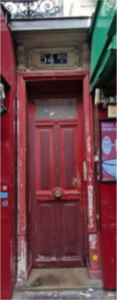
“Dear Madam, I regret to inform you that I have found no information concerning Ewa Goldberg, although the Goldberg family was very well known in Biecz. The first rabbi of Biecz, Meilech Goldberg, was responsible for founding the town’s first synagogue. His grandson, Jakub Goldberg, served as deputy mayor and president of the Jewish community (kehilla). He maintained the community’s civil records, a task later taken over by his son, Meilech (Max) Goldberg. I have carefully examined all the documents at my disposal. I found no person born on the date indicated. I hold complete school registers for pupils from 1915 to 1939, and no Ewa Goldberg – nor anyone else born on that date – appears in them. It is therefore very likely that she left Biecz while still very young and was not schooled there. I am sending you photographs of the houses belonging to Rabbi Meilech Goldberg (no. 1) and Jakub Goldberg (no. 2). It is unfortunately the least I can do. I also wish to thank you for the photograph of Ewa, which I did not have. Kind regards.”
From Nancy to Lyon – A Life Under the Occupation and the Nazi Threat
The exact date of Eva Goldberg’s arrival in France remains unknown, as do the reasons why her parents left Poland and the circumstances of their departure. However, it is likely that she arrived in France at a very young age, based on a civil status form completed by her mother – called Jeanne in French administrative documents – which states that she was naturalised as a French citizen and was issued a French identity card on 28 August 1916. Eva was around 6 years old at the time.
An application for political deportee status filed on Eva’s behalf by her mother and addressed to the Ministry of Veterans and War Victims in 1957 tells us that Eva herself became a French citizen on 19 February 1930.
We know that in 1937, she was living in the centre of Nancy, at 83 rue Charles III. During the Second World War, she moved to Lyon – most likely fleeing Lorraine because she felt unsafe, as many other Jewish people did at the time.
From February 1941 until 8 May 1943, she lived with the Peyrache family at 6 rue Pasteur, in the 7th arrondissement of Lyon. After that, she moved to rue Paul Bert – to number 45, 46, or 47, depending on which document is consulted. A handwritten note from her mother confirms that she and Eva were indeed living at 47 rue Paul Bert at the time of her arrest. This detail will prove to be significant.
Before her arrest, Eva worked as a secretary stenographer, drafting letters and administrative correspondence. Her profession indicates a certain level of education, though we were unable to find further details about her career.
Very little is known about her personal life. We contacted the municipal archives of Lyon, the departmental archives of Bouches-du-Rhône, and the Centre d’Histoire de la Résistance et de la Déportation (CHRD), but none of these institutions held any records about her. Based on the various documents we reviewed, she did not appear to have been married or to have had children.
From 1942 onwards, Lyon was largely under German occupation and controlled by the Gestapo under Klaus Barbie, with the help of French collaborators such as the Milice and the Parti Populaire Français (PPF). Jewish people were persecuted, hunted down and arrested. Raids were often violent and sudden: armed men would burst into homes, threaten residents at gunpoint, and make summary arrests. Those who tried to escape were beaten or even shot. People who were arrested were most often held at Montluc Prison in the 3rd arrondissement of Lyon, which was then controlled by the Gestapo.
Arrested in Lyon, Deported on Convoy 77 – Hypotheses about her arrest
When we received the reply from Régis Le Mer at the CHRD, we realised there were more leads to follow. We wrote back, sharing the information we had gathered about Eva – dates, addresses, including 47 rue Paul Bert. His response was fast:
“Please note that on 17 July 1944, another Jewish family was arrested – this may be useful should you come across the same perpetrators at some point. Indeed, that family’s arrest took place on the same date, just 200 metres from Eva Goldberg’s home. It may be worth keeping this kind of ‘coincidence’ in mind.” “In any case, the address 47 rue Paul Bert, where Eva Goldberg lived, is 200 metres from 16 rue Verlet-Hanus, where the Fajnkuchen family was arrested on 17 July 1944.” “Their descendant, Franck Fajnkuchen – whom I am copying in – has written a remarkable book about his family.”
In light of this new information, our students wrote to Franck Fajnkuchen.
“Dear Mr Franck Fajnkuchen, We are students from Collège Le Plantaurel, in Cazères. We are reaching out to you because we are working with other schools across Europe on a project about deportation from Convoy 77, and more specifically about a deportee named Eva Goldberg, who was arrested on 17 July 1944 in Lyon. Unfortunately, we do not have much information about this, other than the fact that she was arrested at her home, which was located 200 metres from your grandparents’ house. Mr Le Mer put us in touch with you so that we might obtain some important information. We are asking for your help in providing us with any resources or other details that might help us move forward in our research. Thank you in advance for your kind assistance. Yours sincerely, The eTwinning group students from Collège Le Plantaurel, Cazères”
He kindly shared with us an excerpt from his book Yzkor: Une famille juive en France entre 1940 et 1944, which recounts the circumstances in which his grandfather Manek was arrested on 17 July 1944, at 16 rue Verlet-Hanus – just 300 metres from Eva’s home, on the very same day.
Franck Fajnkuchen’s historical research into his family helped us better understand the possible circumstances surrounding Eva Goldberg’s arrest. While we cannot be certain, it is very likely that Eva was arrested by the same perpetrators who arrested Manek, under similar circumstances.
On 17 July 1944, Manek Fajnkuchen was arrested at his home at 16 rue Verlet-Hanus in Lyon. Thanks to research carried out decades later by his grandson, the identities of the two main people responsible for his arrest were most likely established: Sylvain Bressy and Jean-François Constantini, both members of the Parti Populaire Français (PPF), a French organisation that collaborated with the Gestapo. Along with another family member, Manek attempted to escape through a window, but the men opened fire, wounded them, and then beat them before taking them away. Manek was held at Montluc Prison and then deported to Auschwitz, most likely on Convoy 78, which left Lyon on 11 August 1944. A survivor testified to having seen him at Auschwitz, where he died shortly after his arrival.
On 17 July 1944, Eva Goldberg was arrested at her home at 47 rue Paul Bert in Lyon, because she was Jewish. According to post-war administrative records, she was granted the status of “racial deportee” (as noted on her disappearance certificate) or “political deportee”.
She was almost certainly held at Montluc Prison before being transferred to the Drancy internment camp, near Paris. However, she does not appear on the list of people detained at Montluc. Only one German prisoner record card, bearing the name Jeanne Goldberg, has been found in the Montluc registers, dated 23 July 1944. Was this Eva’s mother? Or Eva herself, using her mother’s name? The question remains unanswered.
If Eva was indeed held at Montluc following her arrest, she would most likely have been transferred to Drancy on 22 July 1944 under the registration number 25852.
Eva Goldberg was then deported from Drancy to Auschwitz on 31 July 1944, aboard Convoy 77, at the age of 34. Convoy 77 carried 1,306 people, including 324 children.
At the time, the Drancy camp was commanded by Aloïs Brunner, an SS officer and close associate of the Nazi party since 1931 and of the SS since 1938. He directed the camp from July 1943 to August 1944. Under his authority, approximately 24,000 Jewish people were deported from Drancy to the Nazi death camps – nearly one third of all Jewish people deported from France. After the war, he evaded justice and found refuge in Syria, where he lived under the protection of the regime until his presumed death around 2010.
Even after the Allied landings in Normandy on 6 June 1944 and the beginning of France’s liberation, the deportations continued. Convoy 77 was one of the last deportation trains to leave France before the Liberation of Paris on 25 August 1944.
Eva, who disappared at Auschwitz at the Age of 34
According to her death certificate, drawn up in Paris on 6 June 2011, Eva Goldberg died at Auschwitz on 5 August 1944, shortly after her arrival at the camp. However, in her written testimony, Régine Shorka – a fellow prisoner who knew Eva at the camp – states that she was separated from Eva on 26 October 1944. If this is the case, then Eva survived the selection process upon arrival at Auschwitz and was put to work in the camp.
Doubts therefore remain, both about the date and the exact circumstances of her death. It is impossible to know whether Eva died of illness, exhaustion, malnutrition, violence, or in one of the gas chambers upon arriving at Auschwitz-Birkenau. Like so many victims deported during the Holocaust, her final days cannot be fully retraced.
It was with great emotion that our students found Eva’s name – even though her birth year was still listed incorrectly – in the Book of Names of Holocaust Victims at Auschwitz, during our trip to Poland. This book is a copy of the original kept at Yad Vashem Memorial in Jerusalem, Israel.
After the War
Since Eva left behind neither a husband nor children, it was her mother, Jocheveth Goldberg – known as Jeanne – who made efforts after the war to try to find her, filing a search request with the Ministry of Prisoners, Deportees and Refugees in Germany in 1946. Jeanne Goldberg was by then living once again in Nancy, at 49 rue Hoche.
Today, Eva Goldberg’s story reminds us of the lives of Jewish victims deported during the Second World War. Through research and testimony, the students worked together to restore a part of Eva Goldberg’s identity and to preserve her memory for future generations. This project also reminds us that behind every deportation number there was a human life – a person with a story, hopes and dreams – all violently destroyed by persecution and hatred.
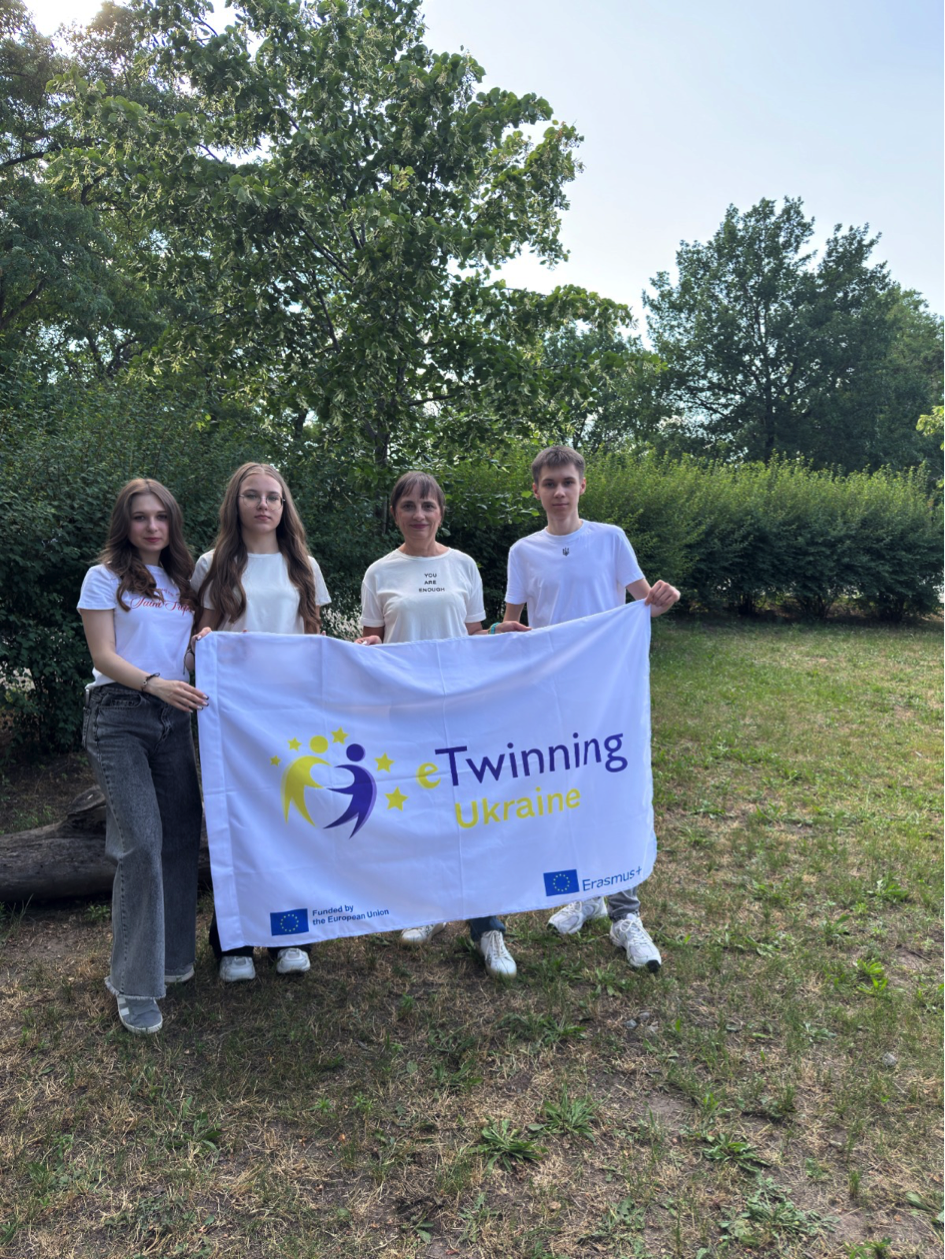
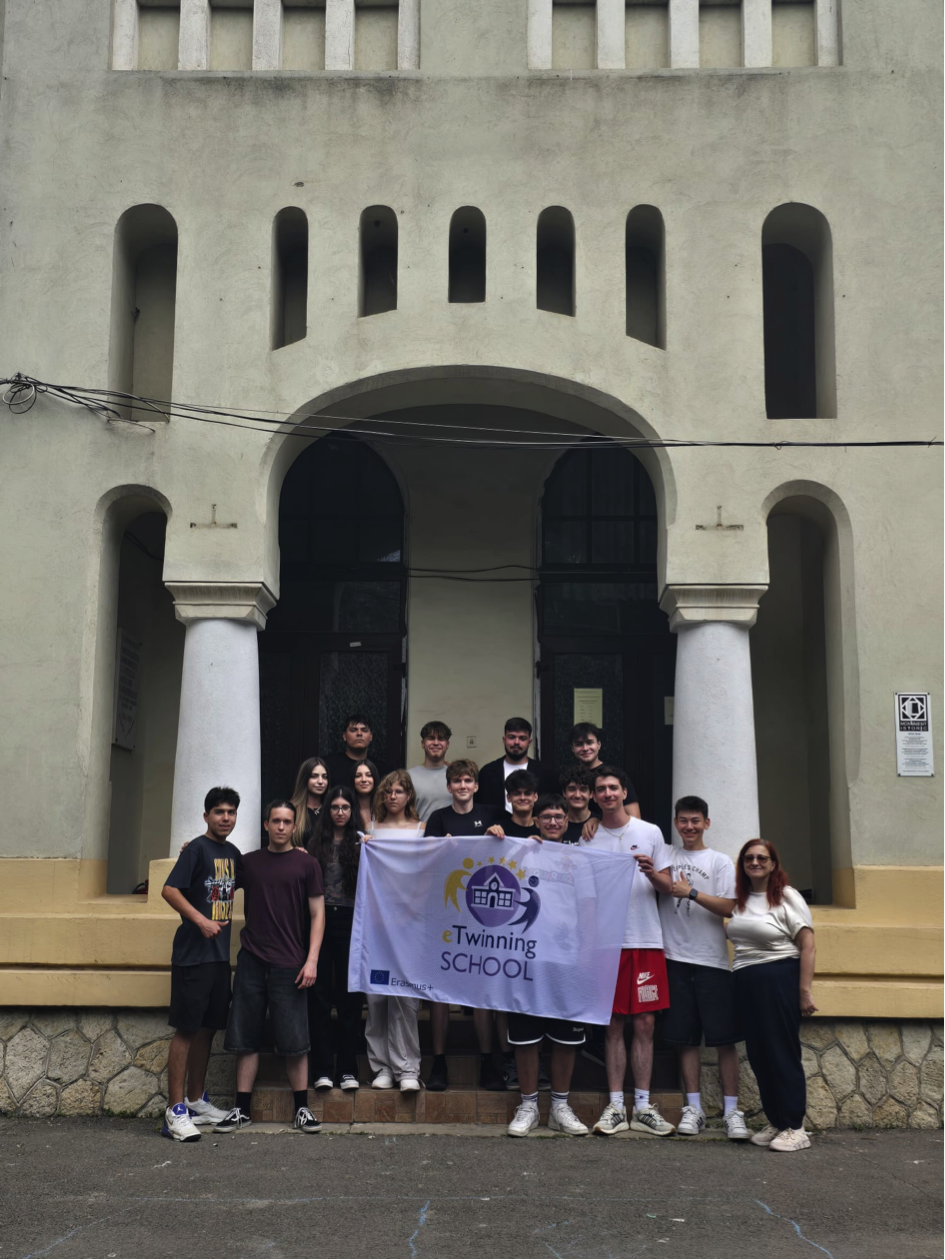
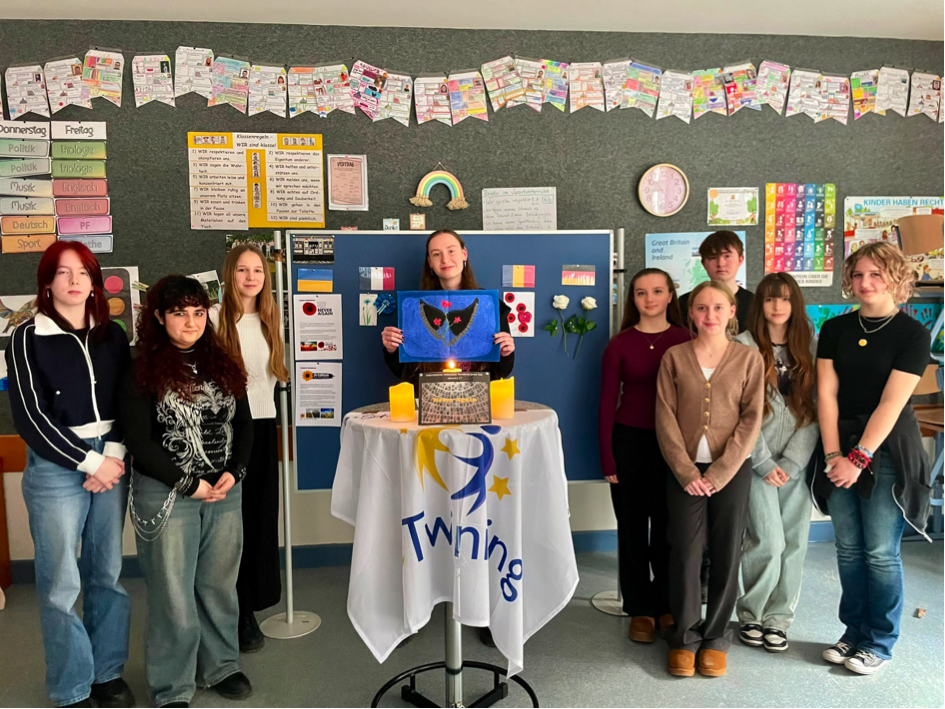
This biography of Eva Goldberg was reconstructed through research carried out by students from France (Collège Le Plantaurel – Cazères), Germany (St-Ursula Realschule – Attendorn), Ukraine (Kamianka School “Intelect” – Zaporizhzhia) and Romania (Colegiul Național Pedagogic – Constantin Brătescu, Constanța) as part of the eTwinning civic and memorial project Memory Keepers.
The students worked in international teams, consulting historical archives and administrative records, and gathering testimonies in order to restore a part of Eva Goldberg’s identity – a woman deported to Auschwitz on Convoy 77 – and to preserve her memory.
This project was conducted in English throughout the 2025–2026 school year. The biography was therefore written by the students in English, and the French students then took on the task of rewriting it in French.

Sources
Official and administrative sources:
- The website and archives of Convoy 77
- The Yad Vashem database
- The municipal archives of Lyon and the departmental archives of Bouches-du-Rhône
Sources relating to the concentration camps:
- The Arolsen Archives (ITS – International Tracing Service)
- The Drancy–Auschwitz resource lists
- The Book of Names (Auschwitz – copy of the Yad Vashem Book of Names)
- The Mémorial de la Shoah archives (for supplementary research)
Oral and written testimonies:
- Email exchange with the town hall of Biecz, confirming that no school records exist for Eva Goldberg under that name or with that date of birth, suggesting she very likely left Biecz at a very young age and was never enrolled in school there
- Email exchange with the Centre d’Histoire de la Résistance et de la Déportation (CHRD) (10 and 11 March 2026, chrd.documentation@mairie-lyon.fr)
- An excerpt from the book Yzkor: Une famille juive en France entre 1940 et 1944 by Franck Fajnkuchen