Français
 Polski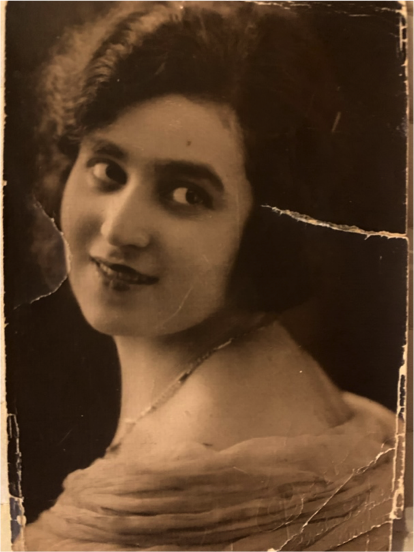
Clara SCHER
Clara Feinstein in her younger years. Photo kindly provided by her granddaughter, Patricia Scher
Growing up in France
Clara Feinstein first saw the light of day on November 10, 1898, in Odessa, in present-day Ukraine. Her parents were Abraham Feinstein and Sarah Edehmann (sometimes spelled Eidelman). She was the eldest daughter of a Jewish family born in what was then part of Russia, in a region in which pogroms were widespread in the late 19th century. The family therefore decided to emigrate. They arrived in France just after the turn of the century, although there is no official record of the exact date. However, we know the birthplaces of Clara’s nine siblings, and Marcelle was the only other child born in Russia, on February 10, 1900. Anna was the first of the Feinstein children to be born in Paris, on August 5, 1901. Also, in a letter[1] written by Abraham Feinstein and included in his French citizenship application, he stated that he arrived in France in April 1900. We can therefore conclude that Clara arrived in France at the same time, when she was about 18 months old. The family set up home in Paris.
Moving house repeatedly. . . but staying in the same neighborhood
When she was very young, Clara lived at 27 rue des Jardins Saint-Paul, in the 4th district of Paris[2]. After that, the family moved several times, initially staying within the Marais quarter. They lived at: rue Eginhard (where Joseph was born in October 1903); rue Charles-V; rue de la Cerisaie; back to rue des Jardins St Paul, at no. 17 this time; rue François-Miron in 1909; 24 rue de la Verrerie (when Paul and Michel were born in 1912 and 1915); Place de la Bastille; rue de la Forge-Royale (during the First World War)[3]. They then moved to rue Baccaria in the 12th district, on the other side of the Bastille.
Did Clara stay at the same school in the neighborhood, or did she have to change schools every time the family moved? One thing is certain: she spoke French. We do not know, however, what language she spoke at home with her parents.
Her father was a cap maker. In December 1908, he began work at the Spalter factory, which manufactured caps, berets, and hats, and was based at 10 rue de Thorigny in the 3rd district of Paris[4]. Her mother was a homemaker. The family led a simple life in the Marais, which at the time was becoming increasingly popular with Jewish immigrants from Eastern and Central Europe.
We do not know whether or not the Feinstein family kept up any religious and/or cultural traditions from Ukraine. Either way, living in or near the Marais, they were in the heart of a thriving Jewish community. The many Jewish grocery stores would have enabled them to keep up their culinary traditions and they could also interact socially—something that might have been more difficult in other neighborhoods, given that newly-arrived immigrants rarely spoke much French.
Becoming a French citizen
That said, it is worth noting that the Feinsteins gave all of their children born in Paris French first names, a clear indication of their desire to integrate fully into French society. The family members born outside France also wanted to become French. After having lived in France for twenty-five years, Clara Feinstein was granted French citizenship on July 21, 1925[5], at the same time as sister, Marcelle, and their father.
Prior to that, on March 31, 1925, Abraham Feinstein had made a declaration before the Justice of the Peace for the 12th district of Paris in order to ensure that each of his children born in France (before he himself was naturalized) would be French citizens from birth.
An unconventional start to adult life
Clara Feinstein was 22 years old when she had her first daughter, Rosette Valinsky, on February 26, 1920, in the 12th district of Paris. The baby’s father, Maurice Valinsky[6], officially recognized the child as his, even though he and Clara were not married. The 1921 census lists Rosette living with a foster family, Eugène and Clara Bréaux, in Villaudé, in the Seine-et-Marne department of France. Three years after she had Rosette, Clara had another illegitimate child, Daniel Feinstein, born in the 14th district of Paris on October 28, 1923[7]. The father never officially recognized the child, so there is no record of his identity.
On July 21, 1927, exactly two years after she was naturalized as a French citizen, Clara married Salomon Scher in the town hall of the 12th district of Paris. This was followed by a religious wedding at the Tournelles Synagogue on Sunday, August 14, 1927[8].
Salomon Scher was 45 years old and had been a widow for nine months. He had previously been married to Tauba Marguerite Gross, with whom he had three children: Léontine, who was born on February 3, 1907 (and died “at her mother’s home” on May 28, 1918); Isaac, born in 1911; and Hélène Rachel, born in 1921. He had been a French citizen since June 15, 1926[9].
When she got married, Clara was still living with her parents at 19 rue Beccaria in the 12th district. According to the 1926 census of Paris, almost all of her siblings were living in that same apartment, along with her daughter Rosette. Daniel, who was not listed, was probably living with foster parents. Clara was not working at the time.
Starting in 1926, Clara suffered three major bereavements. Her mother, Sarah (born in 1876), died on May 22, 1926. In July 1928, her sister Marcelle, who like Clara was born in Odessa, Ukraine, and had married Léon Zeligfeld in 1925, also passed away. Then on February 11, 1929, she lost her father (born on April 19 or July 15, 1871, in Galati, Romania[10]). He was buried in the family vault in the Jewish section of the Bagneux cemetery on February 14, 1929.
A large family
Clara and Salomon Scher went on to have six children together, all born between 1928 and 1938. The eldest was Serge Max, born on July 18, 1928. Next came Jacqueline, on February 26, 1930, followed by David Albert, on October 6, 1931, then Gaston on November 5, 1933, Raymond on December 27, 1935 (who died young on February 16, 1938), and Mireille on February 27, 1938.
The couple thus had a large family to raise on very little income. This led to Clara’s children from her previous relationships effectively being abandoned: Daniel was sent to live in Algeria and Clara relinquished responsibility for Rosette by lying about her date of birth, according to a source within the family.
A capmaker and a homemaker
Before she got married, Clara worked in a cap factory. This is mentioned in both her application for naturalization as a French citizen and the corresponding decree. She earned “50 francs a week”[11], which was less than her sisters Marcelle and Anna, who earned 60 and 70 francs a week, respectively. Did Clara work fewer hours per week, or did she work more slowly, if they worked on a piecework basis? In any case, all three young women earned significantly less than their father, the head of the household, who earned “220 francs per week”.
Her work in the cap-making trade may have been how she met her husband, as Salomon Scher was also a cap maker[12]. However, it is also worth noting that as of 1907, Salomon Scher lived at 27 Rue des Jardins Saint-Paul[13], the same address as the Feinstein family, who moved back to number 17 on the same street a few years later. Perhaps they met as neighbors and stayed in touch.
However, on her marriage certificate, and indeed in the 1926 census record, Clara is listed as unemployed, and her arrest record states that she was a “housewife”, or homemaker, which makes sense given that she was the mother of a large family. That said, she may have helped her husband make caps at home, as did many wives whose husbands worked in the clothing industry.
In 1931, the family was living at 16 rue de l’Orme, in a low-rent tenement building owned by the City of Paris in the Amerique quarter of the 19th district of Paris. They were still there in 1936, with five children living at home. Salomon was a cap maker, his son Isaac was a tinsmith, Rosette worked as a seamstress in the 10th district, and Hélène had a job in the 13th district. Two years later, the family moved into an apartment in another low-income housing building on rue Alphonse-Karr, in the Pont de Flandres quarter of the 19th district.
The war, arrest and deportation
We have no information as to what the Scher family did when war was declared. Did they, like so many other people, flee the capital in what was known as “the exodus”? If they did, they were soon back in Paris. They registered themselves as Jews, as required in 1940 by the first decree on the status of the Jews. However, Clara did not wear the yellow star, which Jewish people aged 6 and over were obliged to attach to their clothes. Her granddaughter Patricia says that, according to her father, Salomon went to collect the family’s stars but then burned them in the stove.
It appears that neither Clara nor Salomon were stripped of their French nationality under the Vichy regime[14].
On December 27, 1940, Salomon’s daughter Hélène got married in the town hall of the 10th district of Paris. Clara was her maid of honor.
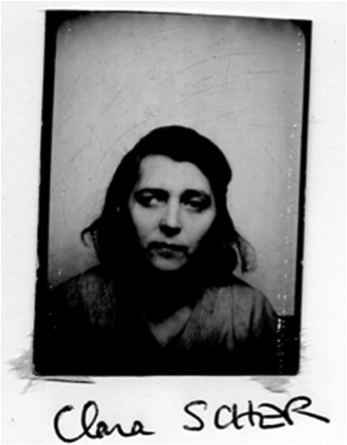
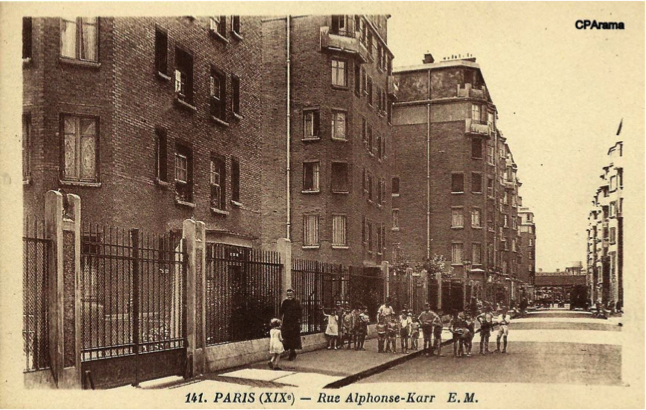
Image 1: Photo of Clara Scher, taken when she arrived at Drancy camp.
Image 2 : Undated postcard showing the low-cost tenements on rue Alphonse-Karr.
The Holocaust took a dreadful toll on the Feinstein family.
Adolphe, Clara’s brother, who was actively involved in the Communist Resistance movement, was arrested by German police in Bois-Le-Roi (now in the Seine-et-Marne department of France) on May 15, 1944. He was taken to Fresnes Prison, where he stayed until July 19, when he was transferred to Drancy transit camp. He was deported on the same convoy as Clara, and never came home. Two of Clara’s sisters, Anna, who was three years her junior and married to Albert (Avram) Coifman, and Gabrielle, the youngest, were arrested in Ézanville (now in the Val d’Oise department) and deported along with Suzanne (Anna’s 8-year-old daughter) on Convoy No. 76, which left Drancy on June 30, 1944. Anna and Suzanne were killed in Auschwitz, but Gabrielle survived[15].
A month later, on July 28, 1944, Clara was arrested in the family apartment at 37 rue Alphonse-Karr, where they had lived since 1938. Her husband, Salomon, and two of their sons, Serge, aged 16, and Gaston, 11, were also arrested that day.
It would seem that they had been denounced. During the war, in addition to making caps, Salomon sold fruit and vegetables on the markets and on the street. Patricia Scher wrote “The concierge on rue Alphonse Karr was involved in the black market; she asked Salomon to lend her his weighing scales, but he refused—that’s why she turned him in”.
There are no official reports detailing the exact circumstances of the arrest or explaining why only two of Clara and Salomon’s children were arrested, but not the others, who survived. The family’s account is based on testimonies from neighbors and the surviving children. According to them, the building supervisor, as we mentioned above, reported them to the authorities. However, as some of the family members were already interned in Drancy, where the Nazis put pressure on people to get them to reveal the whereabouts of other family members, and in particular as they had registered themselves as Jews (Salomon disposed of their yellow stars, and they must have been registered in order to have been issued the stars in the first place) there was no need to report them: the Nazis already knew exactly where they were…
Gaston and Serge appear to have been arrested as a result of unfortunate series of events. That morning, the two older brothers had driven their younger siblings to school, which was providing childcare during the school break. Somewhere along the way, Gaston realized he had forgotten his handkerchief and wanted to go home to fetch it. His older brother Serge went with him, and both were arrested at the same time as their parents. The teacher kept the younger children hidden in the school until she could hand them over to their older sister, Hélène. In doing so, she saved their lives.
Over the course of the next two days, the weighing scales and the family’s sewing machine went missing from the apartment.
After she was arrested, Clara was taken straight to Drancy camp, where she was assigned prisoner number 26,053[16]. She was deported on Convoy 77 on July 31, 1944, along with Salomon, Serge and Gaston.
After a grueling journey that lasted four days and three nights, with the 1306 deportees crammed 60 at a time into cattle cars, with little or no water and barely any food, the convoy finally arrived in Auschwitz. The Scher family members probably travelled together. It is unlikely that Clara met up with her brother Adolphe, who, as a single man, would have been assigned to one of what were known as a “bachelors’ cars”[17].
The parents and their two sons were sent to the gas chambers and murdered as soon as they arrived in Auschwitz-Birkenau.
After the war
When the war ended in May 1945, Clara and Salomon’s children were all still underage: Mireille was 7, David 14 and Jacqueline 15. In accordance with French law, a family council was held in order to decide who should be responsible for them. Isaac, Salomon’s eldest son, who was 34 years old, was appointed their legal guardian[18]. They were living in the family apartment on rue Alphonse-Karr at the time, together with Hélène.
It was Isaac, who worked in the tailoring trade, who undertook the necessary paperwork to have his parents and brothers’ deaths officially acknowledged by the French authorities. In 1956, all four of them were granted “Political Deportee” status, after which their “deported persons” cards were issued to Isaac. A lump-sum “compensation” payment of 2,700 francs for each of the four surviving children was paid into Isaac’s “trustee” account on November 19, 1956.
Many years later, in 1978, David Scher and Daniel Feinstein continued the administrative procedures where Isaac left off. Although the four family members had been officially declared missing in 1952, their deaths had never been registered. On October 6, 1993, a court ruled that they were legally dead, and on November 8, 1993, their deaths were entered into the civil register. In 1994, David asked that the words “Died during deportation” be added to his parents and brothers’ death certificates. His request was granted by means of a decree dated February 3, 1994, which was published in the French Official Gazette on March 23, 1994.
Acknowledgements
This project was carried out by the 9th grade students of classes 3eG (2023–2024 school year) and 3eC (2024–2025 school year) at the Jean Moulin middle school in Aubervilliers, with the guidance of their History and Geography teacher, Ms. Emirian, and their French teacher, Ms. Xavier.
It was greatly improved as a result of our conversations with Patricia Scher, as well as the information, documentation, and family photographs she kindly shared with us. We thank her most sincerely for her help, as with her input, the project took on a whole new dimension. We would also like to thank Gilbert Scher who kindly joined us during our field trip to the Shoah Memorial on April 28, 2024.
SOURCES
- Victims of Contemporary Conflicts Archives Division of the French Ministry of Defense Historical Service, in Caen: File on Clara Scher née Fernstein, refs. 21 P 536.747 and 21 P 271.447
- Shoah Memorial, Paris, arrival and transfer register, summer 1944
- Paris city archives, civil register and census records
- French National Archives: Naturalization applications
- Family archives, Scher family photos and witness statements
Notes & references
[1] Letter from Patricia Scher, David Scher’s daughter, Clara Scher’s granddaughter.
[2] Clara’s parents’ address, as listed on Anna Feinstein’s birth certificate. In 1908, Léa was born at 17 rue des Jardins St Paul.
[3] At Joseph’s bar mitzvah on October 21, 1916, at the synagogue on rue de Nazareth, as announced in L’Univers israélite, on October 20, 1916.
[4] Abraham Feinstein’s employment certificate, issued by the Spalter factory on October 11, 1924, and included in his naturalization application.
[5] Naturalization decree issued on July 21, 1925, n°33361X24. Published in the French official Gazette on July 28, 1925.
[6] Maurice Valinsky, a Russian Jewish tailor who was naturalized as a French citizen in 1928, married Anna Brand in April 1923. He died in 1938 at the Tenon Hospital in Paris. Rosette died on August 24, 1978.
[7] Daniel Feinstein died in Draveil, in the Essonne department of France, on January 1, 2009.
[8] From L’Univers israélite, August 12, 1927.
[9] Application for naturalization, N° 9322 X 22 held in the French National archives under the reference BB/11/7848.
[10] City of Paris online archives for the 12th district of Paris, civil register (born July 15, 1871, died in the St Joseph hospital in the 14th district). However, in the French Official Gazette naturalization announcement, his birth date was listed as April 16.
[11] Naturalization application: Ministry of Justice request to the Chief of Police in Paris, December 9, 1924.
[12] Salomon Scher and Clara Feinstein’s marriage certificate, dated July 21, 1927.
[13] Léontine Scher’s birth certificate, February 1907. On her death certificate, issued in 1918, her mother’s address is unchanged. When Hélène was born in 1921, the Scher family was living at that same address, and Salomon’s occupation was listed as a traveling salesman. City of Paris online archives, civil register.
[14] On July 22, 1940, the Vichy government passed a law that revoked the French citizenship for a large number of naturalized citizens. According to Claire Zalc, approximately 15,000 people, including many Jews, were stripped of their French nationality between 1940 and 1944, mainly those who had acquired it under the terms of a law passed in 1927. This law did not directly affect Clara’s citizenship, however. Claire Zalc, Dénaturalisés. Les retraits de nationalité sous Vichy, (De-naturalized: Revocations of Citizenship under Vichy), published by Seuil, 2016.
[15] See Gabrielle Feinstein’s short-form biography on the Shoah Memorial website https://ressources.memorialdelashoah.org/ Anna’s name is listed on the War Memorial in Ézanville, in the Val-d’Oise department of France.
[16] Sheet from the Office for Deportees, Ministry of Veterans and War Victims, December 16, 1955. French Defense Historical service, dossier 21 P 536.747, and Register of Admissions and Transfers, 1944, Center for Contemporary Jewish Documentation, Shoah Memorial, Paris.
[17] This was what they called the cattle cars in which single men were deported. They were kept under strict surveillance to prevent them from escaping.
[18] File on Gaston Scher, Victims of Contemporary Conflicts Archives Division of the French Ministry of Defense Historical Service, in Caen, dossier 21 P 536.750.